
Part of the series: Women Founders in Indonesia
- Women Founders in Indonesia: Nurhayati Subakat, Who Rebuilt After the Fire
- Women Founders in Indonesia: Formalising a Small Business in Indonesia
- Women Founders in Indonesia: Building a Foreign-Owned Business
- Women Founders in Indonesia: Own It in Your Own Name
- Women Founders in Indonesia: Structuring for Impact
- Women Founders in Indonesia: Making a Woman-Led Business Bankable
- Women Founders in Indonesia: The Merits of Bootstrapping a Business
- Women Founders in Indonesia: The Art of Reinvention
- Women Founders in Indonesia: When a Business Has to Close
Current as at 4 August 2026.
In February 1999 Julie Wainwright took over as chief executive of Pets.com, an online pet-supply company then racing to grow. Twenty months later, on 8 November 2000, she shut it down, with around 147 million US dollars of investors’ money gone. She has described what came next, in her own words, as going through “the valley of death”. The decade after the collapse was not a clean climb back. A women’s health company she started went under in the recession. In 2011 she founded The RealReal, a luxury resale business, and took it public in 2019.


Sophia Amoruso built Nasty Gal from a second-hand clothing shop on eBay into a fashion company that reached around 300 million US dollars in annual revenue. By the time it filed for bankruptcy protection in November 2016, she had stepped back from running it and had already started a media company, Girlboss. She has been open on the experience of failing. “Failure is essentially a free education,” she has said. “How cool is that?”
Each of those endings was forced. That is what sets this instalment apart from the one before it, which followed the change of direction a founder chooses. This piece follows the business that fails, or is taken away, and what a founder does when the choice is removed. It is the harder case, and it is one our own founder knows from the inside.
What failure takes that a pivot does not
A pivot leaves a working business behind on the founder’s own terms. A failure removes the terms. It can take the company, the money inside it, a founder’s standing with the people who trusted her, and, for a time, her belief in her own capability. The founders in this series so far changed direction from strength. The one in the next section lost two companies she had built and loved, in a single night, and spent years finding her way back. How a business is closed, in law, decides whether a founder walks away clean or carries the ending for years, and that is the practical heart of this piece.
What Tracy Wilkinson lost
Before Indonesia, and before TraceWorthy, Tracy Wilkinson ran two companies in Australia that were doing well. Free Spirit was her private performance coaching practice, booked out weeks ahead, with a name for changing how a client worked within their ecosystems, and quickly. Natural Order was the first business of its kind in Australia. It took women out of home-based ventures that rarely made money and built them into structured companies with proper licensing, governance and operating systems. People flew to Western Australia to learn the model and take it back to their own states. At the point everything changed, Natural Order was supporting 24 enterprises, at every stage from newly out of the home to ready to stand on their own.
The landlord worked from the same building. The traffic unsettled them: clients coming and going seven days a week, up to eighteen hours a day, and the lift bell sounding hundreds of times within earshot of their office. They raised concerns over the security of the other tenants and would not agree to a buzz-in door. They did not approve of the complementary-health enterprises Tracy was incubating, from a position, she says, of not understanding their value.
Late one Sunday night the landlord broke into the premises and took an axe to the furniture, tore the original artworks off the walls, and destroyed almost everything inside. Confidential client files, company financial records and employee records were seized and taken away. Tracy arrived on the Monday morning to a broken entrance and a security guard standing in front of what was now a demolition site. In her account, he told her, “You do not work here anymore.”
Everything was on paper. There were no electronic copies. Hundreds of coaching tools and models built over years, and every client note, were gone, and that stopped Free Spirit and the incubated businesses alike. Tracy went to court to recover around AUD 250,000 in lost revenue across the two companies, compensation for the destruction, and the return of the files. The court ordered the documents released inside six months. The next eighteen months went in circles, until she ran out of money and settled for a minuscule sum, for her own sanity.
The damage reached the people in her care. Most of the incubated founders lost their trust in Natural Order, and in Tracy, and most closed their businesses and went home. Their investment would never be realised, and the loss ran through their finances, their health, their sense of themselves, and their willingness to try again. One person Tracy had been helping to rebuild a sense of herself was left exposed by a loss that had nothing to do with her, and Tracy has wondered what became of her many times since.
Tracy’s own standing did not survive it either. The question in the market was direct: how could she be trusted to look after other people’s enterprises when she had not been able to protect her own. Referrals stopped. Clients left their programmes. People could not understand how a landlord could become unhinged enough to destroy the work of people who were nothing to do with them.
Then Tracy withdrew from human-centred work altogether. She has said she seriously contemplated suicide, and that a friend who saw where she was heading intervened and kept her alive to rebuild. She carried shame, resentment and a heavy sense of failure. She felt publicly humiliated, and for a long time she was frightened of being seen at all. Her own words on the fear stay close to the reason she works as she does now:
“How could someone who could not keep her own life in order position herself as able to support others.”
Tracy wilkinson

Recovery started small. Tracy asked a friend to take her on as a labourer in his landscaping business, and she spent six months in work clothes and steel-capped boots, pruning elderly women’s roses and weeding their gardens. They gave her tea and cake and wanted her company. Being seen with no expectation that she be anyone’s superhero lifted the need to prove something.
In time Tracy went back to building businesses, which she could look at without the personal attachment that building people had cost her, and she was good at it. Later she moved into fighting for people who had no voice, working in Indigenous affairs, building schools and health services, and fighting for the funding of people who had almost nothing. In the beginning the fights were an outlet for rage.
Healing came with every small win.
The move to Indonesia, almost ten years after the loss, was not a business decision. Her health had stopped her career a second time, and she rebuilt herself, and her health, here. TraceWorthy came out of all of it.
Closing a company the clean way
A business can end in good order, and Indonesian law sets out how. For a company that can pay its debts, the owner closes it through a voluntary liquidation under the Company Law, Law 40 of 2007. The shareholders resolve to dissolve the company and appoint a liquidator, and from that point the company carries the words “in liquidation” in its name until the process is finished. Within thirty days the liquidator announces the closure to creditors, in a newspaper and in the State Gazette, and creditors then have sixty days to bring their claims. The liquidator settles the assets and the debts, the tax office runs its audit and cancels the company’s tax registration, and the Ministry of Law records the end of the company and removes it from the register. At that point the company no longer exists. Done properly, the whole process runs from three to twelve months, with the tax audit usually the longest part. A founder who closes a company this way owes nothing afterwards and can move on without it following her.
When the debts are larger than the assets
Where the debts are larger than the assets, the position changes, and control passes out of the founder’s hands. Under Law 37 of 2004, a company with two or more creditors and at least one debt due and payable can be declared bankrupt by the Commercial Court, and a court-appointed curator then takes over the assets and pays creditors in the order the law sets. Shareholders usually receive nothing. There is a middle route: a court-supervised suspension of debt payments, which pauses enforcement and gives the company a defined period to put a restructuring plan to its creditors. If the creditors accept the plan and the court ratifies it, the business can continue. The Company Law joins the two together: if a liquidator in a voluntary closure finds that the debts exceed the assets, the liquidator must take the company into bankruptcy, unless every known creditor agrees to settle another way. The practical reading for a founder is that an honest, early conversation with a professional, while the company can still choose its path, keeps the choice in her hands for longer.
The people you owe
Closing a business well means meeting the people it owes, and Indonesian law puts employees near the front. Staff are entitled to a statutory settlement on closure, made up of severance pay, a long-service reward, compensation for accrued rights such as untaken leave, and any additional amount the employment contract provides, and the multiplier changes with the reason for closing. A company that closes while solvent pays at a higher rate than one closing on audited losses, and losses used to reduce the settlement have to be evidenced, not asserted. When a company is wound up, employees’ unpaid wages rank ahead of secured creditors, under a 2014 Constitutional Court decision, while the ranking of tax and other claims below that is less settled and turns on the facts. Limited liability protects a founder who ran the company properly and closed it by the proper process. It is at its weakest when a founder walks away informally and leaves unpaid tax, unfiled reports, unpaid staff, or assets moved out ahead of creditors, and a director whose fault or negligence caused the loss can be made personally liable. For a foreign founder the warning is specific: a PT PMA that is abandoned rather than closed stays legally alive, gathering tax and reporting obligations and penalties, and that record can reach the owner’s future licences and immigration standing.
A rattan business that came back
Coming close to the end does not mean reaching it. In Malang, in East Java, Misriwati Agustina started a rattan-weaving business, Dona Doni, in 1998, after her husband was laid off in the monetary crisis, with fifteen million rupiah of her own. When rattan became scarce and expensive, the business almost went under and she had to let workers go. Bank credit brought it back: a loan from BRI, and then a larger government-backed small-business loan, gave her the working capital to recover. Today the business employs around fifteen people and sells into Singapore, Malaysia, Japan, the United States and Abu Dhabi. In her own account, she was short of capital, and the loan was what let her keep going. Her recovery is the practical face of the restructuring route, a business under real strain kept alive by a change in its finances rather than closed.

The adviser’s part
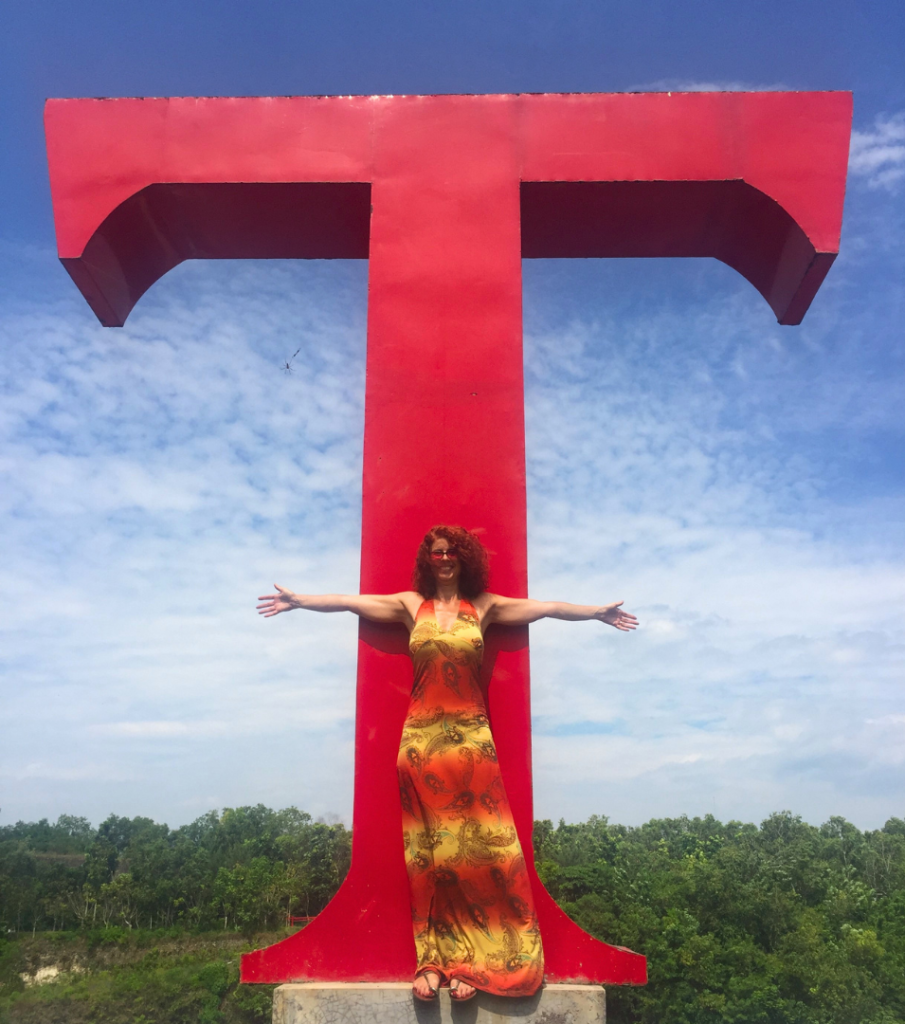
Tracy carries the loss into how she runs TraceWorthy. The memory of a business taken away in a night keeps her attention on exit planning as a form of risk mitigation, and she has built TraceWorthy across a wide range of services so that no single event can take everything again. That instinct is now part of the work.
When a founder has to close a business, TraceWorthy runs the wind-down in order: the staff settled, the creditors and tax addressed, the licences surrendered and the company deregistered, so that nothing is left to follow her. Where the debts are larger than the assets, the team guides her through restructuring or, if it comes to it, bankruptcy, and protects her residency and her standing while it does. And long before any of that, the same people build a business so that it could be closed cleanly if it ever had to be, without the founder losing herself along with it.
Tracy knows what that costs, because she paid it.
A founder who comes to TraceWorthy at the end of a business is working with a company whose founder has stood where she is standing, and whose team treats the closing of a business as careful work rather than paperwork. The aim is to take the weight of the process off her, settle what is owed, protect her from what a botched closure would do to her later, and leave her free to decide what she wants next. She does what she loves. We look after the rest.
If you are facing the end of a business, or you want to build one that could be closed cleanly if it ever had to be, the place to begin is a conversation. Speak with our team, and we will set out what a clean, protected wind-down would take.
Our team is your team.
This article is general information current as at 4 August 2026. Company, insolvency, tax, employment and immigration rules change, and the position for any business depends on its own facts, so obtain advice for your own situation before you act. It is not legal, tax, or immigration advice, and it does not create an advisory relationship or reach any conclusion on a particular reader’s position.
Tracy Wilkinson’s account is published with her consent. Quoted statements from other founders are reproduced or translated from the published sources cited, and company figures are drawn from those sources and change over time.
This article refers to suicide. If you are struggling with these feelings, you deserve support, and help is available. Please reach out to a local crisis line or a trusted medical professional, and if you or someone else is in immediate danger, contact local emergency services.
Frequently Asked Questions
What is the difference between closing a company and going bankrupt?
They are two different events. A voluntary closure, or liquidation, is for a company that can pay its debts: the owner decides to close, a liquidator settles everything, any surplus returns to the shareholders, and the company is removed from the register. Bankruptcy is for a company whose debts are larger than its assets: a court declares it bankrupt, a curator takes control, creditors are paid in a statutory order, and shareholders usually receive nothing. The first keeps the founder in control of the process; the second passes control to the court.
Can I simply abandon a company I no longer use?
It is the most expensive way to stop. A company that is left rather than formally closed stays legally alive and keeps accruing obligations: tax filings, annual and investment reporting, and the penalties for missing them. For a PT PMA the consequences reach the owner personally, because the unresolved record can affect future licences and immigration standing in Indonesia. Closing the company properly ends those obligations; walking away lets them grow.
What do I owe my staff if I close the business?
Employees are entitled to a statutory settlement on closure, made up of severance pay, a long-service reward, and compensation for accrued rights, with any additional amount the contract provides. The multiplier depends on the reason for closing, and a company closing on losses can only pay the lower rate if those losses are audited and evidenced. Employees’ unpaid wages also rank ahead of secured creditors in a wind-up, so staff entitlements are planned for early rather than left to the end.
Am I personally liable for my company’s debts?
In most cases, no. Limited liability under the Company Law protects a shareholder who kept the company properly run and closed it through the proper process, so the founder’s exposure is limited to what she put in. That protection weakens where the company was misused, where its legal-entity formalities were not kept, or where a founder walked away leaving unpaid tax, unpaid staff or stripped assets. A director whose own fault or negligence caused a loss can also be made personally liable. Closing correctly is what keeps the shield intact.
What happens to my PT PMA and my stay permit if I close the company?
They are handled together. The company is deregistered, its business licences are surrendered through the licensing system, and its tax registration is cancelled after a final audit. A stay permit that depends on the company ends when the company does, so the immigration side is planned alongside the closure, whether that means moving to another basis to remain or leaving in an orderly way. Doing the two in step avoids being left without a lawful basis to stay.
How long does it take to close a company properly?
Usually three to twelve months for a solvent voluntary closure. The mandatory steps set part of the timetable, including a sixty-day window for creditors to bring claims, and the tax audit is generally the longest single part. An insolvent case that goes through the court runs on its own timetable. Starting early, while the company is still in good order, keeps the process shorter and cheaper.
How does TraceWorthy help when a business has to close?
We run the wind-down so the founder does not carry it alone. We settle the staff, address the creditors and the tax, surrender the licences, and deregister the company, so nothing is left to follow her. Where the debts are larger than the assets, we guide her through restructuring or bankruptcy and protect her residency and her standing while we do. Our aim is a clean ending that leaves her free to decide what comes next.