
Part of the series: Beyond Tourism
- Bali 2036: Growth Alone Will Not Protect Your Business
- Beyond Tourism: Bali Needs Waste Solutions
- Beyond Villas: Trade and Distribution in Bali
- Beyond Bali: Infrastructure and Built-Environment Services as Foreign Investment in Indonesia
- Beyond Beach Clubs: Creative Production, Events, and Destination Experiences as Foreign Investment in Indonesia
- Beyond Tourism: The Blue Economy in Indonesia – Marine and Fisheries Investment
- From Ingredient to Invoice: Food and Beverage Production as a Foreign Investment in Indonesia
- Teaching Without Permission: Lawful Entry into Indonesia's Education and Skill-Transfer Sector
- Built to Scale: Sports and Recreation Investment in Indonesia
- Clean by Design: Water Treatment, Refill, and Wastewater Enterprises in Indonesia
- The Sexiest Cow in Bali: Turning Business Waste Into a Product
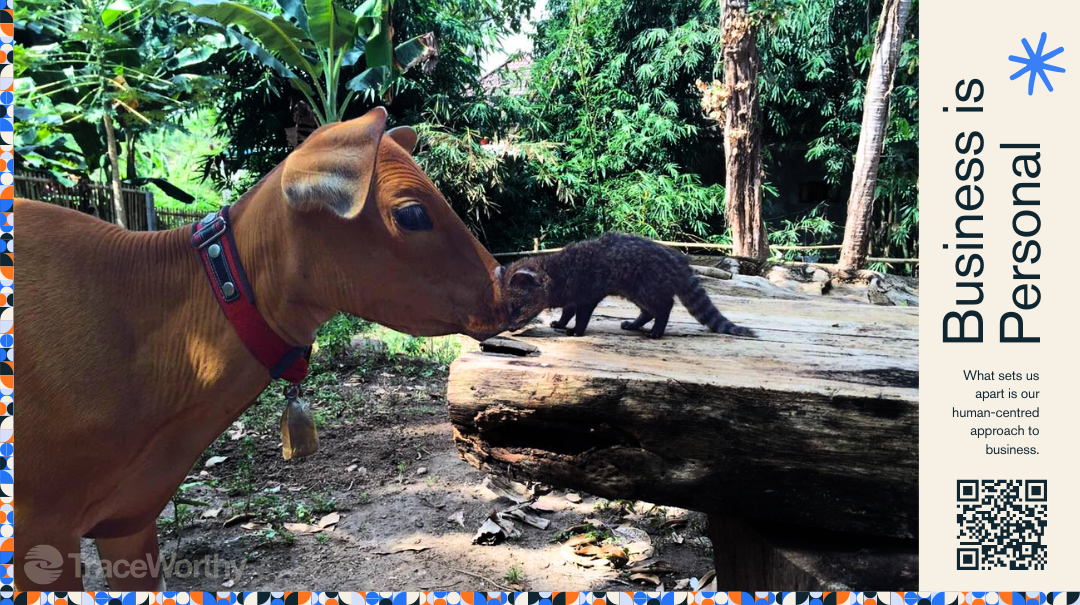
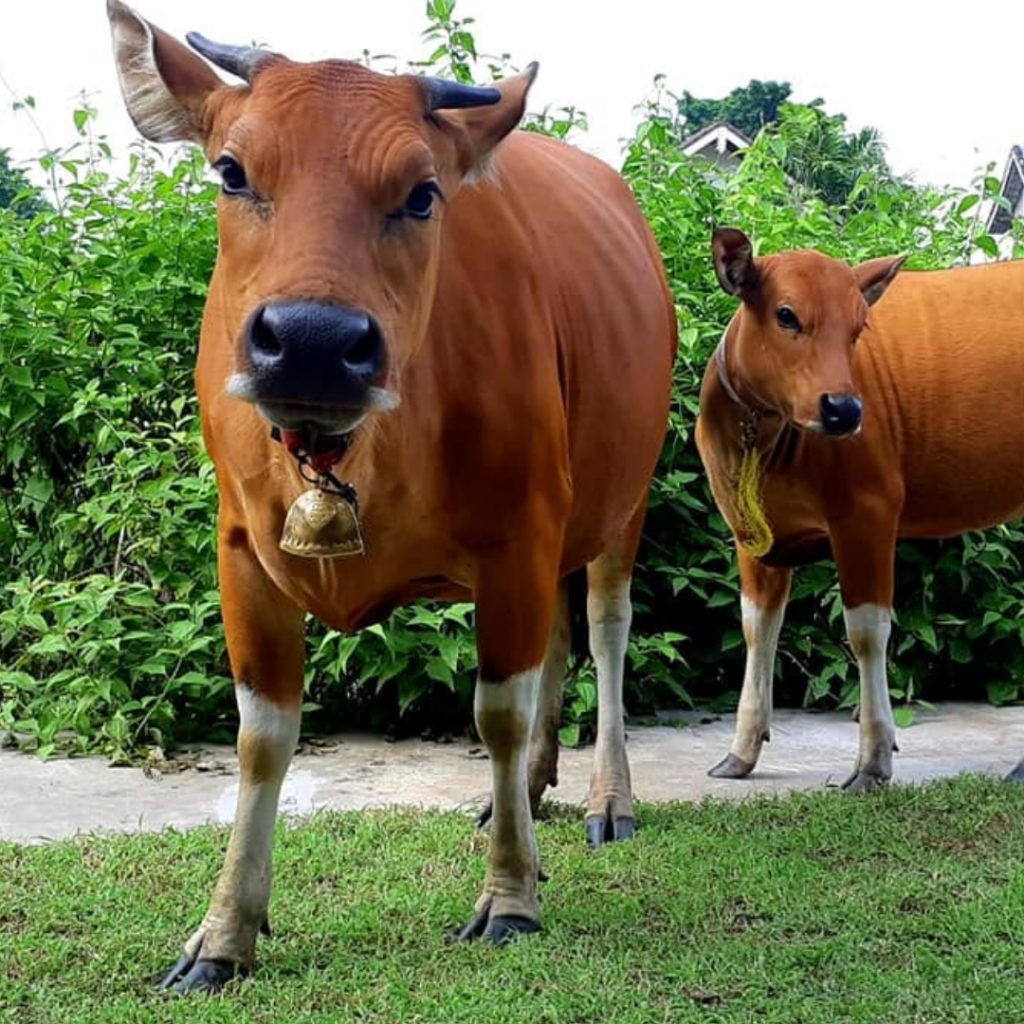
My cow has a reputation in my neighbourhood. People came to call her the sexiest cow in Bali.
The description sounds like a joke, though the reputation was well earned. It grew from a system I built in my backyard, and that system began with one recurring cost I set out to remove. This is also a story of turning business waste into a product, and the method cost very little.
From a Western Australian farm to a Bali riverbank
I grew up on a wheat and sheep farm in Western Australia. That upbringing gave me a practical familiarity with land and livestock, and with the daily labour of keeping both productive. My connection to nature formed early and stayed with me. The way I read a problem traces back to that farm, where land and animals are systems to be managed and livelihoods depended on both.
When I moved to Bali, I took a home on a large block of land beside a river. The land grew over with weeds at a pace that demanded regular cutting, and every weekly cut incurred a cost – both labour and money. I looked for a solution that did not depend on repeatedly paying people to clear vegetation by hand.
A calf, then a constraint
I went to the cattle market and bought a calf. The reasoning was practical, since an animal that eats grass removes the need to cut it. The calf settled onto the block, and the weeds began to recede.
Then the calf grew into a cow, and a cow eats a considerable amount every day. The land that once produced surplus weeds no longer supplied enough grass. My first solution had created a second problem, which is the point at which most people revert to paying for the service they tried to avoid. I looked instead for another resource that was not going to replace the ongoing cost I had averted.
The waste exchange
I approached the cafes and juice bars around me. Each of them faced a cost I could remove, which was the disposal of organic waste. I supplied plastic bins to each venue and trained their staff to separate food scraps from other rubbish. Every day I collected the full bins and left clean ones in their place, and the fresh produce scraps were provided to the cow, who enjoyed them very much.
One daily routine settled three separate costs at once.
| Party | Cost before the routine | Effect of the exchange |
|---|---|---|
| The cow | Not enough grass on the block to feed her | A daily supply of fresh produce scraps |
| Me | Paying for grass to be cut and delivered | That expense removed entirely |
| The cafes and juice bars | Paying to dispose of organic waste | Lower waste disposal cost |
None of us paid extra for these results. That daily exchange was a terrific example of turning business waste into a useful product.
What the neighbours saw
My neighbours watched a foreign woman feed her cow coconuts along with fruit and vegetable scraps, while they cut and carried grass in the fields. Their early reaction was scepticism.
Over time they observed something they did not expect. My cow was well conditioned and stayed at a healthy weight, and she was rarely troubled by ticks or sand flies. These were observations the farmers made themselves, and I have never presented them as proven veterinary science. My cow stood out in the herd.
The farmers began asking me to collect additional fresh produce waste so they could feed their own cattle the same way, and the practice spread through the surrounding neighbourhood. Cows raised on the varied diet were reported to reach better condition with less daily labour spent cutting and carrying grass. My cow also attracted the attention of bulls and produced healthy calves that grew up on the same feed. The economic effect on the farmers was visible in fatter and better-conditioned animals achieved with lower effort and lower input cost.
The same logic, at a larger scale
Separate problems often share a solution once you map how their inputs and outputs connect.
The overgrown land needed clearing, the growing animal needed feed, and the local venues needed to dispose of organic waste. Each was a cost to someone. One routine linked those costs into a supply chain that fed itself, and the value of the method came from noticing a connection that others had overlooked rather than from any large outlay.
My cow was one instance of a pattern that runs across Indonesia. What one operation discards, another can use as a raw input, and the discard is frequently cheaper than a purpose-bought material. Several Indonesian businesses now run on this logic, and I have watched the model work at a scale well beyond a single animal. Each of these firms shows the circular economy in Indonesia working in practice.
| Business | Location | Waste input | What they make from it |
|---|---|---|---|
| Hiro Drinks | Bali | Coffee cherry husk, or cascara, normally discarded in processing | Functional energy drinks; the company reports the first BPOM food licence for cascara in Indonesia |
| Shiva Industries | Bali | Coconut husk, rice husk and straw, discarded bamboo, and food waste | Fertiliser from on-site aerobic digesters, verified by Udayana University as pH-neutral and carbon-rich |
| Magalarva | Banten | Sorted food waste from factories, markets, and hotels | Black soldier fly larvae for animal and fish feed, plus organic fertiliser |
| Green Prosa | Central Java | Household and market organic waste | Black soldier fly larvae for animal feed |
| Robries | Surabaya | Post-consumer plastic waste | Furniture, homeware, and recycled-plastic construction boards |
| Sungai Watch, via Sungai Design | Bali | Plastic recovered from Indonesia’s rivers | Furniture, including a chair pressed from roughly 2,000 plastic bags |
Three of these businesses operate in Bali, which puts the pattern close to home for any operator on the island. The inputs range from coffee husk to river plastic. Each of these businesses found a discarded stream and secured it at low or no cost. From that input, they built a product that customers will pay for. The circular economy in Indonesia is often described in policy language, though these businesses show it as a set of practical trades.
How the same thinking applies to your business
The same discipline sits behind how we advise clients at TraceWorthy. We diagnose a situation before prescribing a solution, because the useful answer usually depends on a resource or connection already present in the business. Many domestic enterprises operate with recurring costs that have become routine, and therefore invisible. Turning business waste into a product usually starts with mapping where a discarded stream could serve as an input.
| Recurring cost that goes unnoticed | Why it persists | Where the connection often sits |
|---|---|---|
| Waste that is paid to be removed | Treated as a fixed line item | Another operator who needs that input |
| Capacity that sits idle | Built for a demand peak that has passed | A partner able to use it between peaks |
| Supplier terms left unchanged for years | Renewal by default rather than review | Volume or bundling that resets the price |
| Processes designed for an earlier stage | The business outgrew them quietly | A simpler routine that removes duplicated steps |
We examine how these inputs and outputs connect, then design a solution that fits the specific client rather than applying a template. The aim is a practical result the client can operate at reasonable cost.
What this means for domestic enterprises
The lesson for an enterprise reader is a practical operating stance. A business sitting on a recurring cost often has an unexamined resource close by, and the task is to find the connection that turns one into the other. Creative solutions come from unlikely places, and they seldom require large budgets or complicated structures to work.
If a cost in your operation recurs every month and has become routine enough to stop noticing, that recurring cost is the place to start looking. A recurring cost that becomes a product is the clearest example I know of turning business waste into a product. This is how I think, and how we work at TraceWorthy, and the approach does not need to be complicated to solve a real problem.
Come and see us to talk about your business, and ask us about the sexiest cow in Bali.