

Part of the series: Beyond Tourism
- Bali 2036: Growth Alone Will Not Protect Your Business
- Beyond Tourism: Bali Needs Waste Solutions
- Beyond Villas: Trade and Distribution in Bali
- Beyond Bali: Infrastructure and Built-Environment Services as Foreign Investment in Indonesia
- Beyond Beach Clubs: Creative Production, Events, and Destination Experiences as Foreign Investment in Indonesia
- Beyond Tourism: The Blue Economy in Indonesia – Marine and Fisheries Investment
- From Ingredient to Invoice: Food and Beverage Production as a Foreign Investment in Indonesia
- Teaching Without Permission: Lawful Entry into Indonesia's Education and Skill-Transfer Sector
- Built to Scale: Sports and Recreation Investment in Indonesia
- Clean by Design: Water Treatment, Refill, and Wastewater Enterprises in Indonesia
- The Sexiest Cow in Bali: Turning Business Waste Into a Product
Indonesia’s Rencana Pembangunan Jangka Menengah Nasional (RPJMN) 2025 to 2029 requires IDR 47,587.3 trillion in infrastructure investment. The state cannot fund it alone. This article examines built-environment services in Indonesia as a foreign investment category, covering the regulatory framework, the enterprise models available, the Bali demand environment, Indonesia’s emerging super priority destinations, and the compliance requirements that determine whether a service enterprise operates on a lawful and sustainable foundation.
The Gap That Creates the Opportunity
Indonesia builds. The physical infrastructure requirement of a 280-million-person archipelago spread across 17,000 islands demands it continuously, and not because it is fashionable to say so. The national government’s RPJMN 2025 to 2029 sets out the scale: IDR 47,587.3 trillion in total infrastructure investment is required over five years, averaging IDR 9,517 trillion per year across transport, energy, water, urban systems, and digital infrastructure.
The Ministry of Public Works budget was cut by 73 per cent in 2025, reduced to USD 1.9 billion as part of a presidential efficiency mandate. New physical projects have been shelved unless structured through public-private partnerships. The government has not reduced its infrastructure ambition. It has changed the mechanism through which that ambition is financed and delivered.
At the Indonesia Conference on Infrastructure 2025, the government invited global investors to participate in Rp 200 trillion in identified national infrastructure projects, citing an estimated USD 46 billion infrastructure funding gap through 2029. This is not a general investment promotion. It is a specific acknowledgement that the state requires private capital and private expertise to deliver infrastructure at the scale the RPJMN requires.
For a foreign investor considering Indonesia, this structural tension between demand and state budget capacity defines the commercial context for infrastructure services and built-environment services across the archipelago. The enterprises that design, advise on, manage, and technically support Indonesia’s infrastructure programme are not peripheral to the country’s development agenda. They are the advisory and technical layer without which the physical investment cannot be prepared, approved, delivered, or maintained to standard.
What Built-Environment Services Means as an Investment Category
Built-environment services are not construction contracting. They are the professional, technical, and specialist services that enable infrastructure and development projects to be designed, approved, managed, delivered, and operated. The distinction is significant in the Indonesian regulatory context because these services carry different KBLI classifications, different foreign ownership positions, and different investment threshold structures from construction contracting itself.
Under BPS Regulation No. 7 of 2025 and the KBLI 2025 framework, the built-environment service sector spans several classification categories that a foreign investor must identify separately rather than treating as a single sector.
Engineering and technical consulting sits within KBLI 71101 and related codes covering architectural and engineering activities and technical consulting. This includes geotechnical investigation, structural engineering analysis, hydrology and water resources consulting, civil engineering design, and the technical advisory services that underpin infrastructure project preparation. These services feed directly into the PPP project pipeline and the national infrastructure programme.
Architectural and specialist design services are classified under KBLI 74100 and related codes. These cover building design, interior architecture, landscape design, and the specialist design activities associated with premium hospitality, commercial, and residential development. In Bali’s context, these services operate within a dual compliance environment: international green building frameworks on one side, and Balinese cultural and heritage construction standards on the other.
Environmental and specialist technical services cover hydrology, environmental impact assessment, waste management system design, wastewater system design and operation, and site investigation services. These align with Indonesia’s RPJPN 2025 to 2045 commitment to reduce greenhouse gas emissions to 93.5 per cent below the 2010 baseline by 2045, and with the World Bank’s USD 350 million Local Service Delivery Improvement Project approved in December 2025, which supports Indonesia’s national solid waste management targets and its stated ambition of zero waste by 2050 to 2060. Infrastructure services in Indonesia addressing environmental and water management requirements are among the highest-priority categories within the national development framework.
Project management and process advisory services cover the planning, governance, and documentation functions that translate technical designs and regulatory requirements into managed delivery processes. These services operate alongside technical providers rather than replacing them, and the distinction between project management advisory and general management consulting is a regulatory one with direct implications for the enterprise model, discussed further below.
Energy efficiency and green building Indonesia services are classified within Indonesia’s energy sector taxonomy as electricity supporting activities. They cover building energy audits, retrofit specification, solar and renewable energy system advisory, green building certification support under EDGE and GREENSHIP frameworks, and operational performance management for existing buildings and facilities.
Fit-out systems supply involves the importation and supply of specialist interior systems, materials, and technically specified products to construction and fit-out contractors. This is a trade-adjacent activity that sits within the supply chain of the built-environment sector and generates income through product margin rather than service fee.
Building Approval and Certificate of Worthiness support covers the technical and administrative services required to prepare, submit, and manage Persetujuan Bangunan Gedung (PBG) and Sertifikat Laik Fungsi (SLF) applications. Every construction project and significant building modification in Indonesia requires these approvals. The preparation process involves geotechnical survey, land survey, structural assessment, MEP engineering review, and documentary compliance, producing consistent and recurring demand for both technical and advisory service providers.
Under BKPM Regulation 5 of 2025, construction services are assessed for the minimum investment threshold at the 4-digit KBLI level rather than the 5-digit level that applies to most other sectors. This means a PT PMA providing construction-adjacent services covers a broader classification grouping under the IDR 10 billion threshold, which is a structurally more favourable position for an investor entering multiple related service activities within the same construction services grouping.
The KBLI 70209 Signal: How to Read It Professionally
KBLI 70209, the management consultancy classification, has been the subject of regulatory attention in Bali that foreign investors in the built-environment advisory space need to understand accurately rather than react to reflexively.
The Bali Provincial Government and BKPM have signalled a restriction on new PT PMA companies activating KBLI 70209 in Bali, with existing operators given a transition period to restructure, transfer assets, or close. As of May 2026, this restriction signal exists. What it does not yet have is full implementation through the OSS system. The KBLI 2025 framework introduced by BPS Regulation No. 7 of 2025 has not been completely mapped into OSS licensing categories and investment restriction positions. Until that mapping is complete, the operational mechanism through which the restriction would be enforced is not fully in place.

The restriction signal warrants three observations that a professionally competent advisory response requires.
- The first is jurisdictional. A restriction applicable to large enterprises operating under KBLI 70209 in Bali would, by the logic of Indonesian commercial law, apply to Indonesian-owned large enterprises in that classification as well as to foreign-owned ones. Management consulting firms of equivalent scale operating under Indonesian ownership would fall within the same scope. The commercial and political consequences of requiring domestic enterprises to restructure or close their Bali consulting operations represent a significant barrier to full enforcement of the restriction as currently signalled.
- The second is operational. Indonesian business licensing compliance operates through a progressive enforcement sequence. An enterprise operating under a valid NIB that is subsequently found to be non-compliant with a new restriction does not face immediate closure. It receives a series of administrative warning letters before sanctions apply. This framework provides a known and legally recognised correction window. For enterprises with valid NIBs currently registered under KBLI 70209, the appropriate professional response is continuous monitoring, compliance maintenance, and preparedness to act within the correction window if enforcement proceeds.
- The third is definitional. KBLI 70209 is a management consultancy classification. Engineering and technical consulting under KBLI 71101, architectural and design services under KBLI 74100, environmental and hydrology consulting, geotechnical services, energy efficiency services, and PBG and SLF support services are classified differently. These technical service classifications are not subject to the 70209 restriction signal. A foreign investor who conflates the entire built-environment advisory and technical services sector with the KBLI 70209 position has received imprecise advice and is making enterprise decisions on an inaccurate basis.
The Bali Demand Environment for Built-Environment Services
Bali’s built environment generates consistent, layered demand for professional and technical services that does not depend on investor sentiment or tourism volumes in the way that accommodation income does.
Every construction project and building modification in Indonesia requires PBG and SLF approvals. The preparation of these applications requires geotechnical investigation, land survey, structural assessment, and MEP engineering review, followed by documentation, submission management, government liaison, and site inspection coordination. This is not a discretionary service. It is a regulatory prerequisite for every project in the built environment. Bali’s sustained construction activity across hospitality, residential, and commercial categories produces a continuous and predictable flow of PBG and SLF requirements.
The green building and sustainability dimension is growing in commercial significance. Operators in Bali’s premium hospitality sector increasingly face requirements from international brands, lenders, and ESG reporting frameworks to demonstrate green building certification. EDGE, the International Finance Corporation’s green building certification framework, and GREENSHIP, administered by the Green Building Council Indonesia, provide the two primary certification pathways available to developments in Indonesia. An enterprise with the capability to advise on certification pathway selection, specification compliance, and documentation submission is operating in a demand environment that is expanding as international capital standards require formal verification of building performance credentials.
Balinese cultural and heritage construction standards represent a distinct and technically specialised compliance environment. Adat law, local planning requirements, and the spatial planning guidelines applicable to Bali’s built environment impose specific constraints on building height, orientation, materials, and proximity to sacred sites and traditional Balinese compounds. The rules are not uniform across Bali and vary by regency, zone, and site-specific conditions. An architecture or design enterprise that cannot navigate these requirements is commercially limited to sites with no cultural or heritage sensitivity. In Bali, those sites are increasingly rare.
The environmentally sensitive materials supply chain creates a further layer of commercial connectivity in the built-environment sector. Architects and designers who specify environmentally sound materials generate procurement requirements that cannot always be met through standard local supply channels. An importer of certified, low-emission, and environmentally specified construction and finishing products has a route to market that runs through professional specification relationships rather than general retail channels. The commercial viability of that import distribution enterprise depends in part on the strength and depth of the professional design community it serves. The two enterprises are commercially interdependent, and an investor considering either should understand the supply chain relationship between them.
Enterprise Models From Observed Practice
Three enterprise structures serve the built-environment services sector in Indonesia for foreign investors, each with different capital requirements, regulatory positions, and operational profiles.
The offshore parent with Indonesian subsidiary
An international firm with established operations in engineering, geotechnical, environmental, or design services may structure its Indonesian presence through an Indonesian subsidiary registered in Jakarta, with the parent company providing the international professional credentialing, project methodology, and quality management framework. The Indonesian subsidiary carries the local KBLI registration, employs Indonesian professional staff, and provides the operational vehicle for project delivery across Indonesia.
This structure is appropriate for firms with recurring Indonesian project work rather than permanent physical operations in a single location. It separates the foreign holding from the Indonesian-registered operating entity, grounds the operating entity in Jakarta where the Bali-specific KBLI 70209 restriction does not apply, and allows project delivery into any location in the archipelago under a single entity structure. The geotechnical discipline, for example, operates effectively under this model: international methodology and parent company credentialing, Indonesian subsidiary delivery, project work following infrastructure pipelines rather than fixed commercial geography.
The substance-grounded PT PMA in Bali
A foreign investor who establishes a PT PMA in Bali for built-environment services must satisfy the substance requirements that BKPM Regulation 5 of 2025 emphasises: the entity’s operational activities must reflect its registered KBLI and declared investment value. Substance is demonstrated through genuine physical operational presence, qualified professional staff employed by the entity, confirmed project activity recorded in LKPM filings, and a client and contract record consistent with the declared business activity.
An investor who establishes this substance through genuine professional credentials, institutional affiliations, or a demonstrable history of project delivery in the relevant technical discipline is in a more defensible regulatory position than one who relies on a virtual office address and a minimal staff complement. The hydrology discipline illustrates this: a major shareholder with a PhD from Udayana University in Denpasar brings institutional affiliation and professional academic standing to a Bali-based PT PMA that is verifiable and substantive. That grounding is not a formality. It is the evidence base that satisfies the substance requirement.
The Bali PT PMA with national project reach
The most commercially generalisable model for foreign investors in architecture, design, and specialist technical services is the Bali-registered PT PMA whose project work follows national demand. These enterprises are incorporated and physically operational in Bali, maintain their administrative and client relationship functions from Bali, and deploy professional staff to project locations across Indonesia as project pipelines require.
This model is not constrained by Bali’s commercial geography. A Bali-registered architecture and interior design enterprise working in environmentally sensitive construction may have an active project book spanning resort developments in Labuan Bajo, villa projects in Seminyak, fit-out specifications in Lombok, and green building certification work for a Jakarta commercial development, all delivered from the same Bali base. The enterprise’s KBLI registration reflects its service classification, not its geographic delivery range.
The advisory and technical partnership model
The PBG and SLF approval process, and the broader infrastructure of government-required technical submissions, has created a functional service enterprise model that is accessible to foreign investors without full in-house technical capability from incorporation.
A project management and process advisory enterprise provides planning governance, documentation management, client communication, government liaison, site inspection coordination, and the administrative continuity that converts technical outputs into regulatory approvals on schedule and within client expectations. A specialist technical provider, holding in-house geotechnical, survey, MEP engineering, and structural assessment capability, provides the regulated technical inputs that the advisory enterprise coordinates without producing them directly.
Neither party alone delivers the full service that a client requires. The combination delivers it in a form that is professionally governed, technically competent, and process-disciplined. The advisory and technical functions must be clearly separated in the enterprise structure, with the licensing requirements for each correctly identified and the contractual relationship between the two enterprises governing the division of responsibility, liability, and income at every stage of each engagement.
This model is a lower-capital entry point for an investor whose professional background is in project management, process governance, or client advisory rather than in a licensed technical discipline. It does not reduce the compliance requirements. It structures them across two entities whose combined capability meets the full service requirement.
Indonesia’s Emerging Destinations: What the Early-Mover Advantage Actually Involves
The Indonesian government’s “10 New Balis” programme, formally the Super Priority Destinations strategy, reflects a genuine policy commitment to developing tourism and commercial destinations beyond Bali. Understanding what this commitment means in practical terms for a built-environment service enterprise requires a more granular analysis than the “Bali 30 to 40 years ago” characterisation that appears in investor commentary.
Bali’s commercial development over four decades produced a specific combination of conditions that most of the super priority destinations do not yet share: cultural depth with a globally recognised identity, geographic accessibility through a major international hub airport, an existing hospitality infrastructure that gave early commercial operators a functioning market to serve, proximity to established commercial centres in Java, and a professional services ecosystem that developed alongside the commercial economy. An investor who enters Mandalika or Labuan Bajo expecting the operational environment of 1990s Bali will encounter a different set of conditions.
What the super priority destinations do offer is confirmed government investment, regulatory priority status, and a competitive environment in built-environment services that has not yet densified to Bali’s level. These are meaningful advantages. They are also advantages that require the investor to operate in markets where some of the enabling conditions for commercial success are still being put in place.
Mandalika, West Nusa Tenggara
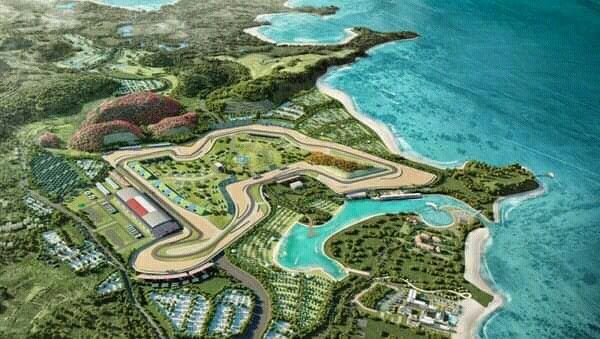
Mandalika is the most commercially advanced super priority destination after Bali. It has Special Economic Zone status, an international racing circuit that has hosted MotoGP, confirmed hotel pipeline from international brands, Lombok International Airport access, and active infrastructure investment at both the zone and regional level. A built-environment service enterprise entering Mandalika has a functioning commercial buyer base operating within a structured regulatory environment. Green building requirements are already relevant to the hotel pipeline. PBG and SLF demand is active and growing with the construction volume.
Labuan Bajo, East Nusa Tenggara
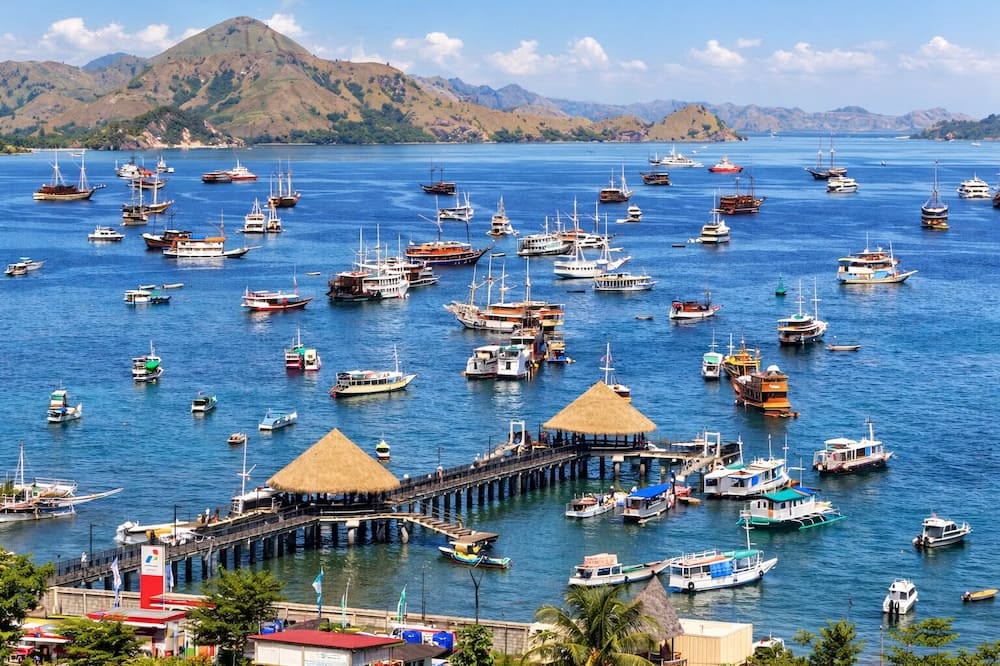
Labuan Bajo has been repositioned as the gateway to Komodo National Park and a premium eco-tourism destination. Infrastructure investment in the airport, port, and road access is confirmed and ongoing. The destination’s premium positioning creates demand for fit-out quality, materials specification, and building performance standards that the local professional services market cannot yet fully satisfy. The gap between demand specification and local supply capability is the commercial opportunity for a built-environment service enterprise with the right technical profile.
Lake Toba, North Sumatra

Lake Toba offers geographic scale and a significant cultural identity anchored by Batak heritage and the world’s largest volcanic lake. Infrastructure investment is confirmed, though the development timeline is longer than Mandalika or Labuan Bajo. Commercial density for hospitality and tourism development is still building. A built-environment service enterprise entering Lake Toba is entering a market with confirmed government commitment and a longer commercial runway to return.
Likupang, North Sulawesi, and the newer additions
Likupang remains in an earlier phase of development with limited hotel inventory and lower destination recognition. The five newer additions to the super priority list, specifically Tanjung Kelayang, Tanjung Lesung, Wakatobi, Morotai, and Raja Ampat, represent genuine frontier opportunity at proportionally higher operational risk. These destinations have government priority status alongside less developed professional services ecosystems, more limited physical access infrastructure, and smaller existing commercial buyer bases for built-environment services.
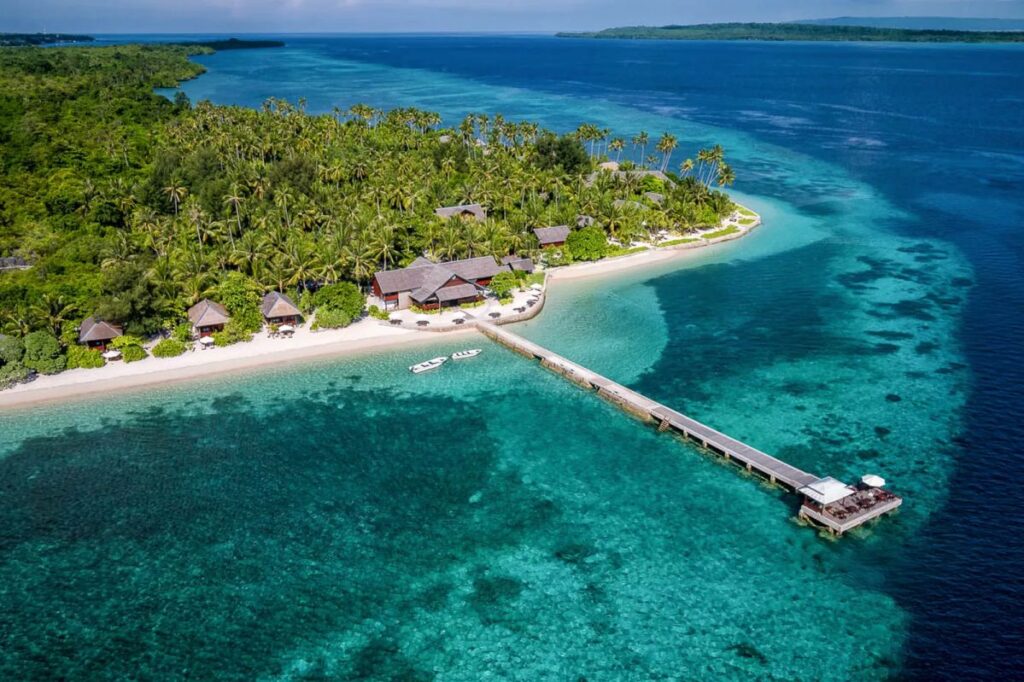
The honest assessment is that early-mover positioning in these destinations is more valuable for an enterprise that can operate with relatively low fixed overhead, deploy technical capability on a project basis rather than maintaining full-time local presence, and sustain operations through a longer ramp-up period before commercial volume reaches the density that Bali or Mandalika already offer.
Frontier Destinations and Infrastructure Participation
The super priority destination strategy represents government-directed commercial development. The frontier investor opportunity, specifically the investor who identifies an emerging destination before it reaches super priority status, requires a different analysis and a different approach to due diligence.
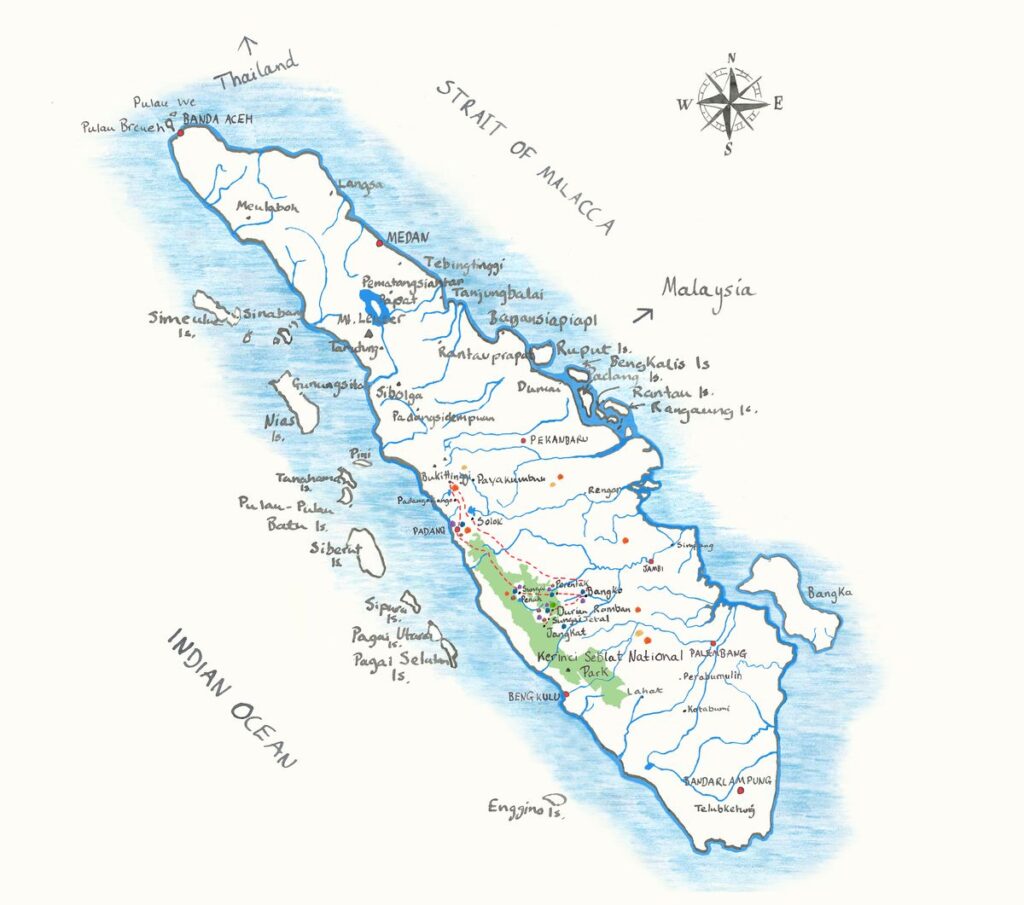
The Mentawai Islands in West Sumatra illustrate the frontier opportunity and its characteristic constraints. The islands are internationally known within the surfing community for world-class wave conditions, attract a small yet high-spending international visitor profile, and have minimal built commercial infrastructure. An investor scoping a beachside resort development in Mentawai faces land due diligence findings that are categorically different from what a Bali acquisition produces.
Title, zoning, and access rights in remote Indonesian island locations require investigation at a depth that a notary-conducted review cannot provide. Spatial planning documentation for remote areas may be incomplete, inconsistent with actual land use, or subject to overlapping claims involving customary rights, plantation concessions, or government land designations that are not visible in the formal title documentation. Utility access, including electricity, clean water, and telecommunications, cannot be assumed from proximity to a populated area. Physical access rights to the site may not be included in the title and may require separate negotiation with local stakeholders.
Where land due diligence identifies constraints that make standalone foreign-owned development untenable, the pivot to a domestic project partnership is a known and legally available pathway. Due diligence on the existing local entity must be completed before foreign capital is committed. This investigation covers the entity’s corporate structure, shareholding history, existing licences and permits, compliance status with tax and employment obligations, existing encumbrances on the entity’s assets, and any historical or pending disputes that would affect the value or viability of the investment. The conversion of the entity to PT PMA status, with foreign capital injection and the restructuring that follows, is a sequential process in which each step depends on the verified outcome of the preceding one.
The investor who reaches this stage having completed verified due diligence, converted the entity to PT PMA status, and committed capital to the project then faces a question that most advisory content does not address: the destination’s infrastructure gap is not only a constraint on the investment. It is a commercial opportunity in its own right.
Lawful foreign participation in infrastructure development at a frontier destination operates through service enterprise models, not through direct ownership of public infrastructure. The available participation modes include:
Advisory and consulting services provided under contract to the government entity, state-owned enterprise, or PPP vehicle responsible for infrastructure delivery. The foreign enterprise contributes technical expertise, methodology, and project management capability to an infrastructure programme it does not own.
Project management services under contract to an infrastructure delivery organisation, covering planning governance, documentation, government liaison, contractor management, and quality oversight for a defined infrastructure programme. This is infrastructure services in Indonesia delivered through a contractual relationship rather than an ownership position, and it represents one of the most commercially accessible entry points for a foreign-owned enterprise with professional project delivery capability.
Specialist technical system supply to the construction contractors delivering the infrastructure, covering energy systems, water treatment systems, wastewater management, telecommunications infrastructure, and other technically specified inputs that local supply capability cannot reliably provide to specification.
Energy and wastewater services to the operating environment that emerges as infrastructure development proceeds, covering facility management, performance monitoring, maintenance, and operational efficiency advisory.
Minority participation in a PPP structure where the concession agreement permits foreign equity participation. This is the most capital-intensive participation mode and requires verification of the specific PPP terms, the foreign ownership ceiling within the structure, and the governance rights attached to the minority position.
Each of these is a service enterprise, not a physical infrastructure ownership position. Each requires a verified KBLI classification, confirmed foreign ownership treatment, and a governance structure that manages the commercial relationship between the foreign-owned enterprise and its Indonesian principal or co-investor.
Pre-Establishment Verification
The following verification sequence applies to any built-environment services enterprise before incorporation. The sequence reflects the specific regulatory features of this sector and should be applied regardless of whether the enterprise is entering Bali, a super priority destination, or a frontier location.
KBLI identification must be completed by service type. Engineering and technical consulting, architectural and design services, environmental and hydrology services, project management, energy efficiency services, wastewater advisory, fit-out systems supply, and PBG and SLF support services are different classifications within the infrastructure services and built-environment services sector. Each must be identified separately. The enterprise’s primary KBLI should represent its primary revenue-generating activity. Secondary KBLIs for supporting activities within the same operational domain should be included from incorporation to avoid the amendment costs and delays that arise when activities expand beyond the founding deed.
The construction services investment threshold applies per 4-digit KBLI under BKPM Regulation 5 of 2025. This calculation must be completed before the investment plan and share capital structure are finalised.
OSS confirmation of the current licensing treatment and investment restriction status of each selected KBLI must be obtained at the time of incorporation. The KBLI 2025 framework is in force. OSS implementation of the new classification mapping is not complete. A founder cannot assume that the OSS treatment of a KBLI code under the prior framework reflects the intended position under KBLI 2025. Active confirmation through OSS, and through BKPM where OSS has not yet mapped the code, is required before the notary appointment. For infrastructure services in Indonesia and built-environment services specifically, this confirmation is the most consequential pre-incorporation step because the construction services threshold structure and the professional licensing requirements depend on the KBLI position being accurately established from the outset.
Professional licensing requirements for regulated technical activities must be identified separately from the business licence. Engineering, survey, and design activities in Indonesia are subject to professional certification requirements administered through the relevant professional associations and the Ministry of Public Works. The enterprise’s operational capacity depends on having licensed professionals on staff or under confirmed subcontractor arrangements. The relationship between the enterprise’s business licence and the professional licences held by its technical staff must be documented and maintained.
Environmental permit requirements apply where the enterprise conducts activities with environmental impact or advises on projects that require environmental documentation. The Amdal and UKL-UPL frameworks apply to different project scales and must be identified in the context of the enterprise’s specific service scope.
Where the enterprise model involves a partnership between an advisory entity and a technical specialist provider, the contractual arrangement governing that partnership must be in place before project delivery begins. The agreement must clearly allocate ownership of deliverables, define the liability position of each party, establish the basis on which fees are shared or invoiced, and produce an auditable structure that satisfies the tax authority’s treatment of related-party and third-party service arrangements.
Transfer pricing documentation is required from the outset for any structure involving related parties, including offshore parent and Indonesian subsidiary arrangements.
Land due diligence, where the enterprise is associated with a site-based project, must cover title verification, spatial planning compatibility through the Informasi Tata Ruang, utility access investigation, physical access rights confirmation, and any customary or overlapping rights affecting the site. This due diligence cannot be delegated to a notary. It requires active investigation by a party with the technical capability and regulatory knowledge to identify and interpret each element of the site’s legal and physical condition.
LKPM reporting must reflect the actual investment and activity of the entity from the first filing period. For a built-environment services enterprise, this means the investment value reported must be consistent with the actual professional staff costs, equipment, office establishment, and project-related expenditure that the entity has committed. Reports must be submitted on schedule and reconciled to the entity’s financial records.
How TraceWorthy Structures the Investment
TraceWorthy provides advisory support across the full structuring and compliance lifecycle for built-environment service enterprises and infrastructure services enterprises in Indonesia.
The engagement begins with enterprise model selection and KBLI verification. The service classification, the foreign ownership position, the investment threshold calculation, and the professional licensing requirements are confirmed before the notary appointment is made. For enterprises entering through the offshore parent and Indonesian subsidiary model, the corporate structure is designed to reflect the operational relationship between the parent and the subsidiary, with the contractual framework and transfer pricing documentation prepared from the point of establishment.
Land due diligence for site-based enterprises is conducted by TraceWorthy as a managed process covering title, spatial planning, utility access, and access rights. This is not a delegated task that returns a report. It is an active advisory process in which TraceWorthy manages the investigation, interprets the findings, advises on the implications for the proposed enterprise structure, and coordinates the resolution of any compliance gaps identified before capital is committed.
For domestic project to PT PMA conversion, TraceWorthy performs due diligence on the existing local entity, manages the corporate restructuring, coordinates the notary and Ministry of Law processes, and implements the governance framework for the converted entity including the shareholder agreement, director authority documentation, and the compliance architecture required by BKPM Regulation 5 of 2025.
PBG and SLF applications are managed by TraceWorthy as a process partnership with a specialist technical provider. TraceWorthy manages the documentation, client communication, government liaison, meeting facilitation, site inspection coordination, and administrative continuity throughout the process. The specialist technical provider contributes in-house geotechnical, survey, MEP engineering, and structural assessment capability. Neither function is handed over and waited on. Both are actively managed throughout the application lifecycle.
Agreement drafting for built-environment service enterprises and infrastructure services enterprises in Indonesia covers the technical subcontractor agreement, the advisory and specialist partnership structure, the project management in Indonesia engagement letter, the client terms of engagement, and where applicable the joint venture or PPP participation agreement. Tax setup covers VAT registration, withholding tax treatment for professional service fees, corporate income tax structuring, and the treatment of project-based income across multiple Indonesian and international parties.
Conclusion: The Structure Determines the Outcome
Indonesia’s infrastructure programme is not a background condition for investment in Bali and the emerging destinations. It is the primary commercial driver of demand for built-environment services across the archipelago. The RPJMN 2025 to 2029 commits to a scale of infrastructure delivery that the state budget cannot fund alone. The enterprises that advise on, manage, technically support, and supply that programme are operating inside the most actively mandated commercial environment in the Indonesian economy.
Foreign investors in built-environment services who enter Indonesia with the correct enterprise model, verified KBLI classification, confirmed professional licensing, and a governance structure that satisfies BKPM Regulation 5 of 2025 are not competing for a discretionary market. They are positioning within a demand environment that the national government has explicitly committed to sustain and expand. Whether the service is project management in Indonesia, engineering consulting, green building advisory, or wastewater system design, the demand context is mandated by a development plan that extends to 2029 and a long-term national development framework that runs to 2045.
Bali remains a productive base for infrastructure services and built-environment service enterprises with national project reach. Its regulatory environment is active and evolving, and the professional response to that evolution is monitoring and measured adaptation rather than reactive restructuring. The super priority destinations offer confirmed early-mover positioning in markets where infrastructure investment is government-backed and professional services competition is less dense than Bali. Frontier locations offer higher upside with proportionally higher execution risk and a longer horizon to commercial return.
The question for a foreign investor considering this sector is not whether Indonesia’s infrastructure demand is real. It is whether the enterprise model selected, the KBLI classification verified, and the compliance architecture built from incorporation can sustain the investor’s participation in that demand for the duration of the investment horizon. Infrastructure services in Indonesia reward investors who structure correctly at the outset and maintain that structure through continuous compliance, active LKPM reporting, and governance frameworks that reflect the actual operations of the entity. Project management in Indonesia, engineering consulting, green building advisory, and environmental services are each subject to the same discipline. The enterprise that treats compliance as an operating cost from day one avoids the restructuring costs that TraceWorthy’s remediation clients have encountered.
TraceWorthy works with investors across each stage of this determination.
If you are evaluating built-environment services or infrastructure services in Indonesia and have not yet incorporated an entity, the starting point is a verified enterprise model and confirmed KBLI classification before the notary appointment. The choices made at that stage determine what the entity can lawfully do, how its professional and regulatory obligations are structured, and whether it can grow, partner, or exit on terms that protect the investor’s position.
If you have an existing entity and are uncertain whether your current KBLI registration, professional licensing position, or enterprise structure reflects your actual operations and current Indonesian investment rules, a compliance review will identify the gaps and define the available remediation pathway.
If you operate a compliant built-environment service enterprise and require advisory support for project expansion into super priority destinations, domestic partnership conversion, frontier land due diligence, or international restructuring, TraceWorthy provides ongoing advisory services across the full investment lifecycle.
Contact TraceWorthy to begin the conversation.
#TraceWorthy #BusinessIsPersonal #OurTeamIsYourTeam #HumanCentred #InfrastructureIndonesia #BuiltEnvironmentIndonesia #ForeignInvestmentIndonesia #BaliInvestment #IndonesiaBusiness #PTMAIndonesia #GreenBuildingIndonesia #SuperPriorityDestinations