

Part of the series: Beyond Tourism
- Bali 2036: Growth Alone Will Not Protect Your Business
- Beyond Tourism: Bali Needs Waste Solutions
- Beyond Villas: Trade and Distribution in Bali
- Beyond Bali: Infrastructure and Built-Environment Services as Foreign Investment in Indonesia
- Beyond Beach Clubs: Creative Production, Events, and Destination Experiences as Foreign Investment in Indonesia
- Beyond Tourism: The Blue Economy in Indonesia – Marine and Fisheries Investment
- From Ingredient to Invoice: Food and Beverage Production as a Foreign Investment in Indonesia
- Teaching Without Permission: Lawful Entry into Indonesia's Education and Skill-Transfer Sector
- Built to Scale: Sports and Recreation Investment in Indonesia
- Clean by Design: Water Treatment, Refill, and Wastewater Enterprises in Indonesia
- The Sexiest Cow in Bali: Turning Business Waste Into a Product
The Sector
TraceWorthy published a landscape carousel mapping eight sub-categories of food and beverage enterprises operating in Bali with foreign investment: specialty drinks, craft spirits and brewing, coffee and roasting, chocolate and cacao, bakery and patisserie, health food and natural grocers, nuts and pantry goods, and seafood and specialised processing. That carousel documents what exists. This article maps what is required to build one lawfully, operate it commercially, and maintain the compliance structure that determines whether the enterprise can distribute, export, and grow.
The sector’s scale warrants the investment in that compliance structure. Indonesia’s food market in 2025 is valued at USD 255.38 billion, with a projected annual growth rate of 6.86 per cent through 2030. The F&B sector grew by 5.90 per cent year-on-year in 2024. Foreign investment in food manufacturing alone reached USD 3.46 billion by the end of that year, alongside USD 3.99 billion from domestic investment. These are not projections. They are investment flows that have already occurred in a sector that Indonesia’s population of 283 million people, its rising middle class, and its premium tourism economy collectively sustain.
The entry requirement for a foreign investor in this sector is not capital alone. It is a correctly designed enterprise with BPOM registration for each product, halal certification built into the production system from inception, and a distribution structure that matches the licences the enterprise has actually obtained. The distance between a production enterprise that meets this standard and one that is producing goods it cannot lawfully distribute is sometimes measured in months and sometimes in years of operating under a non-compliant structure. TraceWorthy has assisted both categories of client.
The Regulatory Chain
Food and beverage production in Indonesia generates compliance obligations that are sequential and interdependent. Each element of the chain must be in place before the next can be activated. A foreign investor who approaches the sector as a product idea first and a compliance structure second will typically discover the regulatory requirements at the point where they create the most operational disruption.
KBLI classification determines the legal scope of production
A beverage manufacturer, a food processor, a fresh produce distributor, and an agricultural ingredient processor each sit in different KBLI classifications under BPS Regulation No. 7 of 2025. Different codes carry different foreign ownership positions, different minimum investment thresholds, and different licensing requirements. A founder who selects a KBLI code to describe their enterprise without confirming that the code’s OSS treatment and investment restriction position match the intended production activity has not completed the first step. The classification is the foundation of every subsequent licensing decision.
BPOM registration is the commercial gate for distribution
The Indonesian National Food and Drug Control Agency is the primary regulatory authority for all food and beverage products intended for commercial distribution. A PT PMA production enterprise without BPOM registration for its products cannot lawfully supply those products to retailers, hospitality buyers, or any commercial channel at scale. The registration process involves product submission, formulation review, laboratory analysis, labelling evaluation, and a risk-based assessment whose practical duration ranges from two to twelve months depending on the product category. High-risk categories, including infant formula, functional foods with health claims, and products with novel ingredients, require longer review periods than conventional foods. An enterprise that begins production before BPOM registration is complete is producing goods it cannot legally sell through the channels its business model requires.
Halal certification is a domestic production obligation
Government Regulation No. 42 of 2024 confirmed mandatory halal certification for food and beverage products produced by medium and large domestic businesses from October 18, 2024. A PT PMA producing food or beverages in Indonesia is a domestic business for this purpose. The two-year extension under GR 42/2024 applies specifically to imported products entering the Indonesian market, not to foreign-owned enterprises producing domestically. This distinction is the most common factual error in market-entry planning for this sector.
Halal certification planning requires integration into the enterprise design before incorporation, not after the first product batch is produced. Indonesia’s halal framework assesses the finished product’s formulation alongside the ingredients and their sourcing documentation, the production facility’s layout and segregation of halal and non-halal processes, cleaning and sanitation procedures, storage, packaging, and the company’s internal Halal Product Assurance System. An investor who treats halal certification as a post-production administrative task will be redesigning the production system after it has been built.
The F&B investment threshold under Government Regulation 28/2025 applies per regency or city
For food and beverage businesses, the minimum investment value of IDR 10 billion applies per regency or city (kabupaten/kota), rather than per project location defined by geographic coordinate. This is a structurally more favourable treatment than the standard five-digit KBLI per project location rule applicable to most other sectors. A PT PMA establishing an F&B production enterprise in Bali calculates the investment threshold across the relevant regency geography rather than at a single production address. The paid-up capital requirement of IDR 2.5 billion under BKPM Regulation 5 of 2025 applies per PT PMA.
Supporting licences depend on the product type
The core NIB and BPOM registration stack applies to all food and beverage producers. Beyond this, specific product categories generate additional licensing requirements. Alcoholic beverage production requires a class-specific SKPL direct seller permit and an NPPBKC excise taxable goods entrepreneur identification number alongside the IUI. Products with specific health, functional, or medicinal claims require BPOM evaluation beyond standard food registration. Export-oriented production may require commodity-specific export certifications. Water production and extraction may require environmental permits. Products distributed through formal retail channels require SNI certification where applicable.
| Compliance Step | What It Governs | Timing | Key Authority |
|---|---|---|---|
| KBLI classification | Legal scope of production activity and foreign ownership position | Before notary appointment | OSS / BKPM |
| BPOM registration | Commercial authorisation to distribute products | 2 to 12 months; must begin before distribution | BPOM |
| Halal certification | Domestic production obligation for medium and large enterprises from 18 October 2024 | Design stage, not post-production | BPJPH |
| Investment threshold | IDR 10 billion per regency or city; IDR 2.5 billion paid-up capital per PT PMA | At incorporation | BKPM / OSS |
The full compliance chain must be mapped at the enterprise design stage. An investor who discovers a required licence after production has commenced faces either a production halt while the licence is obtained or distribution under a non-compliant structure. Both outcomes are more expensive than correct pre-establishment design.
Client Implemented Structures
Five of TraceWorthy’s established F&B production clients illustrate how the compliance chain applies across different product categories. Each is named with the client’s knowledge, and each presents a compliance dimension that a prospective investor in the same category should understand before proceeding.
| Client | Product Category | Primary Compliance Point Addressed |
|---|---|---|
| Hiro Drinks | Functional and lifestyle beverages | BPOM registration track by product claim; halal supplier qualification chain |
| AYR Water | On-site water production systems | Regulatory classification of on-site versus distributed water products |
| Good Life Kombucha | Fermented beverages with probiotic positioning | BPOM classification by alcohol content, label claim, and distribution channel |
| Royal Spice Gardens | Vanilla cultivation and processing | Export certification and phytosanitary documentation for agricultural ingredients |
| Bali Coop | Organic fresh produce distribution | Organic certification, food safety standards, and cooperative supply governance |
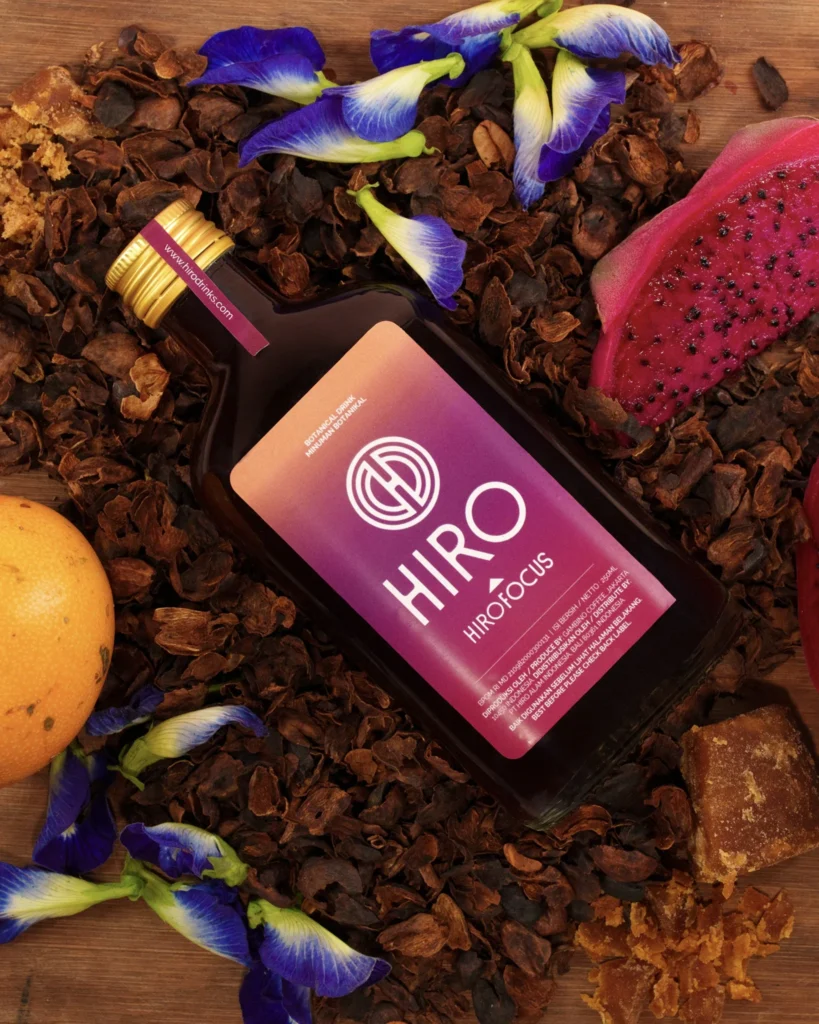
Hiro Drinks produces functional and lifestyle beverages by partnering directly with farmers to transform agricultural by-products into commercially viable products. The PT PMA’s BPOM registration pathway required product category determination before formulation was finalised. Functional beverage claims trigger a different registration track from conventional beverage registration, with a correspondingly different GMP standard for the production facility. Ingredient sourcing from farming partnerships also required documented supplier qualification for the halal production system, since the halal integrity of the finished product depends on the ingredient traceability chain from farm to bottle. The enterprise’s model, connecting agricultural input economics to functional product output, is both commercially distinctive and regulatory complex. It required design-stage advisory across KBLI, BPOM, and halal certification simultaneously rather than sequentially.
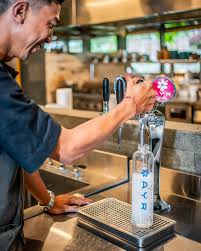
AYR Water provides operationally integrated systems that allow hotels and restaurants to produce their own premium water on-site, without requiring the hotel to bottle and distribute water as a commercial product. The regulatory classification question for on-site water production differs from bottled water intended for retail. SNI certification requirements, environmental permits for water source quality and extraction, and the BPOM treatment of water produced and consumed at the same premises are each product-specific determinations. A hospitality operator who installs a water production system without confirming the system’s regulatory classification relative to the premises’ existing food and beverage licences is operating an unconfirmed production activity within a licensed food service environment. The classification question must be resolved at the system design stage rather than after installation.
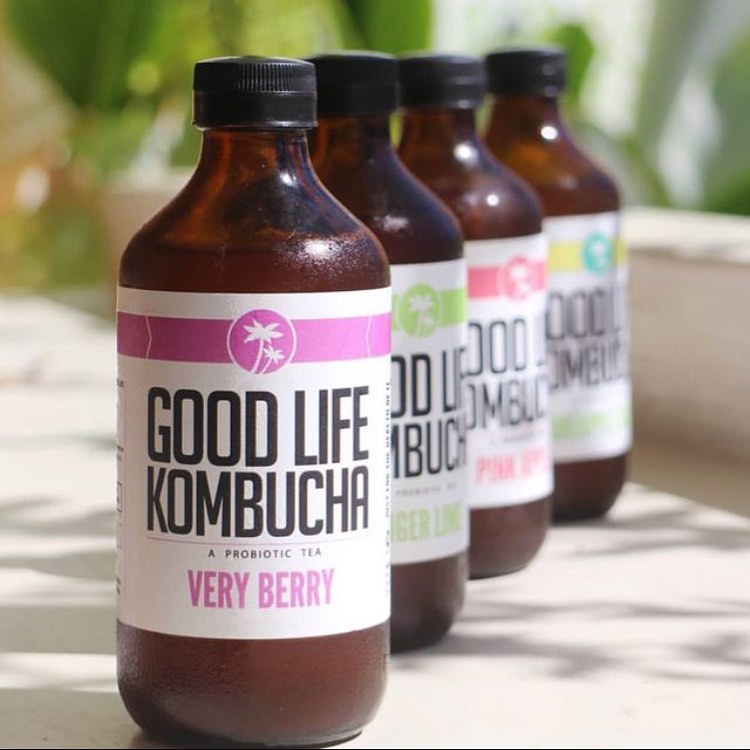
Good Life Kombucha produces fermented beverages with functional characteristics and probiotic positioning. BPOM treatment of kombucha for a PT PMA in Indonesia depends on three variables that interact with each other: the alcohol content generated by fermentation, the specific health or probiotic claim made on the label, and the distribution channel through which the product reaches consumers. Each combination of these variables determines which BPOM registration track applies and which GMP standard the production facility must meet. The article cannot state which track applies to any specific kombucha product because the determination is product-specific and requires BPOM assessment. What the article can state is that the classification must be obtained before the production facility is designed and the formulation is finalised, because the facility requirements differ between tracks in ways that affect capital expenditure, layout, and equipment specification.
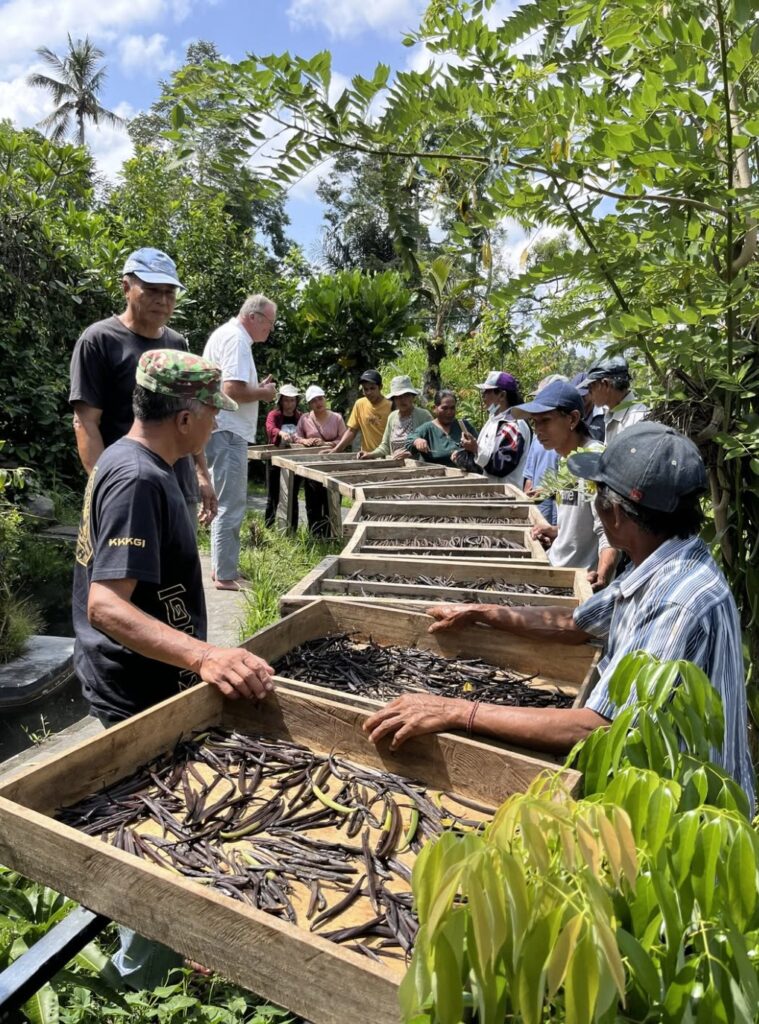
Royal Spice Gardens produces and processes vanilla in Bali, sourcing from local cultivation. The enterprise operates upstream of the processed food sector, in the agricultural ingredient and processing category. Vanilla cultivation and post-harvest processing sit in different KBLI classifications from food manufacturing. Export of vanilla as a processed spice ingredient requires export certification and phytosanitary documentation for destination markets with specific biosecurity requirements. The enterprise’s commercial position depends on producing to a standard that satisfies international buyers for whom provenance, traceability, and certification documentation are as commercially significant as the quality of the product itself. For an agricultural ingredient producer whose revenue depends on export channels, the compliance architecture is the commercial infrastructure.
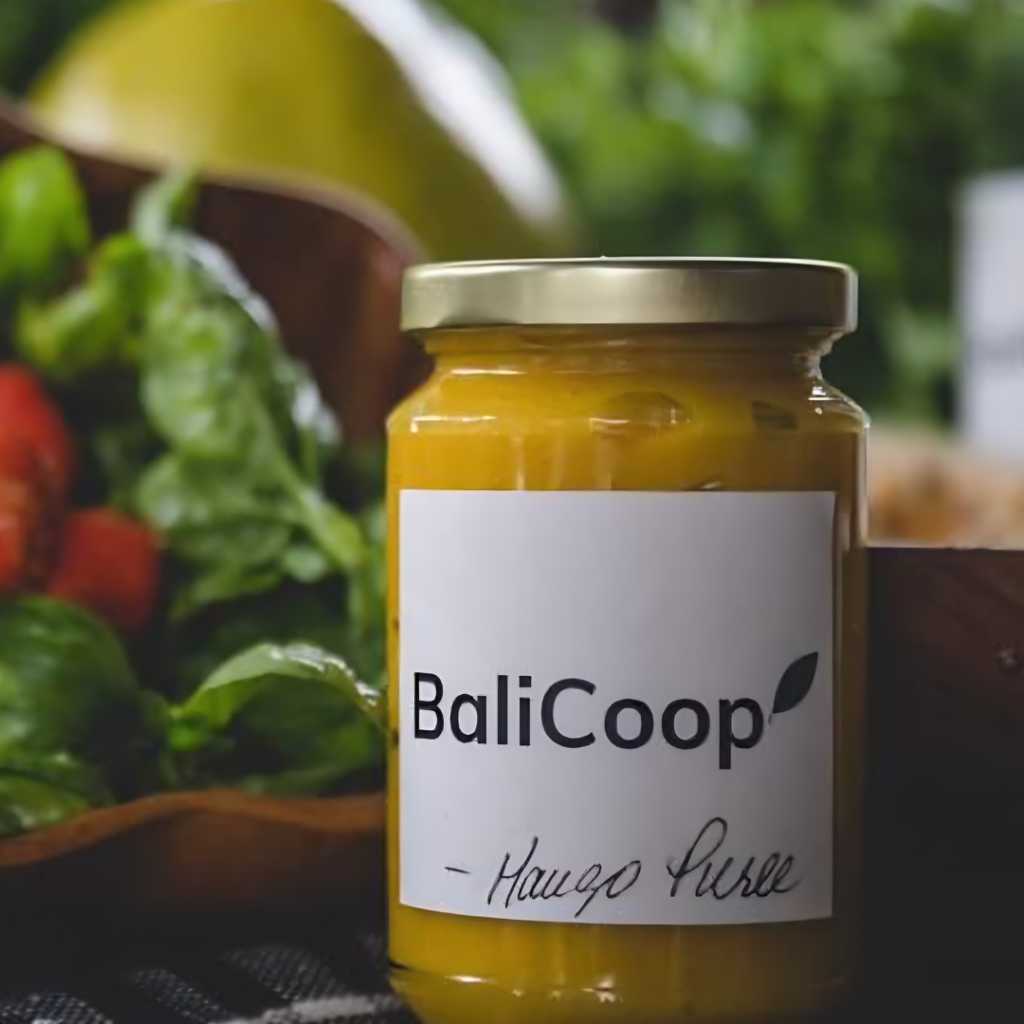
Bali Coop connects organic fruit and vegetable producers to commercial distribution channels, specifically the hospitality, wellness, and premium retail buyers whose procurement requirements exceed what unorganised smallholder supply can reliably meet. The PT PMA’s regulatory obligations for fresh produce distribution cover food safety standards, organic certification for products carrying an organic claim, and the distribution licences required to supply hospitality buyers at scale. Bali Coop’s structure also involves a cooperative arrangement with its producer network, requiring a governance framework that defines the terms of the relationship between the commercial enterprise and the farming households whose produce it markets.
When the Compliance Framework Is Not Followed
TraceWorthy has concluded an advisory engagement with a client in a high-regulatory-risk product category where the enterprise’s actual operations departed from the compliance structure TraceWorthy had designed and the client had committed to maintain. The export pathway for the product had been established on the correct regulatory framework. The client’s domestic market activity did not satisfy TraceWorthy’s assessment of what the regulatory position permitted. The engagement was concluded.
The domestic regulatory status of the product category in question is unresolved between Indonesian ministries, with BPOM and the National Narcotics Agency holding positions that restrict domestic commercial use and the Ministry of Trade simultaneously recognising export as a legitimate economic activity. The export regulation applies to exports. It does not authorise domestic commercial sale. An enterprise that treats the existence of the export framework as implying domestic commercial permission has made an inference that the regulations do not support.
The advisory position TraceWorthy took, and the basis on which it concluded the engagement, reflects a principle that applies across every F&B production advisory relationship. TraceWorthy’s engagement with a client is conditional on the client operating within the compliance structure that has been established. Where a client consistently departs from that structure, the engagement ends. An adviser who continues to represent a client operating outside the framework the adviser built is not providing advisory services. The clients listed in the preceding section maintain their compliance structures. That is the standard TraceWorthy applies to every engagement.
The Alcoholic Beverage Production Pathway
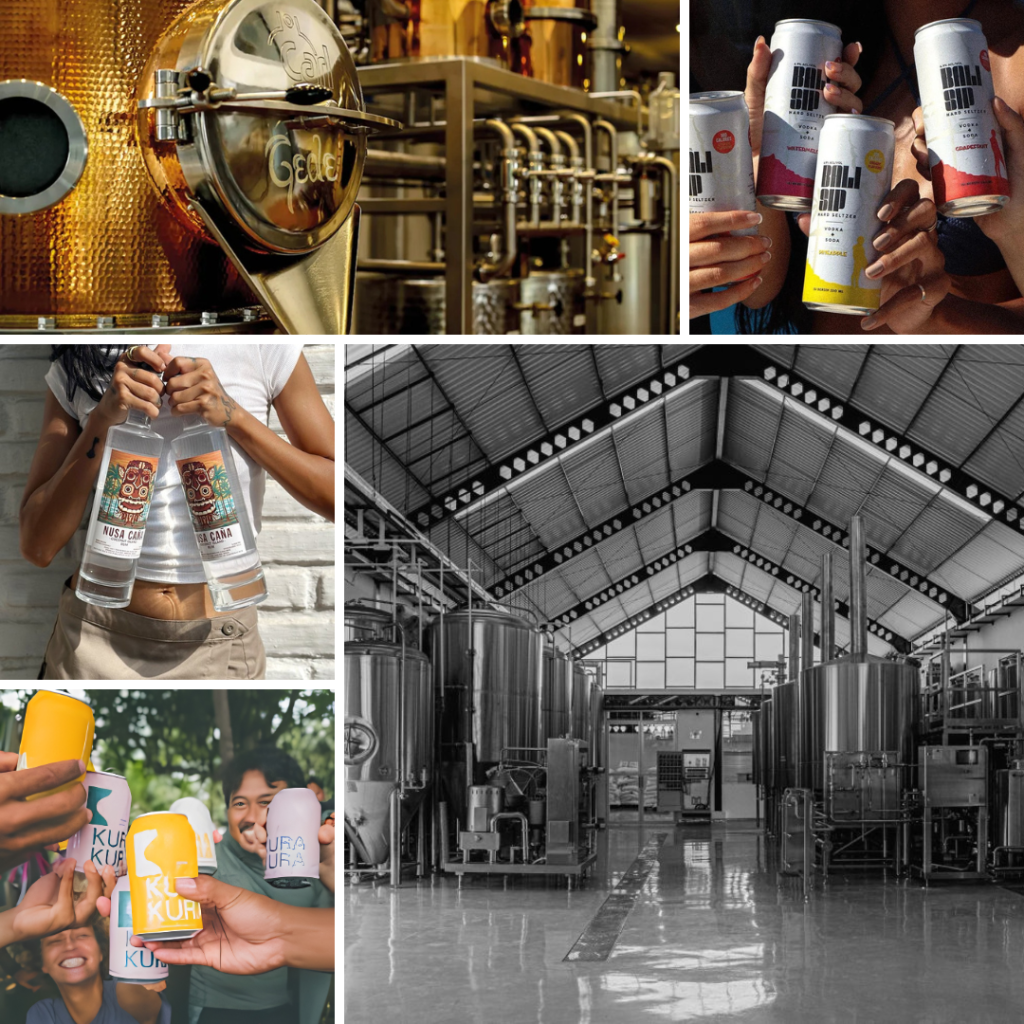
The craft beer, spirits, and specialty beverage landscape in Bali is commercially active and documented in the carousel. Kura Kura Beer, Spice Islands Distilling Co., Black Sand Brewery, Nusa Caña Rum, and the other enterprises listed are producing, trading, and in some cases exporting alcoholic beverage products under Indonesian licenses. The licensing pathway that supports those enterprises is specific, multi-layered, and substantially more capital-intensive than most foreign investors anticipate at the planning stage.
Alcoholic beverage production in Indonesia requires three specific authorisations in addition to the standard NIB and IUI.
SKPL — Direct Seller Permit Issued by class:
Class A (up to 5% ethanol), Class B (5% to 20%), Class C (20% to 55%). Each class requires a distinct permit. A single enterprise producing across classes requires a permit for each.
NPPBKC — Excise Taxable Goods Entrepreneur Identification Number Issued by the Directorate General of Customs and Excise.
Required for all enterprises producing, importing, or distributing alcoholic beverages. The NPPBKC links the enterprise to the excise payment obligation that applies to every unit of product released from the production facility.
IUI with Directorate General recommendation
The Industrial Business License for alcoholic beverage production requires a recommendation from the Directorate General of Agro-Industry within the Ministry of Industry. The production facility must comply with current Good Manufacturing Practices for food products applicable to the relevant product class before the recommendation is issued.
The excise tax structure on alcoholic beverages in Indonesia is high relative to comparable markets and is reviewed periodically. The excise cost is embedded in the cost of goods and affects the margin structure of the enterprise from the point at which production begins. A financial model for an alcoholic beverage production enterprise that does not include excise duty in its cost-of-goods calculation will not reflect the actual commercial position.
Distribution of alcoholic beverages is restricted by provincial regulation across a significant portion of Indonesia. Aceh and West Sumatra are examples of provinces where sales restrictions apply. Bali, with its tourism-driven hospitality economy and its own traditional relationship with local beverages including Arak Bali, operates in a more permissive environment than most Indonesian provinces. An enterprise whose commercial model depends on national distribution of a Class B or Class C product must map the provincial restriction landscape before the distribution strategy is finalised.
Every client who has engaged TraceWorthy at the advisory stage for alcoholic beverage production has examined the full licensing and investment requirement and not proceeded. The capital required to establish a compliant production enterprise across facility specification, licence stack, excise structure, and investment threshold has exceeded the business case in each examination. The article presents this as a pattern, not as a deterrent. An investor who is genuinely capitalised to proceed, who understands the excise structure’s effect on the margin model, and who has confirmed the distribution territory can build a lawful and commercially active enterprise in this category. The licensing pathway is navigable. The investment requirement is specific. The investor’s opening task is to confirm whether the business case justifies the capital commitment before the first advisory appointment is made.
Kratom and the Regulatory Contradiction
Kratom (Mitragyna speciosa) has a regulatory status in Indonesia that is genuinely unresolved at the domestic level, and an investor considering the category needs to understand the contradiction precisely rather than rely on either the export framework or the domestic restriction as a complete description of the regulatory position.
| Regulatory Position | Authority | Applicable Scope |
|---|---|---|
| Prohibited in traditional medicines and health supplements | BPOM | Domestic |
| Supported for classification as Schedule I narcotic | BNN (historical position) | Domestic |
| Recognised as legitimate export commodity requiring Exporter Certification | Ministry of Trade | Export only |
| Export limited to finely ground powder, maximum 25% of production (June 2025 quota) | Ministry of Trade | Export only |
| Domestic commercial sale for consumption: no BPOM approval pathway | BPOM | Domestic |
The Ministry of Trade has confirmed in writing that its export regulations apply to exports and do not constitute authorisation for domestic commercial use. An investor who reads the export regulation as resolving the domestic market question is drawing an inference the regulations do not support.
The domestic commercial sale of kratom for consumption has no BPOM approval pathway and no explicit legal authorisation. An investor who enters the kratom sector on the strength of the export regulation, without establishing that their domestic market activity has a separate legal basis, is operating in a space where the regulatory position has not been resolved by the relevant authorities.
The export pathway has a defined regulatory structure. A production enterprise operating entirely within the export framework, with documented compliance at each step, can be built on a legal foundation. A production enterprise whose commercial model includes domestic distribution channels is building in an unresolved direction. The advisory questions that must be resolved before any investment commitment are product-specific, jurisdiction-specific for the target export markets, and require current regulatory assessment from BPOM and the Ministry of Trade at the time of establishment. Regulations in this category have changed materially in 2024 and 2025 and are under active policy review.
Tabanan Downstream Agricultural Processing Opportunity
Tabanan Regency produces fruit, vegetables, cacao, vanilla, and other agricultural commodities from some of Bali’s most productive farming land. Its agricultural identity is long-established and its farming communities are the custodians of cultivation knowledge and land management practices that have sustained the regency’s economy through generations.
The structural problem that Raja Panji, the King of Tabanan, has identified is not a decline in productivity. It is the absence of a commercial pathway for grade 2 produce.
Fresh markets and hospitality buyers purchase grade 1 produce: the correctly sized, cosmetically uniform fruit and vegetables that meet the visual specification of a premium buyer. Grade 2 produce is the portion of each harvest that meets no commercial fresh market requirement: not through nutritional deficiency or food safety failure, rather through irregularity in size, shape, or appearance. It is nutritionally equivalent to grade 1 produce. In the absence of a processing facility, it is agricultural waste.
The commercial consequence of recurring agricultural waste accumulates over seasons. Farming households whose harvests repeatedly produce a significant proportion of grade 2 produce with no revenue attached rationally reassess whether farming remains economically viable. The next generation makes the assessment again, with additional pressure from urban employment alternatives and the visibility of other livelihoods. The result is not a dramatic collapse. It is a gradual withdrawal from the land and the cultivation practice, visible first as reduced investment in soil management and crop quality, then as land abandonment, and eventually as the loss of the generational farming knowledge that made the agricultural system function.
A cannery at the right scale changes this. Grade 2 produce that cannot be sold fresh can be processed into canned goods, preserved products, dried ingredients, pastes, and frozen pulps with documented domestic wholesale value and export potential in the premium organic and specialty food channels where Indonesian provenance is commercially attractive to international buyers. The processing facility converts agricultural waste into a revenue-generating product line, stabilises the income available to farming households across multiple commodity categories, and creates downstream employment that is structurally connected to and dependent on the agricultural economy it serves.

TraceWorthy has conducted extensive research and planning in this investment through its advisory relationship with Raja Panji, the King of Tabanan. The structural problem is documented. The agricultural economics are confirmed. The commodity categories suitable for processing have been identified, and the product lines with commercial viability in domestic wholesale and export channels have been mapped. The governance framework for the relationship between a processing facility and the farming communities that supply it is under design.
The investment structure has not yet been established. The right partner, specifically a foreign investor with capital capacity for food processing infrastructure, operational interest in agricultural supply chain development, familiarity with the BPOM registration and halal certification requirements for processed food production, and a commitment to the community economic dimension of the project, has not yet been identified.
A foreign investor who recognises this profile as matching their capital position and operational interest should begin the conversation with TraceWorthy. The opportunity is real, it is grounded in a relationship with the traditional head of the Tabanan kingdom whose standing within the farming communities of Tabanan gives the initiative a form of social and cultural authority that no administrative appointment can confer. The planning work that precedes a capital commitment has been substantially completed.
Pre-Establishment Verification
The following verification sequence applies to any F&B production enterprise before incorporation, regardless of product category.
Pre-establishment verification sequence for F&B production enterprises:
- KBLI classification by production activity — Confirm the primary code for the main revenue-generating activity and secondary codes for supporting activities. Verify the OSS investment restriction position for each code under KBLI 2025.
- Investment threshold calculation — Confirm the total investment commitment per regency or city exceeds IDR 10 billion excluding land and buildings. Confirm paid-up capital of IDR 2.5 billion per PT PMA is reflected in the deed of establishment.
- BPOM registration pathway determination — Obtain the applicable registration track for each product before the production facility is specified. GMP standard requirements differ by track and affect capital expenditure.
- Halal certification design — Integrate halal requirements into ingredient sourcing, facility layout, production processes, storage, and packaging before incorporation. Prepare the Halal Product Assurance System documentation from the point of establishment.
- Supporting licence requirements by product type — Confirm whether SKPL, NPPBKC, IUI with Directorate General recommendation, SNI, environmental permits, or export certifications apply to the specific product category and distribution channels intended.
- Supplier documentation — Establish supplier qualification documentation for halal traceability before sourcing agreements are signed. The traceability chain runs from ingredient source through production to finished product.
- Labelling compliance — Confirm all mandatory Indonesian-language label requirements against applicable BPOM regulations before packaging design is finalised. A label that cannot accommodate required information without modification after BPOM registration creates avoidable reprint costs.
- LKPM alignment — Reconcile the investment plan, the paid-up capital commitment, and the production activity against the LKPM reporting schedule from the first filing period.
How TraceWorthy Structures the Investment
TraceWorthy provides advisory support across the full establishment and compliance lifecycle for F&B production enterprises in Indonesia, from initial product category assessment through BPOM registration, halal certification integration, and ongoing compliance management.

The engagement begins with enterprise model selection and KBLI verification. The production activity, the target distribution channels, and the investment capacity determine the applicable classification, the investment threshold calculation, and the supporting licence stack. These determinations are made before the notary appointment, not during or after it.
BPOM registration pathway management is a specific advisory service distinct from general business establishment. TraceWorthy manages the product submission process, the supporting documentation, the labelling review, and the government liaison required to move a product through the registration process without preventable delays caused by incomplete submissions or misclassified products.
Halal certification integration covers the enterprise design from inception through to the Halal Product Assurance System documentation and the BPJPH audit preparation. For clients in product categories with complex ingredient sourcing chains, such as functional beverages or products with imported ingredients, the supplier qualification component of halal certification represents a significant documentation effort that is more efficiently managed from the enterprise design stage than assembled retrospectively.
Agreement drafting for F&B production enterprises covers supplier agreements with ingredient sourcing and quality documentation requirements, distribution agreements with the compliance allocation provisions that protect the producer when a distributor departs from the required handling standard, farmer cooperative or supply framework agreements where the production model involves smallholder supply chains, and export agreements with the documentary requirements applicable to the destination market.
For the Tabanan downstream processing opportunity, TraceWorthy is the advisory and relationship facilitator between a prospective investor and the planning work, the relationship with Raja Panji, and the structural design that has already been completed. The first engagement is a conversation to determine whether the investor’s profile and the investment’s requirements are aligned.
Tax setup covers VAT registration, corporate income tax structure, withholding tax on raw material purchases from smallholder suppliers where applicable, and the treatment of export income for enterprises with both domestic and international revenue. LKPM alignment ensures the investment plan and the production activity are reconcilable from the first filing period.
TraceWorthy’s advisory relationship with any client in the F&B sector operates on the condition that the client maintains the compliance structure that has been established. This is not a standard qualification. It is the basis on which the advisory relationship functions.
Conclusion: The Enterprise Earns the Distribution Rights
Indonesia’s food and beverage sector produces real and growing demand for both domestic consumption and export. Foreign investment in the sector is active and confirmed. The market exists.
The enterprise earns the right to operate in it through the compliance chain that runs from KBLI classification through BPOM registration, halal certification, and the applicable supporting licences to the point at which a product can be lawfully invoiced to a commercial buyer, distributed through a licensed channel, and exported through a documented supply chain. Each element of that chain is achievable. None of it is achievable in the wrong sequence.
The investor who enters the sector with the compliance chain designed from the beginning has a PT PMA production enterprise that can distribute, scale, export, and sustain regulatory scrutiny. The investor who begins producing and fills in the compliance requirements as they become visible will encounter BPOM registration as a gate that prevents distribution, halal certification as a production system redesign, and licence gaps as distribution channel closures. Both investors may be producing identical products. The compliance architecture is what determines whether those products reach the buyer.
TraceWorthy works with F&B production investors at every stage.
If you are evaluating food or beverage production in Indonesia and have not yet incorporated an entity, the starting point is KBLI verification, BPOM pathway assessment for your specific product, and halal certification design before the production facility is specified. The sequence cannot be reversed without cost.
If you have an existing production enterprise and are uncertain whether your BPOM registration status, halal certification position, or supporting licences reflect your actual production and distribution activity under current Indonesian law, a compliance review will define the gaps and the remediation pathway.
If you are an investor with capital capacity and operational interest in downstream agricultural processing in Tabanan Regency, and the structural problem described in this article matches the investment profile you are looking for, contact TraceWorthy to begin the conversation.