
Part of the series: Outposition Your Competition
- Competitive Advantage in Indonesia: Winning the Position Your Rivals Cannot See
- Most Operators Compete by Doing the Same Thing as Their Rivals: Slightly Better or Slightly Cheaper
- Supply Chain Control in Indonesia: How a Domestic Operator Secures Its Place in a Foreign Joint Venture
- Brands Built to Multiply: How an Indonesian Enterprise Scales Without Parting With Capital or Control
- Raising Growth Capital in Indonesia: The Decision That Converts a PT PMDN to a PT PMA
- Service Level Auditing in Indonesia: How a Measured Standard Becomes a Competitive Position
A domestic enterprise competes against rivals that sell what it sells to the buyers it serves. In that contest the advantage goes to the largest balance sheet and the longest endurance, and the margin of every operator in the sector falls together. A competitive advantage in Indonesia rarely comes from doing the same work at a lower price, because a larger rival can match the price and wait. It comes from changing the basis on which the enterprise competes, and that change comes from knowledge carried in from outside the sector. The move that wins is usually one another industry has already proven, and an adviser who has worked across many sectors and several countries can see it where a single-sector operator cannot. The clearest way to show what that means is one piece of work.
This is the first article in a series for established operators of the PT PMDN (Penanaman Modal Dalam Negeri, Domestic Investment Company), named Outposition Your Competition. The expertise a PT PMDN buys from TraceWorthy is forty years of Tracy Wilkinson’s work, applied to the company’s own market. Tracy, the Founder of TraceWorthy, has set up and scaled well over two hundred businesses since 1995. Thirty-five of her forty years have been in the private sector, with for-profit and not-for-profit enterprises across several jurisdictions, and four were in the public sector on two projects she chose in order to bring integrity to the work. That range is the asset a domestic enterprise engages, and the series sets out the positions it makes available, beginning with the position that range found for one Indonesian company.
How TraceWorthy changed the way Jungle Padel competes

Jungle Padel operates clubs for padel, the racket sport whose demand has grown quickly across Indonesia. The shareholders came to TraceWorthy with a plan to win market share by building new clubs at their own cost. The plan was sound on its own terms, and it carried the limits that every capital-funded expansion carries. Each new club consumed the shareholders’ capital and took time to build and fill, and a competitor with deeper pockets could open alongside and wait.
A company growing this way is restrained by the speed its own balance sheet allows, and the position it builds is one a larger rival can match.
Tracy proposed a different basis of competition. Rather than spend capital to own every club, Jungle Padel would license its brand and its intellectual property to operators who build at their own cost, so the business replicates without the shareholders parting with capital. Selling the brand and the intellectual property became the model, in place of selling court time alone. The shareholders keep the system they created, and the licensees fund and run the clubs that carry it.
The result reset the company’s position. Jungle Padel earns from its brand and its system rather than from its own capital expenditure alone, and the model now draws in enterprises from outside sport, in food and beverage, in retail, in wholesale, and in businesses adjacent to a club. Each brings the capability it already runs, so the company does not need to be the expert in everything. A padel operator that once competed on the number of courts it could afford to build now competes on the strength of a brand and a system that others pay to use.
Why TraceWorthy could see the move
The licensing model was available to Jungle Padel because TraceWorthy had seen the same problem solved across many sectors and several countries. It examined how other industries separate the owner of a brand and a system from the capital and the labour that run each outlet. In home maintenance, Jim’s Mowing in Australia built a national network by licensing a brand and a method to operators who buy their own equipment and serve their own rounds. In food and beverage, McDonald’s expanded by franchising a system rather than owning every restaurant. Fitness chains licensed their brand to gym operators, and clothing brands licensed their name to retailers who carry the stock and run the stores. The common structure is that the brand owner earns from the system and the name, and the operator carries the capital and the local execution. Padel had not used that structure, and TraceWorthy carried it across into the sport.
An operator inside the sport treats that growth problem as a building programme. An adviser who has watched other sectors and other countries solve it recognises a licensing opportunity. The models came from other jurisdictions as much as other industries, and TraceWorthy brought the pattern into a market that had not used it, which is where the competitive advantage came from. A single-sector adviser cannot make that connection, because the pattern lives outside the sector it knows.
The judgement that repositioned Jungle Padel is the reason a domestic enterprise engages TraceWorthy, rather than the result it admires from a distance.
Who is Tracy Wilkinson
Tracy Wilkinson is the Founder of TraceWorthy, and the forty years of work experience she brings is the expertise a domestic enterprise engages when it retains TraceWorthy. Thirty-five of those years have been in the private sector, with for-profit and not-for-profit enterprises across several jurisdictions. For profit, she has set up and scaled well over two hundred businesses since 1995.
Much of her not-for-profit work was a single type of problem. An organisation depended on grants and goodwill, and Tracy brought responsibility and accountability into its model and its governance, then taught it to monetise its work so that it relied less on handouts. Health services and organisations in remote communities were among them, each rebuilt to fund itself rather than to wait for the next allocation. Finding the model that lets an organisation fund itself from its own income is the discipline that later found Jungle Padel a model that funds its own growth.
Four of her forty years were in the public sector, on two projects she fought to join in order to bring integrity to the work. She led a whole-of-government evaluation of a major Commonwealth programme, testing whether it delivered what it promised, and she took a research and heritage role representing Aboriginal interests within the native title system. She chose each because the work needed someone who would call it to account.

A business and life coach since 1996, she treats a company and the people who run it as one subject, because a structure performs only as well as the people inside it understand it. Her work has developed other people and their enterprises, and the experience behind it is what a domestic enterprise now engages directly. The move to Indonesia followed a personal turning point. In the years before 2015, she faced a serious, life-threatening illness and was given a short prognosis. She reassessed her priorities and settled in Bali, where she rebuilt her life and built TraceWorthy to apply four decades of method to a new country.
Who is TraceWorthy
TraceWorthy is an advisory firm based in Bali and operating across Indonesia, with a presence in Jakarta. It works in legal drafting, compliance, finance, tax, and immigration, and it advises companies on building and growing a business rather than on filing paperwork alone. TraceWorthy serves domestic companies and foreign-owned companies, and its clients run businesses in countries across Europe, Asia, the Americas, Africa, and Oceania, which is how it has built the cross-border range this series draws on.

The work spans the life of a company. TraceWorthy structures and licenses a business, conducts investment and land due diligence, drafts and negotiates agreements, resolves disputes, manages governance, raises capital, and runs the service level audits that keep a growing network to one standard. It carries over one hundred distinct services, so a company does not assemble a different adviser for each problem as it grows.
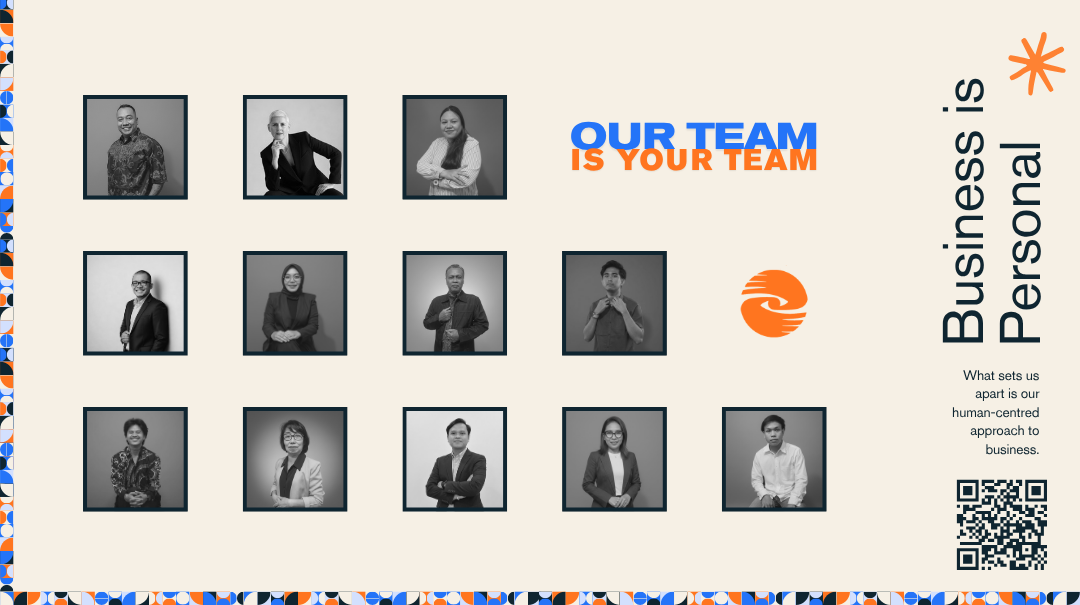
The team is the product. Tracy imparts her method to a team of native Indonesian speakers who work across legal, finance, tax, permits, and compliance, so the experience reaches the whole of an engagement rather than resting with one person, and it reaches it in the language the company works in. This is why TraceWorthy describes its team as the client’s team. A domestic enterprise that engages TraceWorthy retains forty years of method, delivered by people trained to apply it to the company’s own competition, wherever in Indonesia the company operates.
If need be, TraceWorthy works alongside the licensed professionals a company also requires from time to time. For example, a statutory audit is performed by a licensed public accountant, and a notarial act is performed by a notary, so the work TraceWorthy carries is the advisory and the structuring that sit around and inform them.
Why Jungle Padel grew so quickly
The speed of Jungle Padel replication came from the structure. When a company funds its own expansion, its growth is capped by its own capital and by the time each site takes to build. When it licenses its brand and its system, the capital and the construction come from the licensee, and the company adds a market each time an operator signs rather than each time it saves enough to build. Expertise arrives the same way. Because the model draws partners from food and beverage, from retail, from wholesale, and from businesses that sit beside a club, each partner supplies the capability it already runs, and Jungle Padel carries none of the cost of learning every one. The brand, the intellectual property, the licence terms, and the service level audits keep each licensed club to the same standard, so the network grows quickly without the quality falling as it spreads. The competitive advantage sits in the model, which a rival cannot copy without the same range of experience behind it.
The work that the business model is built on
A licensing model works only when the brand and the intellectual property are protected and the licence is enforceable. The brand licensing agreements are drafted to an international standard, and because they involve Indonesian parties they are prepared in the Indonesian language alongside the foreign language, under Law No. 24 of 2009 on the National Flag, Language, Emblem and Anthem (the Language Law) and Presidential Regulation No. 63 of 2019. The governance of a structure with many licensees is managed under Law No. 40 of 2007 on Limited Liability Companies (UUPT, the Company Law), as amended, so that authority and reporting are defined as the network grows.
TraceWorthy is the primary consulting team for Jungle Padel, and the team performs the work that keeps the model running. It conducts the investment and the land due diligence on each site, negotiates the brand licensing agreements, resolves disputes, and carries the expansion across Indonesia. It assists with capital raising and manages the governance as the network grows, and it facilitates the service level audits that keep every licensed club to the same standard, because a brand licensed to others is worth only what the audits protect. The corporate base is not a separate exercise. It is the structure that lets the company take and keep its position.
The market a domestic enterprise competes in
A company competes in its own market, and that market might be one town or the whole country. A restaurant in Jember competes in Jember, while a manufacturer might compete across several provinces, and the series speaks to both, because the method that finds a position applies whether a company serves one city or many. The national picture sits largely away from Bali. Bali accounts for under two per cent of the nation’s land and under 1.5 per cent of its population, while Java generates over 58 per cent of national GDP and contains four of the country’s five largest cities, and the priority industrial regions run from North Sumatra to Sulawesi. TraceWorthy brings the same range to a company serving one town as to a brand intending to reach many markets.
A model designed to replicate through licensing is built to cross from one market into the next, because each new market is entered by a local operator under the brand rather than by the shareholders’ own capital. That is why the Jungle Padel expansion can run across Indonesia. A company without a replicable model competes where it operates, and the same cross-sector approach finds its position there.
What is happening in Bali and why this is an opportunity for domestic enterprises
The present political environment in Bali favours the well-run domestic enterprise. The scale behind the recent measures appears in the Governor of Bali’s letter of 28 January 2026. It records 19,262 foreign-owned companies registered in the province between 2021 and 2025, close to 40 per cent of all such registrations in the country, across 55,458 projects. Of those projects, 47.55 per cent were low-risk activities that required only a Nomor Induk Berusaha (NIB, Business Identification Number), and the province found that a significant share of these companies used the low-risk classification mainly to obtain residency permits, without operating a real business or contributing genuine investment. Through 2025 and 2026 the authorities in Bali investigated foreign-owned companies across the province and sanctioned over four hundred of them for licensing and reporting failures, including operating outside their approved business activities. In May 2026 the Ministry of Investment, acting on a request from the Governor of Bali, blocked all new low-risk and medium-low-risk business classifications for foreign-owned companies across the province. In February 2026 the province criminalised nominee land arrangements under a provincial regulation, and enforcement has included the demolition of unlicensed structures. The stated aim across these measures is the protection of local enterprises and the improvement of investment quality.
A compliant Indonesian-owned company now operates in sectors that new foreign-owned entrants can no longer enter, and it can attract investors and partners on the strength of its own legitimacy, at a moment when many foreign-owned operators are constrained. What the enterprise needs is the corporate knowledge that companies such as Jungle Padel have already taken advantage of – TraceWorthy’s, led by an advisor who has built companies for forty years. This applies equally to Bali-based enterprises that want to take up the gaps that are appearing in historically foreign investment dominant sectors, and enterprises based in Jakarta or Bandung, Surabaya or Medan. TraceWorthy’s experience is accessible wherever you are in Indonesia.
The positions this series takes
The Jungle Padel sequence shows four positions, and the series takes each in turn.
- The article on the niche shows how an enterprise finds a position its rivals have not seen, as the licensing model changed the basis on which Jungle Padel competes.
- The article on supply and authority shows how an enterprise draws on the expertise and the supply chains of partners and becomes the brand a buyer trusts, as the model now draws enterprises from outside sport.
- The article on scaling shows how an enterprise replicates a working model across locations and markets without breaking, as the licence lets Jungle Padel grow without spending its own capital, and how it pivots when the market moves.
- The article on growth capital shows what changes when a domestic company takes foreign investment and converts to a PT PMA, and how the enterprise structures capital and partnership deliberately.
Find the position that fits your enterprise
The position that changed Jungle Padel was available because Tracy had seen how other industries, in other countries, solved the same problem, and because the team she has trained can leverage that approach into the detail of the work the company performs. That is the depth an enterprise engages when it works with TraceWorthy, applied to its own market, so the position it finds is the one its competitors have left open. The result is reproducible, because it comes from forty years of method and range rather than from a single idea.
TraceWorthy works with established Indonesian enterprises that intend to outposition their competition and to be ready for the parties they choose to attract. To find the competitive advantage that fits your enterprise, contact the TraceWorthy team.
This article provides general information on operating and competing as a domestic enterprise in Indonesia as at June 2026 and does not constitute legal, tax, or accounting advice. Regulations and thresholds change, and the position for any individual company depends on its sector, its structure, its licensing, and its circumstances. Obtain advice specific to your circumstances before acting on any point set out above.