
Current as at 20 July 2026.
When an Indonesian company is registered, the proof that its shareholders paid for their shares can be a statement the company’s own officers sign. Article 6 paragraph 1(e) of Peraturan Menteri Hukum Nomor 49 Tahun 2025 (Permenkum 49/2025, the regulation on company registration procedure that replaced its 2021 predecessor from 11 December 2025) accepts, as evidence of a cash contribution, either a bank slip or bank certification in the company’s name, or an original statement that the capital has been paid, signed by all members of the board of directors, together with all the founders (pendiri, the incorporators named in the deed of establishment) and all the commissioners. This proof is given at establishment, which is where an unfunded figure first enters the record, and no bank confirms that the money reached the company.
A funded company and an unfunded one that recorded the same figure on a signed statement produce an identical public record. A buyer, a lawyer, a notary, and an accountant reading the deed and the company record at the Ministry of Law (Kementerian Hukum) see paid-up capital in full in both. In practice this means you can pay full price for a company whose bank account is short of what its records claim, and the shortfall becomes yours. The document that would separate the two, evidence that cash reached the company, is not part of the file the buyer inspects on a share purchase.
We wrote this for four readers: the shareholder asked to sign that the capital is paid, the buyer pricing a purchase of shares in an Indonesian company off a register and a set of accounts, the lawyer or notary drafting the transfer, and the accountant who has to present the position. Each reader owns a different part of the same exposure, and unpaid share capital is a subject few of them examine before the shares are transferred.
Three kinds of capital, and which one is cash
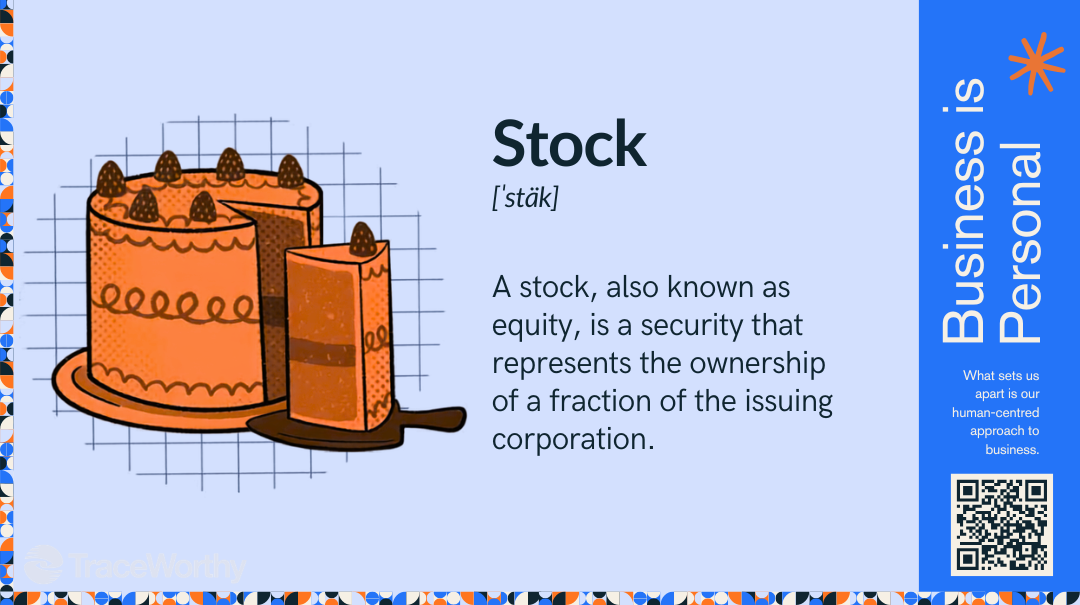
Indonesian company law separates three figures.
- Authorised capital (modal dasar) is the ceiling a company may issue.
- Issued or subscribed capital (modal ditempatkan) is the portion shareholders have agreed to take up, meaning the shares they have subscribed for, or agreed to take and pay for.
- Paid-up capital (modal disetor) is the portion the shareholders have actually paid to the company.
Only the third figure represents money received.
A register that shows a large issued capital tells a reader nothing on its own concerning cash inside the company. The figure that answers that question is the paid-up capital, and the paid-up capital is exactly the figure the registration process will accept on a signed statement.
In Indonesian law, a share is paid or it is not issued
The Undang-Undang Perseroan Terbatas (UUPT, the Company Law), Law Number 40 of 2007, requires that at least a quarter of the authorised capital be issued and paid in full, proven by valid evidence of payment, under Article 33. Article 33 also requires that every later issuance of shares to increase the placed capital be paid in full at the time of issue. Indonesian law does not recognise the partly-paid or instalment share that exists in some other systems. A share is either paid for or it is not validly issued.
Article 34 permits payment in cash or in another form, and a non-cash contribution must be valued at fair value, according to market price or by an appraiser who is not affiliated with the company. An overstated contribution in kind reaches the same result as an unfunded cash subscription, which is a recorded paid-up figure that real assets do not support.
The full-payment rule means that any gap between recorded paid-up capital and cash received is an unpaid obligation that should never have been recorded as paid, and not a permitted deferral. That obligation is the debt this article concerns, and it is owed to the company by whomever subscribed for the shares.
Capital paid in kind, and the sweat-equity trap
Payment for shares does not have to be cash. Article 34 of the Company Law permits a contribution in another form, and a contribution in kind must be an asset, tangible or intangible, valued at fair value according to market price or by an appraiser who is not affiliated with the company, and actually received by the company. Skill, labour, and services do not meet that test. Personal expertise remains with the person who has it, so it is not an asset the company can receive and value, and Indonesian company law does not recognise it as payment for shares in a PT, in contrast with a civil partnership under the Civil Code, where labour may be contributed.
Sweat equity, the practice of granting a founder or a worker shares in exchange for effort rather than money, does not satisfy this rule. Recorded as paid-up capital, sweat equity is either capital that was never funded, because no asset reached the company, or a contribution in kind that fails the valuation the law requires. It produces the same record this article concerns, a paid-up figure with no real asset behind it.

Several lawful routes reach the same commercial end without the defect. A founder can contribute cash and be rewarded for the work separately, through salary or fees. A company can operate an employee or management share scheme, using the exception to pre-emptive rights that Article 43 allows for shares issued to employees. Where the work has been done and the company owes a genuine, quantified debt for it, that debt can be converted into shares by set-off under Article 35, with the approval of the general meeting, which is the mechanism a debt-to-equity conversion uses. Each of these gives the shares a real asset, cash or a valued claim, which sweat equity recorded straight into paid-up capital does not.
Vesting, and where it meets the full-payment rule
Vesting is the usual way a founder or an employee is given equity for effort over time, and it answers to the same two rules. Shares must be paid in full when they are issued, and effort is not one of the forms of payment the law accepts. A scheme that issues shares now and treats them as earned through future service records paid-up capital that no asset has funded, which is the defect this article concerns.
The designs that stay inside the rules keep the shares paid at the moment they are issued. An option grants the right to acquire shares later, and the shares are issued and paid for in cash on exercise, after the vesting condition is met, so Article 33 is satisfied when the shares come into existence. Reverse vesting has the founder pay cash for the shares at the outset, which funds the capital, with a buy-back right over the unvested portion if the founder leaves before the shares vest. A company buy-back is limited by Article 37 of the Company Law to 10 percent of the issued capital and a maximum period of three years, so the buy-back right is often given to the other shareholders instead. On a share sale, unvested shares, open options, buy-back rights, and leaver terms all change the real paid-up position behind the register, so the verification reaches them as well. We set this out in full in our companion article on founder and employee equity in Indonesia.
Why the register can say paid when no cash reached the company
The company’s officers declare the capital paid. The notary records the declaration in the deed. The general legal administration system (Administrasi Hukum Umum, AHU) at the Ministry of Law accepts the electronic filing, and the company receives legal-entity status and a record that shows the capital paid in full. Two records show the capital: the register of shareholders the company keeps itself, under Article 50 of the Company Law, and the company record the Ministry maintains in AHU, under Article 29, which is the one a buyer relies on. Neither is tested against a bank account.
A notary authenticates what the parties declare. A notary who receives a signed statement of payment is not engaged to audit the company’s bank records, and the regulation does not require one. This is a familiar limit in our work: a check run by a notary is narrower than an independent investigation, and the same limit applies to proof of capital deposit. The signed statement satisfies the registration requirement without answering the question a buyer actually needs answered.
Two companies, one funded and one not, therefore have the same register and the same deed. The buyer who relies on those documents acquires whichever of the two the seller actually formed, and nothing on the public record distinguishes them.
The same gap on a later capital increase
The subject is not confined to the day a company is formed. A company can raise its capital later, and the full-payment rule is identical, because Article 33 requires every issuance of shares to increase the placed capital to be paid in full at the time of issue. A capital increase is approved by the general meeting under Article 41, and the new shares are offered first to the existing shareholders in proportion to their holdings under Article 43, subject to the exceptions for shares issued to employees, to holders of convertible bonds, and on a reorganisation.
The proof of payment on an increase has the same weakness as the proof at establishment, and arguably a wider one. Under Permenkum 49/2025, the deposit for an increase can be evidenced by a bank record in the company’s name, by the company’s own current-year balance sheet, or by other proof of deposit. A balance sheet the company prepares itself can stand as the proof that the increased capital was paid, and no bank is required to confirm it. Unfunded capital can therefore be recorded on any increase, not only at incorporation, and the defect can arise in any round the company has raised.
For a buyer, this adds to what must be checked. The paid-up capital on the register may be the sum of an original subscription and several later increases, and each round is a separate point at which the money may or may not have reached the company. The verification has to reach every increase, not the formation alone.
The transfer, and the unpaid subscription it includes
A transfer of shares in an Indonesian company is effected by a deed of transfer, delivered in writing to the company, recorded by the board in the register of shareholders, and notified to the Ministry within 30 days, under Article 56 of the Company Law. The articles of association may add pre-emption rights and an approval requirement under Article 57. None of these steps requires anyone to prove that the shares being sold were paid for in the first place.
A transfer does not cure a defect the shares already had, so where the subscription was never funded, the buyer acquires shares that are recorded as paid and were not. The rights those shares confer, including at a general meeting, can then be challenged, because the capital behind them was never paid. A buyer who assumed that a purchase of 100 percent of the shares delivered clean voting and dividend rights may find those rights open to question.
Who owes the money after completion
The obligation to pay for subscribed shares rests on the subscriber. Our reading is that this is a personal debt of the person who originally subscribed, and that it does not pass to a buyer by the transfer of the shares alone, without an express assumption of it. That reading is not settled by any single provision of the Company Law, so we do not rely on it. Once 100 percent of the shares have been transferred, the company, or a later liquidator, may pursue the seller who never paid, the buyer as the new registered holder, or both, and the documents of the sale should resolve the point rather than assume the register is true.
Limited liability is also less secure than it appears. Article 3 of the Company Law lists circumstances in which a shareholder loses that protection, among them the unlawful use of company assets that leaves those assets insufficient to pay the company’s debts. Unfunded capital is a failure to contribute rather than a use of assets, so the exception does not plainly apply. A creditor may still raise it, and the position is contested, which is a further reason to fund the capital rather than rely on the register.
What the financial statements do not verify
The presentation of share capital in the accounts is governed by an accounting standard, and that standard requires the paid and the unpaid to be shown separately. Under Indonesian financial accounting standards (Pernyataan Standar Akuntansi Keuangan, PSAK), the current presentation standard is PSAK 201, Penyajian Laporan Keuangan (Presentation of Financial Statements), which practitioners still call PSAK 1 and which the Indonesian Institute of Accountants renumbered from 2025. Paragraph 79(a) requires a company to disclose, for each class of shares, the number issued and fully paid separately from the number issued and not fully paid. PSAK 118, which adopts the international standard IFRS 18, replaces PSAK 201 from 1 January 2027, and the same fully-paid disclosure remains under it. Accounts that present the whole issued capital as fully paid, when part was never funded, breach the requirement.

For a buyer, the practical question is whether the accounts show the unpaid capital honestly or hide it. An unfunded subscription has two honest presentations and one dishonest one. The company may record a receivable from the shareholder (piutang pemegang saham) as an asset, where collection from the subscriber is genuinely expected. It may present the unpaid portion as a deduction within equity, where collection is doubtful. The dishonest presentation records the capital as fully paid and reports an asset that does not exist, and a set of accounts prepared that way is the one a buyer cannot detect from the totals.
A buyer who prices a purchase off the balance sheet relies on the asset side being real. A receivable from a departing shareholder, once that shareholder has sold the shares and left, is a claim against a person with no remaining stake in the company. Where the missing amount was instead concealed in cash or another asset, the buyer has paid for equity that is not there. An audit opinion does not close the gap either, because it addresses whether the statements follow the standards, and not whether a deposit slip from the year of incorporation was genuine.
There are tax consequences as well as accounting ones. Where the unpaid balance is treated as a loan owed by a related party, the arm’s length principle in Article 18 of the Income Tax Law, now detailed in Minister of Finance Regulation Number 172 of 2023, allows the tax authority to tax the company as if interest had been charged on it, because related parties are required to deal on the terms independent parties would. Whether an unpaid capital subscription is a loan of that kind is contestable, so this is an exposure to weigh rather than a settled charge. A company treated this way faces an argument that it should have recognised interest income across the years the sum was owed, and that historic exposure passes to the buyer with the company, because the cash paid at completion does not erase it. A paid-up capital figure that was never funded also distorts any later step that depends on it, whether a capital reduction, a dividend, a debt-to-equity calculation, or a further issue of shares.
Curing the gap on a share sale
The remedy we use, which we call the payment-instruction split, directs the buyer’s completion money into two separate payments instead of one. The first payment goes to the seller, as the price for the shares. The second payment goes to the company, in an amount equal to the seller’s unpaid capital, made on the seller’s behalf while the seller is still the subscriber, to discharge the subscription debt before the shares are transferred.
Take a company recorded as having paid-up capital of Rp10 billion, where Rp2.5 billion actually reached the company and Rp7.5 billion was recorded on a signed statement. The seller owes the company Rp7.5 billion. The parties negotiate a price of Rp25 billion for 100 percent of the shares, set on the basis that the company is fully funded. The completion instruction then reads as follows.
| Payment | Amount | Destination | Character |
|---|---|---|---|
| First | Rp17.5 billion | Seller | Price for the shares, net of the seller’s unpaid subscription |
| Second | Rp7.5 billion | The Company | Settlement of the seller’s unpaid subscription |
| Total | Rp25 billion | Consideration for 100 percent of the shares |
The figures are illustrative. The correct accounting and tax treatment depend on how the shortfall was first recorded and on each party’s own position.
Where the company’s accounts recorded the capital as funded against an asset that does not exist, the accounts have to be corrected before the payment can be booked. Because the split makes the collection certain, the shortfall is restated as a receivable from the shareholder, as a correction of a prior-period error under the accounting standards. Only once that receivable is on the books can the completion payment clear it.
The company then records the second payment as collection of that receivable, debiting cash and reducing the receivable from the shareholder. Where the receivable had been written down as doubtful, its later collection is recognised in profit or loss; otherwise the entry has no effect on profit, because the company has received capital it was always owed. After the entry, and once the shortfall has been quantified and funded in full, the paid-up capital is genuinely backed by cash the company has received, and the paragraph 79(a) disclosure of fully paid can then be made truthfully.
The Rp7.5 billion is cash the buyer funds in full, and it adds no value in itself, because the company only gains the cash the buyer has put in. What the cure gives the buyer is a funded company, a doubtful receivable removed, and rights no longer open to challenge on the ground that the capital was unpaid, while the return on the purchase comes from what the business earns. The seller applies part of the price to finish paying what was owed, and does not receive money for capital the seller never contributed.
The tax result depends on who the seller is, and it should be settled in writing before completion rather than assumed. Where the seller is not an Indonesian tax resident, the sale of shares in an Indonesian company is taxed under Article 26 of the Income Tax Law and Minister of Finance Regulation Number 258/PMK.03/2008 at 5 percent of the gross price, and the buyer, or the company itself where the buyer is also non-resident, has to withhold it. That charge is calculated on the whole price and is not reduced by directing part of the money to the company, though a treaty can lower or remove it where the seller provides a certificate of domicile. Where the seller is a resident, the gain is taxed as income. Discharging the subscription out of the price counts as both proceeds the seller has realised and cost the seller has now contributed, so it is neutral for the gain in itself and neither creates nor removes tax on the sale. The seller’s gain depends on the price against the seller’s cost, which the tax office measures on the facts, so the position has to be confirmed rather than relied on from this article.
The original statement of payment, if the money never reached the company, is a separate exposure, and the funding at completion does not undo it. We advise on that exposure as part of the same work.
Several routes reach the same result, and setting them side by side shows why we prefer the payment instruction.
| Route | Who funds the shortfall | Weakness |
|---|---|---|
| Payment-instruction split | Seller, out of the sale proceeds at completion | Requires the shortfall to be quantified before completion |
| Price reduction, buyer injects later | Buyer | Buyer funds the company and takes execution risk after completion |
| Pre-completion cure by the seller | Seller, from own funds before signing | Ties up the seller’s own cash, and its opportunity cost, before the price is received |
| Formal capital reduction to the real figure | No one; the stated capital is cut | Creditor process and Ministry approval; the stated capital falls |
| Indemnity or escrow holdback | Seller, through a retained sum | A claim to pursue later, not cash in the company today |
The payment instruction uses the buyer’s completion payment as the funding source and puts the cash into the company in the same step that discharges the seller’s debt. It resolves the position with money at completion rather than with a promise afterwards, which is why we prefer it to a warranty or an indemnity from a seller who may be resident abroad and no longer reachable by the time a claim arises.
The character of the second payment has to be fixed in the sale documents, because the accounting and the tax both depend on it. The payment settles the seller’s outstanding capital subscription, made on the seller’s behalf out of the price, and the documents must say so. Described as additional price to the seller, it would leave the company unfunded and misstate the seller’s proceeds. Described as a loan to the company, it would create a liability where equity is intended. The capital is already recorded, so the payment settles an existing subscription rather than issuing new shares. A completion deliverable is then the bank evidence that the money reached the company, replacing the original signed statement as the proof of capital deposit that supports the register.
The verification we run before completion
The remedy operates only once the gap is known, so the work begins with detection, which we run as a capital-deposit verification. We do not take the signed statement as proof. We trace the paid-up capital to the company’s own bank records, at formation and at every later increase, test each deposit against the event it belongs to, look for cash withdrawn soon after it was paid in, check any contribution in kind for overvaluation and for services that cannot be capital, and follow related-party payments that circle back to the subscriber. We quantify the shortfall against the figure the register shows, build the split into the completion, and take the bank evidence of receipt as a completion deliverable. This is the work a notary and an ordinary transaction checklist do not run.
For a seller preparing to sell, the same work done early removes a problem from the negotiation before a buyer’s adviser finds it. For a buyer, completing the cure funds the company, clears the doubtful receivable, and answers the challenge to the rights on the ground of unpaid capital. For the lawyer, the notary, and the accountant, it brings the company’s records back into agreement with the cash it actually received.
How TraceWorthy helps
The TraceWorthy team runs the capital-deposit verification, quantifies any shortfall against the register, and designs the completion to fund it and to support the register with bank evidence. We draft the transfer documents so the payment to the company is characterised correctly for accounting and for tax, and we settle the tax position, including any withholding on a non-resident seller, before completion.
This is advisory work rather than a filing service. A filing service records the transfer and does no more. We establish whether the register is backed by cash, correct the funding position through the sale itself, and put the tax and reporting consequences in place before completion rather than after the first audit.
If you are buying or selling shares in an Indonesian company, or advising a party to such a sale, ask for the paid-up capital to be verified against the company’s bank records, and for any shortfall to be quantified, before the deed is signed. Speak with our team, and we will run that verification and build the completion around it.
This article is general information current as at 20 July 2026. Company law, accounting standards, and tax rules change, and the position for any transaction depends on its own facts, so obtain advice for your own situation before you act. It is not legal, tax, or accounting advice, and it does not create an advisory relationship or reach any conclusion on a particular reader’s position.
Frequently Asked Questions
Can shares be issued and paid for in instalments in Indonesia?
No. The Company Law requires shares to be paid in full when they are issued, and every later issuance to increase the placed capital must also be paid in full. There is no lawful partly-paid share. A figure recorded as paid-up capital that was not funded is an unpaid obligation to the company, and not a permitted deferral.
How can a company show paid-up capital that was never contributed?
Because the registration process accepts a signed statement as proof of a cash contribution, under Article 6 paragraph 1(e) of Permenkum 49/2025, as an alternative to a bank slip. The statement is signed by the company’s directors, its founders (pendiri, the incorporators named in the deed of establishment), and its commissioners, and no bank confirms the deposit, so the register shows the capital as paid whether or not the money reached the company.
If I buy 100 percent of the shares, do I inherit the unpaid capital?
You inherit the economic position with certainty: the company is short of the cash its records claim, and you own that shortfall. Our reading is that the debt to pay the capital is a personal obligation of the original subscriber that does not pass to you by the transfer alone, without an express assumption; that reading is not settled by statute, which is the reason the sale documents should resolve the point rather than assume the register is true.
How do we verify the paid-up capital before completion?
We run a capital-deposit verification: we trace the paid-up capital to the company’s bank records rather than the signed statement, quantify any shortfall against the register, and direct part of the completion money to the company to discharge the seller’s unpaid subscription. The bank evidence of that payment becomes the proof that supports the paid-up capital going forward.
Does the payment-instruction split cost the buyer extra?
No. The buyer pays the agreed price for a funded company and directs part of it to the company instead of all of it to the seller, so the buyer does not pay twice. The seller receives the price net of the capital they never contributed, and the company receives the cash it was owed.
Can services or sweat equity count as paid-up capital?
Not directly. The Company Law allows payment for shares in cash or in an asset valued at fair value, according to market price or by an unaffiliated appraiser, and actually received by the company, and personal skill or labour is not such an asset. Sweat equity recorded as paid-up capital is either unfunded capital or an unsupported contribution in kind. The lawful routes are to pay cash and reward the work separately, to use an employee share scheme, or to convert a genuine, quantified debt the company already owes for work done into shares by set-off under Article 35 with the general meeting’s approval.
Do these rules apply to a later capital increase?
Yes. Every issuance of shares to increase the capital must be paid in full at the time of issue, and on an increase the proof of payment can be the company’s own current-year balance sheet or other proof of deposit, with no bank required to confirm it. Unfunded capital can arise on any increase, so the verification has to cover each round, not the incorporation alone.