A client asks, “Can you do it cheaper?” It rarely means they doubt your competence. More often, it means they feel exposed. They are trying to reduce decision uncertainty with the one variable that looks easy to control: price. The problem is that the same uncertainty that drives the question is also the reason value over price matters. When the work is complex, outcomes endure only when the scope is complete, ownership is explicit, and evidence is built as you go, not reconstructed later.
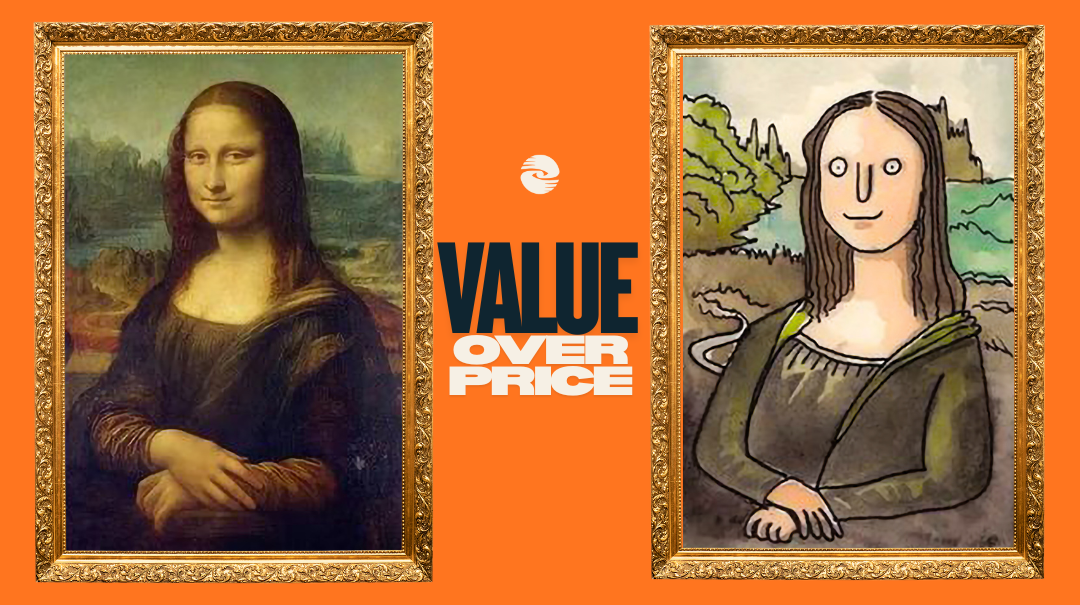
Choosing value over price is choosing the proposal most likely to produce the specific outcomes you want to last, with the evidence and ownership that keep them working over time. That is a human decision before it is a commercial one.
Why people default to price
This article is not a lecture about “better choices” or a pitch to engage us without due consideration. It is a map of normal buyer psychology under pressure, and how to guide the conversation back to outcomes without pushing or posturing.
Risk transfer and loss aversion
When the work is complex, paying more can feel like a loss, even when it buys protection. Behavioural economics formalised this in Prospect Theory: people tend to weigh losses more heavily than equivalent gains, which helps explain why a visible saving can feel safer than a less visible improvement in outcomes.
If a buyer is feeling this pull, arguing about “quality” rarely helps. Converting the conversation into comparable trade-offs helps. A small saving now versus a larger risk of rework later is easier to evaluate than a saving now versus a promise later.
Too many choices and decision fatigue
When people face too many similar options, interest rises but action falls. In a field study, a 24-option display drew attention yet only about 3 percent purchased; a six-option display converted roughly 30 percent.
Later analysis shows the effect is context-dependent, which strengthens the case for structuring the decision rather than collecting endless quotes.
In practice, this is what decision fatigue looks like: your client has five “almost identical” proposals, no common definition of deliverables, and no time to reconcile differences. Price becomes the only visible comparison, and “cheaper” becomes the default.
What this means for the reader: do not accumulate quotes. Curate them. Reduce options to a small shortlist, then use a structured method so the decision is about outcomes, not document formatting.
Present bias postpones necessary work
People often put off tasks that take effort now, even when delaying makes the outcome worse later. Economists O’Donoghue and Rabin describe this pattern as present bias: choosing short-term comfort over better long-term results.
For example: a founder is asked for two half-days this month to assemble an evidence pack that future inspections will require. The founder postpones it because the effort is immediate and the benefit is later. Months pass. A deadline appears. The team pays in overtime, disruption, and stress. The work was never optional, it was merely delayed. Present bias turned a planned task into an emergency.
This is where value over price becomes practical. A higher-fee proposal that includes evidence discipline and ownership is often the proposal that avoids late-stage disruption.
Ambiguity aversion rewards simplified stories
When pathways and probabilities are not clear, people prefer options with fewer unknowns. This pattern is the core of Ellsberg’s paradox, which shows a preference for known risks over ambiguous risks, even when the underlying expected value is comparable.
In professional work, the “unknowns” are usually sequence, approvals, dependencies, and evidence. A pared-back quote can feel easier because it avoids describing uncomfortable details, even if it removes safeguards that protect the outcome.
For example: Proposal A is specific: steps, approvals, named owners, pass criteria, and where each record will live. Proposal B is smooth: “we will handle it” and a lower fee. The simpler story feels safer, not because it is safer, but because it avoids uncertainty. Choosing value over price means resisting the comfort of the vague story and selecting the plan that makes the unknowns manageable.
Sunk-cost effect keeps weak options alive
Once time or money has been invested, people are more likely to persist with a poor option rather than reset. The classic sunk-cost research shows how prior investment increases commitment even when changing course is rational. This distorts vendor selection after lengthy discovery phases.
For example: a team spends six weeks in workshops with Vendor X. The proposal arrives thin: no acceptance criteria, no evidence plan, no named owner. Vendor Y submits a stronger plan. The team still chooses Vendor X because abandoning six weeks feels like waste. Three months later, rework is required, delivery slips, and the total cost exceeds Vendor Y’s quote. The buyer did not choose badly because they lacked information. They chose badly because they were trying to redeem sunk time.
A simple reset rule helps: treat discovery as learning, not a commitment device. If the best plan changes after discovery, change vendor.
Cognitive load in complex regulation
Human working memory is limited. Acronyms, systems, and overlapping authorities create mental overload. As task complexity rises, people simplify decisions to reduce effort, often by focusing on a single salient attribute such as price. Cognitive Load Theory explains how intrinsic complexity strains working memory and degrades decision quality.
A structured comparison that focuses on outcomes restores perspective: scope depth, evidence, renewals, ownership, and risk controls.
What quality feels like to a client
A client rarely describes value in abstract terms. They describe how it feels to work with a team.
- Relief because there is one accountable steward and a visible sequence.
- Competence because explanations link to process and source, not slogans.
- Safety because evidence exists, renewal triggers are diarised, and there is a defined alternative route if an authority declines.
- Progress because milestones close and records arrive without prompting.
This is the lived experience of value over price. It is not that the higher price is necessarily “premium”. It is more likely that the service with the highter price is predictable.
Conversation prompts that move beyond price
When a client asks if the work can be done cheaper, respond by returning to outcomes, evidence, and ownership, then quantify the trade-offs in time, rework, and exposure.
Scope reality check
What result must exist ninety days from now, and who will verify it. Ask for the end state in measurable terms and the artefacts that prove it.
Risk conversion
If a step is removed, which exposure increases: time, penalties, or rework. Discuss the trade with real numbers and examples.
Evidence anchor
When the file is reviewed at renewal, which documents must be on record and where will they live. This converts promises into records that are easy to find later.
Ownership and a defined alternative route
Who is the named file manager. Who covers leave. If the authority declines, what is the pre-agreed alternative route and who authorises the switch.

These prompts turn a price negotiation into proposal evaluation based on outcomes, evidence, and ownership. They also reduce FOBO (Fear of a Better Offer) and decision fatigue because the decision becomes structured.
Red flags that create rework and penalties
This section is deliberately comprehensive. It is a buyer’s filter. Use it to decide whether a proposal is even worth comparing.
Typical early signals
Red flags often appear as small inconsistencies, missing named owners for tasks, approvals, and records, or vague timelines. A 2025 global study by F-Secure found that 69 percent believed they could identify scams, yet 43 percent of them still became victims within the year. That gap between confidence and outcome has a close cousin in procurement: people proceed because they think they can “manage it later”.
1) Scope and outcomes
- Deliverables are described in broad terms, not measurable outcomes.
- No working definition of “done” per milestone.
- Test: “What will exist on this date, who verifies it, and where is the evidence stored.”
2) Governance and accountability
- No single accountable file or project manager; responsibilities are scattered.
- No escalation path or response-time commitments.
- Test: “Name the owner for each workstream, decision, and record.”
3) Evidence and acceptance
- Artefacts are not listed; acceptance criteria are absent or subjective.
- No plan for file structure, version control, or access.
- Test: “Show a sample artefact index and where completed records will live.”

4) Schedule and dependencies
- Dates are quoted without third-party lead times or prerequisite tasks.
- Critical path is not identified; slippage plans are missing.
- Test: “Which tasks are on the critical path and how will delays be absorbed.”
5) Pricing and change control
- Headline fee with vague inclusions and exclusions.
- Variations are handled informally or only after work starts.
- Test: “Price by deliverable; show the variation method and approval steps.”
6) Risk management
- Risks are described generically; no mitigations or fallback routes.
- No pre-agreed decision gates with pass criteria.
- Test: “Provide a risk register with owner, trigger, mitigation, and alternative route.”
7) Supplier capability
- Team members unnamed; biographies do not match the work proposed.
- References or representative artefacts are unavailable.
- Test: “Name the team, their roles, and provide de-identified examples.”
8) Post-go-live support
- No plan for monitoring, renewals, optimisation, or handover.
- Support is time-boxed but not outcome-based.
- Test: “Describe the cadence, artefacts, and owners after go-live.”
9) Compliance and ethics
- Baseline controls treated as optional.
- Requests to proceed without required approvals or records.
- Test: “List non-negotiable baselines and confirm they are in scope.”
Quick decision aid
Score each proposal 0–2 on the nine areas above. Prioritise vendors that:
- Define outcomes per milestone.
- Name owners for tasks, approvals, and records.
- Provide artefact lists and acceptance criteria.
- Expose dependencies and risks with mitigations.
- Price by deliverable with a written variation method.
If any red flag appears, do not negotiate price yet. You are not negotiating cost, you are negotiating risk. Request the missing element. If the bidder cannot supply it, exit the process.
This is where many buyers stop, and that is why value disappears from view. A red-flag filter prevents bad choices, but it does not show you how to select the best adviser among good options. That is what comes next.
After red flags: how to choose value over price
Instead of another scoring tool that mirrors the red flags, use a process that creates value for the reader immediately. The goal is to make invisible work visible, convert claims into evidence, and enable a confident decision with minimal time.
Step 1: Create a one-page outcomes brief
This is the simplest antidote to decision fatigue. Write one page that every bidder must respond to.
Include:
- A short statement of the outcome you want to endure
- Milestones with a “done” definition and acceptance criteria
- The evidence artefacts you expect at each milestone
- Who must own decisions, approvals, records, and updates
- Known dependencies and your preferred decision date
This single page turns vendor selection into fair proposal evaluation. It also prevents the most common pricing illusion: two proposals that look comparable but are priced against different work.
Step 2: Ask for a Value Proof Pack
This is where value over price becomes tangible. A trusted adviser can show how they work.
Ask each shortlisted bidder for:
- A de-identified artefact index from a comparable project
- A sample folder structure with naming conventions and access rights
- Two to three de-identified artefacts that show acceptance and inspection readiness
- A redacted risk register from a comparable engagement
- A statement of who owns the file and how handover is prevented
Treat the Value Proof Pack as a practical test of delivery discipline. It converts promises into artefacts, reveals the true scope, and makes downstream effort visible early. It is also an effective way to estimate total cost of ownership. A team that cannot show evidence discipline will often cost more later through remediation and delay.
Step 3: Run a ninety-minute selection meeting
Run a ninety-minute working meeting focused on outcomes, evidence, ownership, and dependencies. The aim is to make the decision executable, not merely agreeable.
Agenda:
- Re-state the one-page outcomes brief.
- Ask each bidder to show their Value Proof Pack and explain their sequence.
- Ask one uncomfortable question: “Where do projects like this fail, and how do you prevent it.”
- Decide in the room, or schedule a final decision within 48 hours.
This meeting works because it respects buyer psychology. It limits options, reduces ambiguity, and counteracts present bias by creating a near-term commitment.
Step 4: Make the decision that you can defend later
If you ever need to explain the choice to investors, partners, auditors, or a future buyer, you will be glad you chose value over price through a documented method:
- The outcomes brief you issued
- The proofs you received
- The meeting notes showing why the selected adviser was most likely to deliver durable outcomes
Create a decision record that documents the outcomes brief, the proofs reviewed, and the reasons for selection. This supports governance and makes the choice defensible later.
How TraceWorthy delivers lifecycle value
Where TraceWorthy is different, and why it costs more than “cheaper”
A low quote often looks cheap because the bidder has moved costs into the future. They exclude evidence creation, omit renewal planning, avoid high-effort coordination, and leave the client to discover gaps later. That is not a bargain. It is deferred cost.
TraceWorthy positions itself on value over price because the work is designed to endure beyond go-live. The approach is human-centred, but it is also operationally strict.

Single-file stewardship
A named file manager coordinates specialists and remains accountable for the full sequence.
Evidence discipline by design
Artefacts are defined early, produced progressively, and stored in an agreed structure. This is how outcomes endure when leadership changes, staff turnover happens, or a regulator asks questions.
Decision gates and correction early
Work advances when pass criteria are met. If a gate fails, corrective actions and owners are agreed before the next step begins. That is how rework is prevented rather than funded.
Transparent scope and change control
Deliverables are explicit. Changes follow a written method. This protects both client and adviser from informal scope drift that ruins outcomes and relationships.
This is how the engagement stays predictable: the right steps, the right records, and accountable people at each stage. It is also why TraceWorthy is often not the cheapest quote, and why clients who choose value over price do not experience the same “surprises later” pattern.
The objective is predictable cost against defined outputs, supported by clear inclusions, exclusions, and a written variation method.
Schedule an idea-stage consultation
Book an idea-stage consultation with the TraceWorthy team. Arrive with the concept and preferred location. You will receive a scenario-specific scope map, a milestone plan tied to deliverables, an evidence folder tree, and a risk register. This converts a price-based discussion into a result-based plan that you can execute with confidence in process and outcomes.
Frequently Asked Questions
Why do buyers ask for cheaper
They try to reduce perceived exposure when the work is complex. Price feels like the only clear variable. A better approach is to compare outcomes: scope depth, evidence, renewals, ownership, and risk controls.
How do I compare two similar quotes
Use the value scorecard. Review scope and sequence, decision gates, artefacts, evidence method, renewal pathway, single owner, risk register, and pricing by deliverable. Ask for examples where detail is thin.
What is FOBO and why does it matter
FOBO is fear of a better offer, and is directly connected to distinguishing value over price. It leads to extended shopping and delayed action. Hidden costs mount while deadlines pass. Replace it with a checklist and proceed when baseline requirements are met.
What proof should an adviser provide before engagement
A sample artefact index, an example folder structure, regulator references by number and year, a renewal calendar example, a redacted risk register, and a list of named specialists who will manage the file.
Why engage at the idea stage
Fore foreign investors in Indonesia, starting early allows proper mapping of activities to KBLI, correct use of OSS RBA, and alignment of spatial, environmental, immigration, civil registration, and tax steps. Evidence folders and renewal calendars are set from day one, which reduces rework and timing risk.
References
- Kahneman, D., & Tversky, A. (1979). Prospect Theory: An Analysis of Decision under Risk. Econometrica, 47(2), 263–291.
- Booij, A. S., van Praag, B. M. S., & van de Kuilen, G. (2009). A Parametric Analysis of Prospect Theory’s Functionals for the General Population. CESifo Working Paper No. 2609. (Evidence on typical loss-aversion magnitudes.)
- Iyengar, S. S., & Lepper, M. R. (2000). When Choice Is Demotivating: Can One Desire Too Much of a Good Thing. Journal of Personality and Social Psychology, 79(6), 995–1006. (Jam study: ~3 percent vs ~30 percent.)
- Scheibehenne, B., Greifeneder, R., & Todd, P. M. (2010). Can There Ever Be Too Many Options? A Meta-Analytic Review of Choice Overload. Journal of Consumer Research, 37(3), 409–425. (Context-dependence of overload effects.)
- O’Donoghue, T., & Rabin, M. (1999). Doing It Now or Later. American Economic Review, 89(1), 103–124. (Present-biased delay of effortful tasks.)
- Ellsberg, D. (1961). Risk, Ambiguity, and the Savage Axioms. Quarterly Journal of Economics, 75(4), 643–669. (Ambiguity aversion.)
- Arkes, H. R., & Blumer, C. (1985). The Psychology of Sunk Cost. Organizational Behavior and Human Decision Processes, 35(1), 124–140.
- McGinnis, P. (2019). FOMO Sapiens (HBR podcast page; managerial discussion of FOMO/FOBO as decision frictions). Pair with the academic sources above when using FOBO as a label.