
By the time the last message went unanswered, the money had already moved several times. The lender refreshed the banking app again, hoping for a late transfer that would prove everybody wrong. Nothing appeared. Transfers out remained as a neat column on the screen. Incoming funds stopped. In that quiet moment the pattern that TraceWorthy had warned about finally took shape: one more of the high interest lending scams in Indonesia that begin with warmth and end in silence.
The arrangement had sounded modest at first. A short term loan. Very high interest. A borrower who knew people in common and paid back early amounts on time. Each repayment felt like proof. Each new request felt less risky than the last, even as the figures grew. By the time TraceWorthy became involved to prepare documents, the lender had already convinced themselves that this was different from other informal lending schemes Indonesia media had begun to talk about.
This article follows that file from the first formal draft of an agreement through to criminal reporting of investment fraud Indonesia. It uses that story to examine how short term lending scams are structured, how legal due diligence for private loans can slow or re-shape them, why money game investments appeal to people under financial and social pressure, and what happens to both investors and advisers when the predictions in a risk memo turn into a lived experience. It also connects this case to wider Indonesian and international patterns, and explains how TraceWorthy due diligence services approach everything from a small private lending deal to a USD 150 million health technology transaction preparing for IPO.
Case snapshot: when a friendly private loan stops being friendly
The first request arrived in a chat.
The borrower had been introduced through a mutual contact, the sort of connection that feels safe. There was a short term opportunity, he said. He needed a bridge. High interest was on offer, well above anything listed by banks. The client transferred a modest amount. Repayment arrived exactly on time. Another request followed, this time slightly larger. Again, repayment came back without fuss.
Over several weeks, a rhythm formed:
- money out
- a friendly update
- money back – with interest
Screenshots of repayments, casual photos, voice notes about progress. The borrower talked about future projects and suggested that the lender could increase the amounts. The client began to treat this as a private income stream, steady and reliable. It felt almost routine.
When the sums grew serious, the client asked TraceWorthy to document the arrangement. The instruction sounded simple: draft an agreement, reflect the interest rate, recognise the history of previous transfers. From experience with high interest lending scams in Indonesia, the legal team looked twice.
Identification documents did not line up neatly. There were gaps in the story about where funds would be applied. Guarantees from associated companies felt thin. The team slowed the process. They asked questions, requested updated identity records, sought personal guarantees, and asked for evidence of earlier transactions. This was legal due diligence for private loans taking shape, step by step.
The client accepted some of these safeguards and declined others. Comprehensive checks on the borrower’s background were pushed aside. The instruction came through clearly: “I want this to proceed. I understand the risk.”
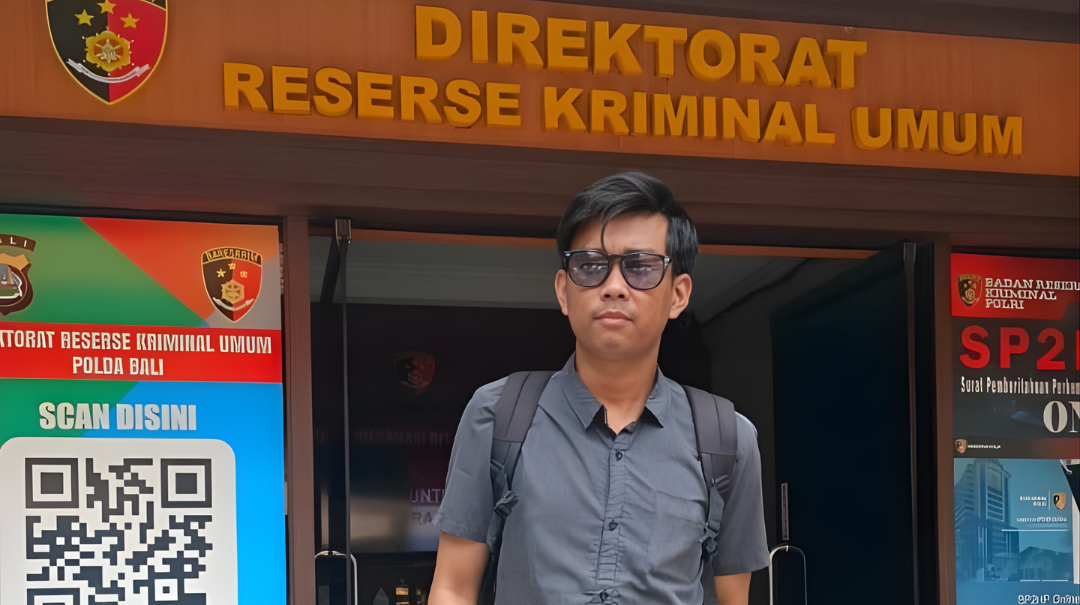
Weeks later, repayments stopped. Calls rang unanswered. Messaging apps showed a single tick. The balance outstanding remained. The lender’s story moved out of private negotiation and into the corridors of the Direktorat Reserse Kriminal Umum / Directorate of General Criminal Investigation.
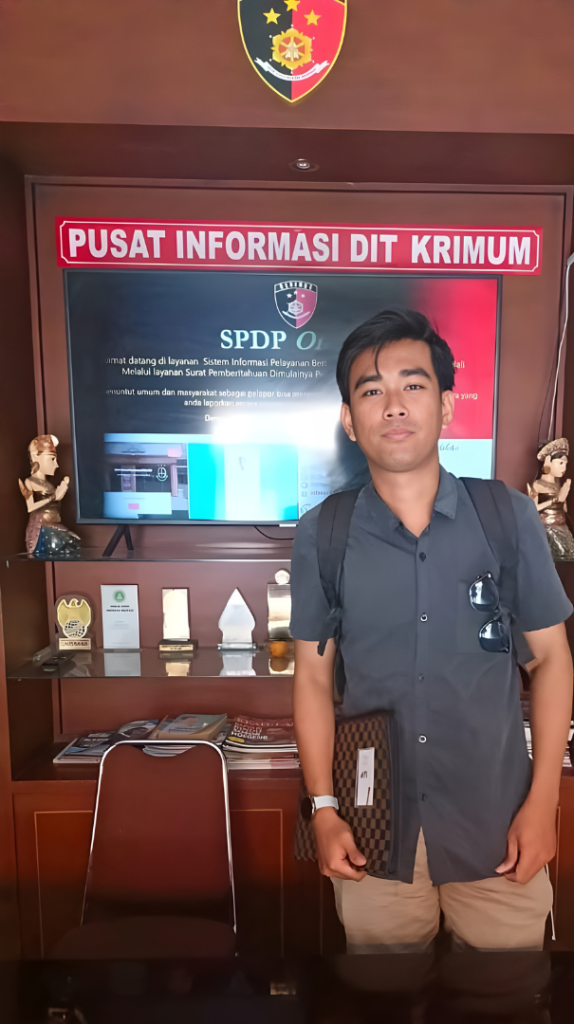
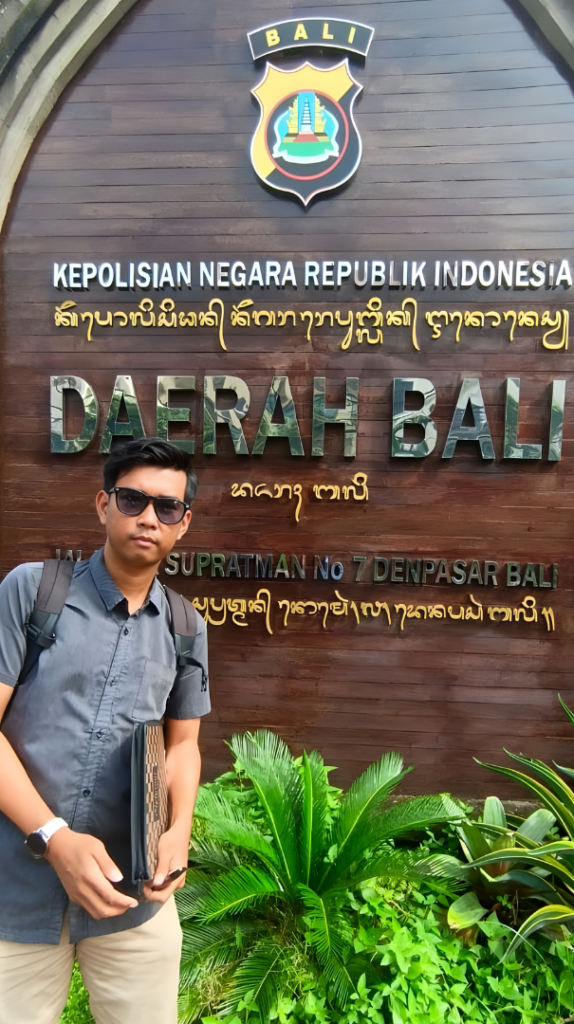
Rizal, one of TraceWorthy’s legal staff, walked down the fluorescent hallway with a folder under his arm. Inside were printed emails, chat transcripts, bank statements, signed agreements, and copies of advice letters that had warned of the risk. The investigator opened the file. A new criminal complaint joined the statistics.
How high interest lending scams in Indonesia usually unfold
This single case is not an isolated event. It sits inside a wider field of short term lending scams and money game investments that Indonesian authorities have been dealing with for years.
Task forces under Otoritas Jasa Keuangan (OJK) have reported public losses in the tens of trillions of rupiah from illegal investment schemes, many of them dressed as high-return opportunities that never had a licence to collect funds. In Bali alone, regional OJK offices have named companies that raised money with promises of attractive interest while holding only general trading licences, not the approvals required for financial services.
Lower down the scale, pinjaman pribadi, or private lending at extreme interest, finds victims in ordinary neighbourhoods. Local newspapers tell stories of borrowers who give away personal data, then struggle under rates that would break any household. Cooperative scandals show another version of the same behaviour, with members drawn in by attractive returns that depend on new deposits rather than genuine profit.
The details vary, yet certain traits recur:
- Above-market interest that appears to solve immediate financial pressure.
- Social or community links that reduce suspicion.
- Initial repayments that arrive on time and create the impression of safety.
- Thin documentation, or documentation that is never tested.
- A point at which the borrower disappears, or the scheme collapses under its own weight.
International regulators describe similar movements. New Zealand’s Financial Markets Authority has recorded cases where victims sent repeated transfers to what looked like a legitimate trading account, only to discover that profits were fabricated. Australian courts have seen “music investment” frauds where supposed insiders promised high returns linked to an artist’s career and eventually stripped friends and acquaintances of their savings. In Malaysia and Singapore, individuals have wired funds to people posing as relatives or project sponsors, encouraged by stories about short term cash flow and future windfalls.
In each jurisdiction, the surface language changes. The underlying mechanics remain close to the behaviour seen in high interest lending scams in Indonesia.
Legal due diligence for private loans: what should happen
Not every private lending arrangement is fraudulent. Families, friends, and companies lend to each other regularly. The difference lies in how the structure is checked and recorded.
When a lender asks TraceWorthy to review a proposal, legal due diligence for private loans begins with basic questions:
- Who is the borrower, in legal terms, not only in social terms?
- What income or assets exist to support repayment?
- Which documents currently describe the loan, if any?
- How the parties expect money to move, both out and back?
From there, the work can deepen. Identification is verified. Company records are checked. Guarantors are asked to sign clear undertakings. Transaction histories are reconstructed to reveal whether there is genuine business activity or simply circular flows.
In some cases, this process saves a deal. A borrower who is genuine, but disorganised, becomes more disciplined when faced with structured requirements. The lender proceeds with better documentation and a realistic understanding of the risk.
In other cases, the process exposes what the lender did not see. Names do not match across documents. Corporate entities appear with no meaningful capital. Past litigation emerges. The lender can then step back, decline the arrangement, or insist on changes before any funds leave their accounts.
The legal framework matters here. Indonesian commentary is clear that high interest alone does not create a crime. A harsh contract between consenting adults remains, in most situations, a civil issue. Criminal reporting of investment fraud Indonesia becomes relevant when there is deception, licensing abuse, or deliberate misuse of funds. Legal due diligence for private lending cannot guarantee that a borrower will act in good faith, but it can uncover patterns that suggest that good faith was never intended.
In the case that took Rizal to the Directorate, the due diligence process was only partially allowed to run. The file shows both: a series of checks conducted carefully, and boundaries imposed by a client determined to proceed.
Why money game investments feel attractive
Money game investments seldom begin with legal r financial analysis. They usually begin with a feeling that present pressures need to ease and that this offer might be the way to do it.
Foreign residents in Indonesia often live with a mix of visible comfort and private strain. Some rely on income from distant businesses, some work contract to contract, some run enterprises that depend heavily on seasons and tourism. Indonesian entrepreneurs can face similar pressure, particularly where formal credit is limited and extended family has expectations.
Several familiar patterns then come into play:
- Scarcity and pressure
Limited access to capital and strong expectations from family or partners create pressure to show visible progress. Very high interest offers appear to solve this pressure quickly. - Social influence
When peer groups talk about informal lending schemes Indonesia networks present as normal, saying “no” can feel awkward. Investors often assume that others know what they are doing. - Selective memory
Early repayments reinforce the belief that the arrangement is safe. Warnings regarding high interest lending scams in Indonesia begin to sound theoretical, while the borrower’s “good behaviour” feels real. - Optimism bias
Many people see themselves as better judges of character than others. They tell themselves that they can exit before a problem appears, even when patterns mirror familiar short term lending scams.
Early success pushes earlier warnings to the edge of memory. Each repayment feels like confirmation that the arrangement is safe. Stories told by someone in the same social circle receive more weight than written cautions from an adviser. Confidence in personal judgement grows with every cycle of money out and money back in. The phrase “too good to be true” begins to sound abstract, while the balance in the banking app feels very concrete.
In Bali, these dynamics sit inside close networks. Expatriate chat groups recycle the same names, numbers, and “opportunities”. Local communities sometimes see cooperative or investment schemes promoted by respected figures. If someone nearby appears to profit, scepticism becomes harder to sustain.
The client in this case had years of business experience. They had negotiated contracts, managed staff, and seen risky ideas before. Yet each successful repayment made the warnings from TraceWorthy’s team feel less urgent. The borrower’s messages were calm and consistent. The transfers became a habit. By the time unease returned, the outstanding balance had grown to a level that could not be shrugged off.
Emotional impact on investors and advisers
The first few days of silence felt like an inconvenience, not a crisis. The borrower had always replied quickly before. The lender sent another message, then a polite reminder. More silence. A familiar unease began to grow. The lender checked the chat history, scrolled back through months of friendly greetings and screenshots of transfers, and then opened the banking app again. Outgoing payments appeared in steady lines. Incoming funds had stopped. High interest lending scams in Indonesia often reach this same point: no announcement, just absence.
When the lender walked into TraceWorthy’s office with a folder of statements, they carried more than paperwork. Anger sat close to the surface, aimed at the borrower and at themselves in equal measure. Embarrassment followed. They had shown the deal to friends. They had reassured a partner that this was a safe way to earn more than a savings account. Now the story had cracked. This was not simply private lending fraud in Indonesia in an abstract sense. This was their judgement, their name, their household.
The adviser listening across the table had seen the file before. Earlier emails showed legal due diligence for private loans, requests for better identification, questions about the business story, and written reservations about risk. Those documents were now laid out between them. Together they traced the timeline: the early repayments, the larger transfers, the moment when TraceWorthy had suggested that the client pause, and the message in which the client confirmed that they wished to continue anyway. The aim of that conversation was not to say “you were warned,” but to show that there had been a point where another decision was available.
There was a different emotional path inside the TraceWorthy team. Lawyers and finance staff remembered the internal discussion when the matter still looked like one of many informal lending schemes Indonesia investors bring into advisory rooms. They had tried to make the agreement harder to enter, adding steps that required thought. Watching the borrower behave exactly as predicted brought a mix of frustration and sadness. It confirmed that the pattern in high interest lending scams in Indonesia was real, yet also underlined how limited advisers can be when a client chooses to move ahead.
Later, when Rizal carried the file into the Directorate of General Criminal Investigation, the emotional tone shifted again. The work became methodical: sort messages into sequence, attach bank statements, prepare a chronology. Criminal reporting of investment fraud Indonesia demands order. Facts, dates, and documents take centre stage. Even in that environment, however, the team remained conscious that every page in the bundle represented one person’s savings, one household’s plans, and one set of conversations where advice and decision parted company.
This is where the human side of TraceWorthy due diligence services sits. The team cannot decide for clients. It can name risk, document advice, and, when necessary, walk beside clients through police corridors and courtrooms. It can also carry its own discomfort at watching preventable harm unfold, without turning away from the people who trusted it enough to ask for help in the first place.
A wider map: from Bali to the rest of the world
Although the names and institutions differ, versions of this story occur in many countries.
In Bali, OJK’s public warnings about illegal investment products have mentioned cooperatives and companies that promised steady high returns, then failed, leaving thousands of members with empty balances. In Java, newspapers report on private lenders who charge heavy interest and then use personal data to pressure borrowers, creating a different, though related, kind of harm. Victims often explain that they were trying to keep a business alive or pay urgent bills.
Further away, New Zealand’s regulators describe cases where people send money to online trading schemes that reward them with apparent profits before shutting down the platform altogether, as illustrated in a New Zealand Financial Markets Authority case study of ‘Mia’, who lost NZD 41,000 after being targeted through social media.
Australian police speak about offenders who use shared histories and music or film projects as hooks for high-return promises, repaying a few early participants and then turning off the tap. In these cases, friends and acquaintances were encouraged to fund a musician’s career in return for high ‘guaranteed’ returns, only to discover that the money had been diverted.
These stories are echoed in Malaysia, where a man in Miri lost more than RM 253,000 to an impersonation scam involving someone posing as a relative of an acquaintance. They are also mirrored in Singapore, where a retiree lost more than SGD 1 million after trusting an investment proposal from a fake Facebook friend. European regulators warn about bogus loan offers that demand up-front fees for credit that never arrives, including guidance from the UK Financial Conduct Authority and the Luxembourg CSSF on loan fee fraud and social-media-based credit scams.
Beyond individual cases, larger frauds show the same pattern at scale. Australian prosecutors describe how the Courtenay House scheme drew thousands of investors into foreign exchange and futures trading that never matched the promises, with new money used to pay earlier participants until the structure collapsed and the director received a lengthy prison sentence. Commentary on Singapore’s recent “scamdemic” highlights another variation, where sophisticated impersonation and investment schemes now account for a significant share of reported crime, fuelled by social media, encrypted messaging and fast cross-border payments. These examples from mature, heavily regulated markets underline that high-return offers and money game behaviour are not tied to one country; they emerge wherever financial pressure, persuasive storytelling and easy payment channels intersect, and they reach from small private loans to multi-million dollar schemes.
The details of the law change from place to place. Contract doctrines, enforcement tools, banking regulation, and criminal codes all differ. The human elements are recognisably the same:
- a person under pressure
- an offer that seems to relieve that pressure
- early signals that everything is working
- a point where everything stops
The Indonesian experience with informal lending schemes Indonesia communities discuss daily, and with more structured investasi bodong, belongs in this global picture rather than standing alone as an anomaly.
TraceWorthy due diligence services: from small private lending to large transactions
The same habits that supported this client through a difficult experience appear across TraceWorthy’s work.
Examples include:
- Smaller matters
- Review of informal lending schemes Indonesia clients encounter in social networks.
- Due diligence on the takeover of a dormant foreign investment company, where hidden tax and licensing problems had to be identified before acquisition.
- Larger transactions
- Participation in legal due diligence for private loans linked to structured financing vehicles.
- Comprehensive TraceWorthy transaction due diligence on a USD 150 million health technology investment as the company prepared for IPO, covering regulatory compliance, contract structures, and investor documentation.
Across this spectrum, TraceWorthy due diligence services:
- keep detailed internal records that support later negotiation, audit, or investigation
- map parties and related entities
- trace flows of funds
- verify licences, registrations, and permits
- test whether contractual diagrams match reality
The matter that took Rizal to the police directorate reflects the same method applied to a very different scale. In both contexts, fraud risk for foreign investors in Indonesia is reduced when transactions are reviewed before commitments are made, not after loss occurs.
Practical checklist for investors considering informal lending
Before entering arrangements that resemble high interest lending scams in Indonesia, investors can apply the following checklist.
- Reframe the proposal
- Treat the offer as an investment, not as a favour.
- Ask whether the interest rate aligns with realistic business models or whether it matches patterns seen in short term lending scams.
- Insist on structure
- Require written agreements drafted after legal due diligence for private loans.
- Ensure identification and corporate records are checked, not merely copied.
- Assess impact
- Calculate the effect of a complete loss on your household and business.
- If the loss would damage essential obligations, regard that as a warning.
- Seek independent advice
- Ask an adviser to explain fraud risk for foreign investors in Indonesia in this context.
- Invite that adviser to rate the arrangement honestly: acceptable risk, elevated risk, or money game.
- Observe your own emotions
- Notice whether scarcity, fear of missing out, or the wish to impress others is driving the decision.
- Consider pausing for a set period before transferring funds.
- Plan an exit
- Agree on realistic repayment schedules that can be tested before exposure grows.
- Be prepared to stop lending if the borrower resists structure or transparency.
This checklist cannot remove risk entirely. It can, however, shift decisions from impulse to deliberate evaluation and create space for TraceWorthy due diligence services to identify structural problems early.
Beginning the year with a different posture toward risk
The case that placed Rizal in front of investigators arose from one of the many high interest lending scams in Indonesia that begin as friendly conversations. The client now lives with the financial and emotional cost. The TraceWorthy team lives with the knowledge that the risk was identified, recorded, and still accepted.
Readers can take a different path. Any proposal that resembles informal lending schemes Indonesia communities circulate, or that promises returns typical of money game investments, deserves careful scrutiny. That scrutiny includes legal analysis, psychosocial awareness, and a realistic view of enforcement options if something goes wrong.
TraceWorthy due diligence services are designed for this kind of work. The same discipline applied to a USD 150 million health technology transaction can examine a private lending proposal between two individuals. Both merit attention, because both can alter lives.
If you are considering private lending, side deals, or other high return offers in Indonesia, request an independent review before you send funds. A structured session with TraceWorthy can examine your position, outline options, and reduce the chance that your story becomes another example of private lending fraud in Indonesia.