Inside TraceWorthy’s Cross Functional Training Culture
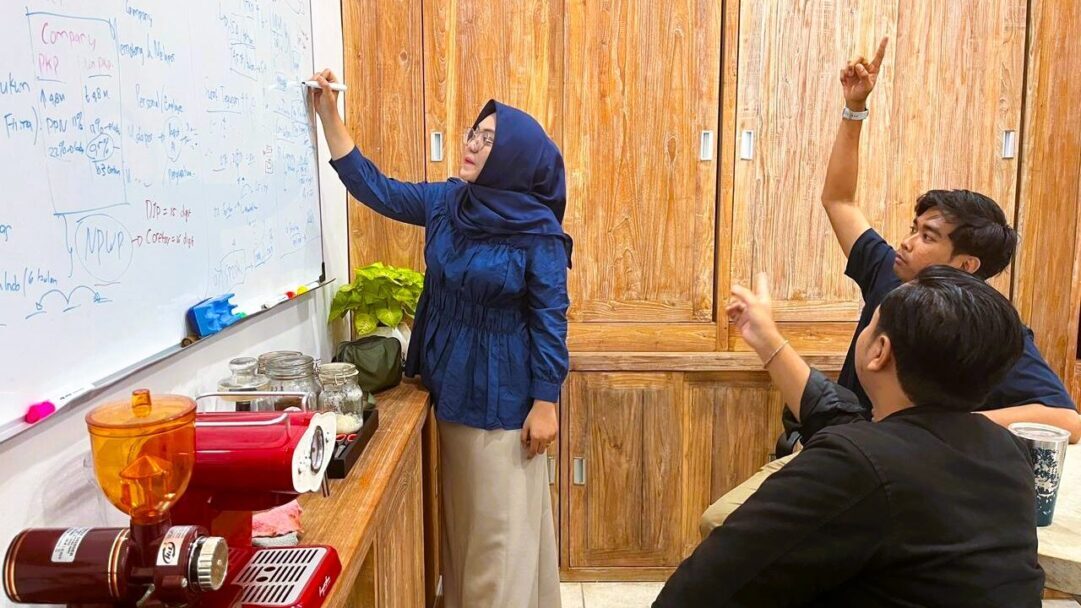
On a Thursday morning in Bali, the TraceWorthy whiteboard fills with Mirna Pratiwi Mangitung’s tax diagrams. She sketches the route of income from a client company to government accounts and into personal bank records. The legal team ask questions and link each line on the board to live client files. This session is routine. It shows how TraceWorthy uses human centred consulting as a working method rather than a marketing phrase.
In this workshop, the team studies tax flows, then test those flows against immigration rules, corporate governance, and commercial terms that clients negotiate. The firm operates as a learning organisation, where every person learns to see how their own expertise connects with that of colleagues. Regular cross functional training sessions of this kind are scheduled in the same way as client meetings.
For anyone seeking a trusted advisor for foreign investors in Indonesia, this scene matters. The legal team hear directly from Mirna how tax authorities interpret transactions. Mirna hears which company law provisions and immigration pathways create difficulty. The discussion produces integrated legal and tax advice that respects both regulatory requirements and the realities of running a business in Indonesia. In that moment, human centred consulting appears as a practical discipline.
Learning organisation principles in a consulting context
The idea of a learning organisation often appears in management literature. A useful way to describe this ethos is through the idea of T-shaped and π-shaped professionals. This language has been adopted widely in professional services and consulting firms.
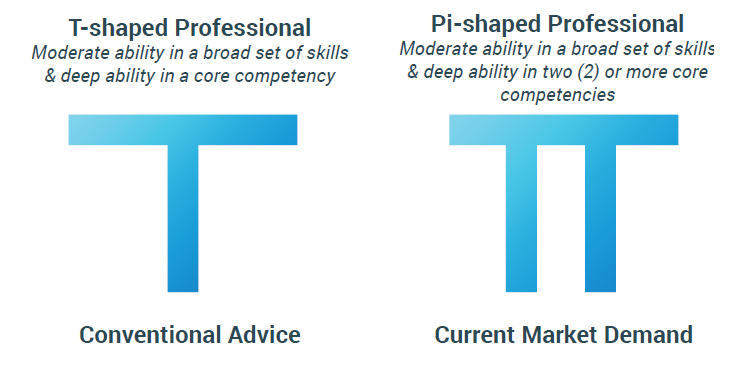
The T-shaped professional model describes a person who combines deep expertise in one discipline with a broad working understanding across adjacent fields. The vertical stroke of the “T” represents depth, while the horizontal stroke represents breadth. Management scholar David Guest is often credited with introducing the concept in the early 1990s, and Hansen and von Oetinger later applied it to “T-shaped managers” in Harvard Business Review, arguing that such managers share knowledge across units instead of guarding it inside one function. Tim Brown of IDEO then popularised T-shaped people in design and innovation settings, describing them as ideal collaborators in complex, multidisciplinary projects.
Researchers and professional bodies have since explored T-shaped professionals in engineering, design, and management education. Their work links T-shaped profiles to better collaboration, stronger systems thinking, and smoother communication between specialists, because individuals can engage in conversations beyond their core discipline while still contributing rigorous expertise. In a consulting firm that aspires to act as a learning organisation, this pattern matters. A finance specialist like Mirna can explain tax flows in depth, while also understanding enough legal, immigration, and governance context to frame questions usefully for colleagues and clients. Legal and consulting staff, in turn, build breadth across finance and other domains, so their advice reflects integrated realities rather than isolated technical viewpoints.
The π-shaped (pi-shaped) professional extends this idea. Instead of a single deep vertical, a π-shaped profile combines two areas of deep expertise resting on a broad base. Writers in marketing, consulting, and future-of-work analysis describe π-shaped people as individuals who can operate at expert level in two distinct domains, such as tax and corporate finance, or immigration and employment law, while still maintaining a broad understanding across related disciplines. Business schools and consulting institutes have urged professional firms to invest in π-shaped talent on the basis that complex client problems rarely sit neatly within one discipline, and that two intersecting deep specialisations position advisors to design more resilient structures and strategies.
In TraceWorthy’s context, regular internal workshops create space for T-shaped and π-shaped development over time. A finance lead who trains colleagues and attends legal and immigration sessions gradually acquires a second vertical. A lawyer who begins with corporate and regulatory work and then builds deep experience in tax-aware structuring moves in the same direction. When those people sit in front of clients, they listen differently and design differently. They can see how a decision regarding a shareholder agreement will surface in tax reports, immigration screenings, and day-to-day operations. That capability links directly to human centred consulting, because the advisor is equipped to consider human consequences and regulatory constraints in the same conversation, rather than passing the client through a chain of disconnected specialists.
In the TraceWorthy context it takes a concrete form. Every week, the team gathers for internal sessions on meditation for wellbeing, bullying and harassment, immigration reforms, new ministerial regulations, and tax systems. The same structure supports every topic. A team member leads the session, others bring questions from real client work, and together they adjust internal tools and checklists.
This rhythm anchors human centred consulting. Advisors who participate in a learning organisation share a common language concerning risk, regulation, and human impact. A finance specialist understands where immigration challenges appear. A lawyer understands where bookkeepers or payroll staff encounter friction. No one carries every technical detail. Instead, each person gains enough context to recognise connections and request focused support. That culture produces integrated legal and tax advice that fits with immigration status and governance design.
For a trusted advisor for foreign investors in Indonesia, this environment changes the nature of service. Indonesian regulations shift frequently. New guidance on KITAS categories, beneficial ownership reporting, or sectoral restrictions alters how a structure functions. A learning organisation treats each regulatory shift as a training opportunity. The team schedule a session, someone maps the change on the whiteboard, and colleagues translate that change into updated documents and workflows. As cross functional training accumulates, advice grows steadily more precise and humane.
Cross functional training as the engine of integrated advice
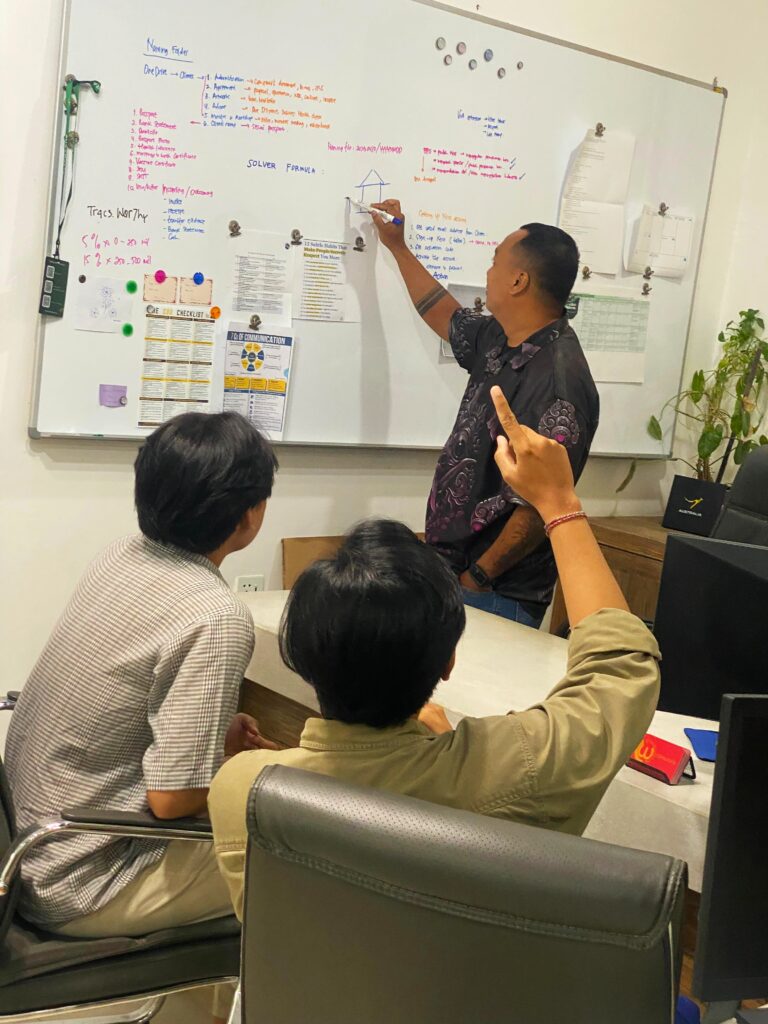
Within this system, cross functional training forms the engine that moves knowledge across disciplines. Mirna’s tax workshop is one example. A session on immigration systems provides another. A third might explore employment law, and a fourth might walk through land transactions or service level audits. Each meeting gives staff a chance to present their own discipline in plain language and to test client scenarios together.
Every cross functional training session advances several aims. Presenters refine their thinking when they explain complex systems step by step. Participants learn to ask stronger questions in client meetings. The group identify gaps in internal procedures while they discuss edge cases. Over time the firm strengthens its status as a learning organisation, because information travels through open discussion rather than staying inside one desk or inbox.
This process supports integrated legal and tax advice in a direct way. When a foreign founder enquires regarding a new PT PMA to acquire land, the lead advisor brings a mental map that connects tax flows, immigration status, governance requirements, and commercial goals. The advisor knows when to invite Mirna to review tax exposures, when to involve the legal drafting team, and when to involve immigration specialists. Repeated cross functional training ensures that integrated legal and tax advice arrives in a coherent form instead of isolated opinions that the client must reconcile alone.
For a trusted advisor for foreign investors in Indonesia, the benefit is clear. Investors confront linked questions regarding tax residency, land titles, sector restrictions, employment relationships, and exit routes. An advisor shaped by human centred consulting and cross functional training can recognise intersections early and can plan work so that the right specialists join the conversation at the right moment. A learning organisation therefore becomes a structural safeguard for clients.
Human centred consulting from the client perspective
From a client seat, human centred consulting feels very different from transactional advice. A founder, investor, or family office representative usually arrives with a mixture of ambition, concern, and fatigue. They try to describe their plans for Indonesia. The TraceWorthy advisor listens for themes that cross legal, tax, immigration, and governance boundaries. The advisor then relates these themes back to the frameworks and diagrams developed in internal sessions with Mirna and other colleagues.
Because TraceWorthy operates as a learning organisation, each advisor carries more than their own job description. An advisor who attended Mirna’s workshop can explain how a proposed dividend pattern will affect personal income tax, how those payments appear in corporate reporting, and where immigration officers may ask questions. The same advisor can link those flows to board authority, shareholder expectations, and cash flow planning. Clients receive integrated legal and tax advice that reflects daily realities such as school fees, travel patterns, and obligations to business partners.
A trusted advisor for foreign investors in Indonesia earns trust through this kind of integration. Clients often work with lawyers, tax consultants, real estate agents, and immigration agents in separate silos. That approach can leave gaps and contradictions. Human centred consulting reduces those gaps. When TraceWorthy designs a PT PMA, the team combine legal drafting with tax mapping, immigration planning, and governance design at the same table. The client sees how each decision influences the next decision, which reduces surprises and rework.
Over time, repeated experiences of this nature turn a consulting firm into a reference point for clients. They return not only for individual transactions, but also for decisions regarding new ventures, divestments, or reorganisations. A learning organisation that invests in cross functional training sustains this relationship because staff can respond to new questions with fresh and coordinated thinking.
A practical framework any enterprise can adopt
The ethos behind these sessions does not belong only to professional services firms. Any organisation that faces complex regulation or delivers complex services can apply similar methods and evolve toward a learning organisation model. In this broader sense, human centred consulting refers to any advisory role where teams design structures, systems, or experiences that shape human outcomes.
Leadership can begin with a simple map of the disciplines that influence client or customer results: finance, law, operations, technology, human resources, and field delivery teams. From this map, the organisation can schedule cross functional training sessions at regular intervals. Each session places one discipline in the teaching role. For example, finance may unpack invoicing and tax audit risks, while operations may explain service delays that frustrate clients, and human resources may explore misconduct reporting pathways.
As this rhythm continues, the organisation generates shared tools. Flow diagrams, checklists, short case studies, and internal FAQs emerge from each cross functional training workshop. New staff receive these tools during induction and immediately experience the firm as a learning organisation rather than a collection of isolated departments. Management can then review patterns: recurring client complaints, repeated errors at handover points, or structural causes of delay. These observations lead to redesigned processes and, where relevant, integrated legal and tax advice that aligns with service delivery.
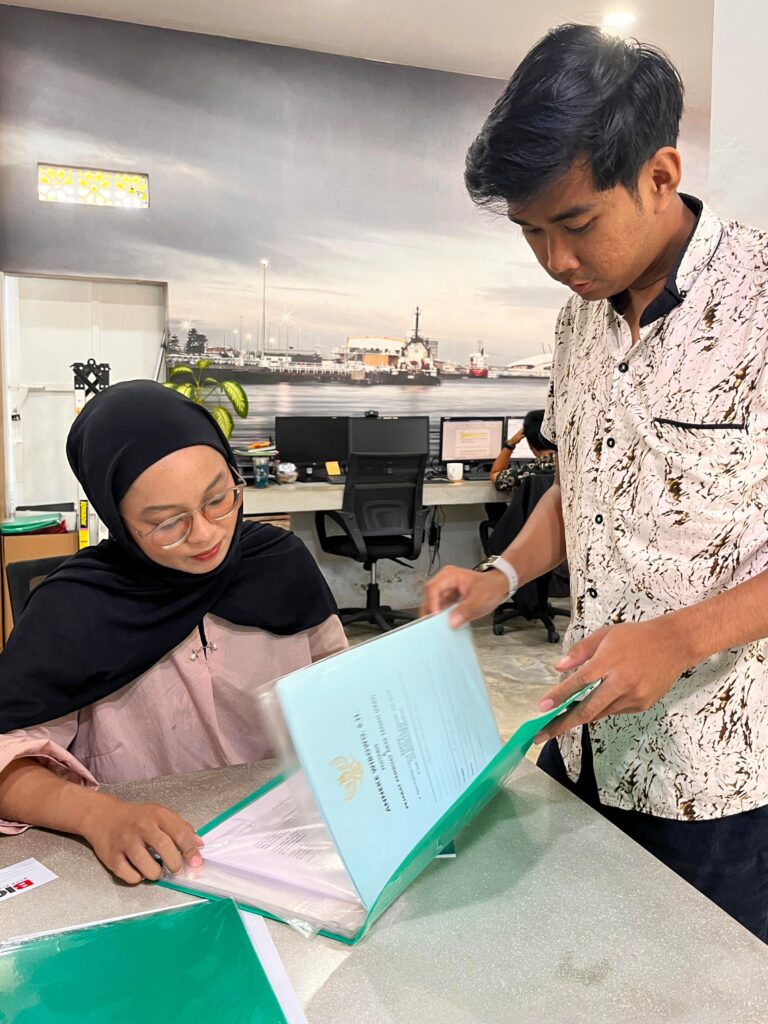
For teams that serve foreign clients, the model provides additional value. A group that aspires to act as a trusted advisor for foreign investors in Indonesia can use cross functional training to bring cultural understanding, regulatory knowledge, and human empathy into the same conversation. When staff share this context, human centred consulting becomes a default, because every project begins with the question of how decisions will affect people as well as compliance metrics.
An invitation to design a different advisory relationship
The internal workshop with Mirna, a whiteboard, and a small group of colleagues provides one example of human centred consulting in practice. TraceWorthy uses structured cross functional training and a deliberate learning organisation culture to ensure that every engagement draws on shared knowledge, rather than isolated expertise. This design supports consistent integrated legal and tax advice across matters that range from simple PT PMA setups to complex land transactions and retreat structures.
Foreign founders and investors who plan to operate in Indonesia often face overlapping questions that reach into tax residency, exchange controls, immigration status, land title, and dividend flows. A trusted advisor for foreign investors in Indonesia who operates inside a learning organisation can untangle these links and present realistic pathways. TraceWorthy’s approach to human centred consulting enables the team to align regulatory structures with the personal and commercial realities of each client.
Enterprises that wish to move toward a similar culture can work with TraceWorthy in several ways. The firm can provide integrated legal and tax advice on new or existing structures. It can review governance documents and operational arrangements through the lens of cross functional training and human impact. It can also assist leadership teams that wish to design their own learning organisation programmes, drawing on TraceWorthy’s experience in weekly internal sessions.
For readers who recognise that their current advisory relationships leave important questions unanswered, this is an opportunity to explore a different model. A conversation with TraceWorthy can test current structures, reveal unseen risk, and design future engagements that reflect the principles of human centred consulting in a practical and measurable way.