
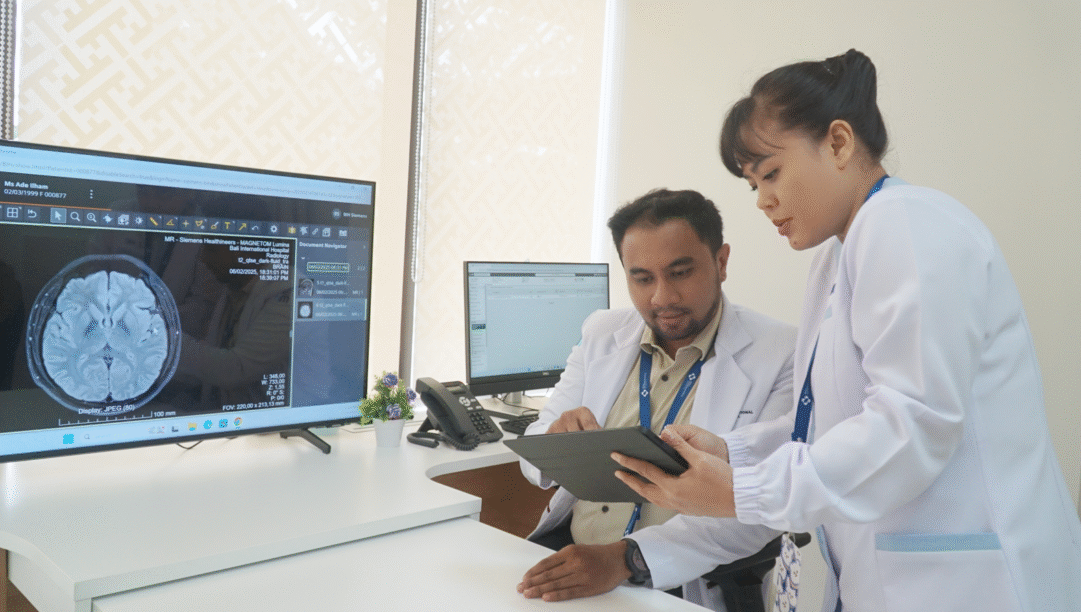
A working front door for new health enterprises in Indonesia
This month, TraceWorthy’s Founder, Tracy Wilkinson, joined an intimate Women’s Investment and Entrepreneurs Community conversation with Dr Noel Yeo, Chief of Commercial and Operations at Bali International Hospital, and Serena Wee, Chief Executive Officer of ICON Cancer Centre. The discussion focused on the Sanur Special Economic Zone, the practical hurdles that are being resolved as international expertise participates in Indonesian healthcare, and the adjacent enterprise opportunities that now require courageous founders.
What the Sanur Special Economic Zone offers founders today
Sanur Special Economic Zone is Indonesia’s first integrated health and tourism zone with a land area of 41.26 hectares. The National SEZ Council positions the area as a platform for internationally certified medical services, hotel and MICE facilities, and a health research centre. The formal SEZ frame signals priority for operators that strengthen health delivery and recovery-led hospitality on the same campus.
Bali International Hospital sits within this environment as the anchor clinical institution. BIH communications describe centres of excellence including oncology, cardiology, neurology, orthopaedics, and advanced diagnostics.
ICON Cancer Centre operates on site and publishes that its Nuclear Medicine and PET-CT service in Sanur uses a Siemens Biograph Vision 450 scanner, supporting earlier diagnosis and more informed planning.
Bali International Hospital as an anchor for the Sanur Special Economic Zone
BIH articles describe a commissioning timeline through 2025 with progressive partnerships that elevate diagnostic capability and clinical standards. Those updates are valuable leading indicators for founders who wish to align venture timing with service ramp-up. The BIH–Innoquest article on diagnostic excellence illustrates the partnership-led approach that Sanur Special Economic Zone encourages.
National and media briefings consistently reference 41.26 hectares for the Sanur Special Economic Zone footprint, reinforcing the scale available for patient-facing services and recovery-grade hospitality. Government and media briefings pair the footprint with macro targets: cumulative investment realisation and employment growth attached to Sanur’s positioning as Indonesia’s first health-focused SEZ. Several communications also reference foreign-exchange retention from Indonesian patients receiving treatment domestically once the precinct matures. For founders, these signals indicate that spatial capacity, licensing posture, and demand drivers are aligned within one managed estate, which shortens the path from concept to operating enterprise.
Supportive cancer care models that fit the Sanur Special Economic Zone
International precedents show how hospital-adjacent supportive cancer care improves journeys for patients and families. Maggie’s Centres in the United Kingdom integrate psycho-oncology, education, and practical support alongside oncology units with published frameworks and parliamentary submissions.

Solaris Cancer Care in Western Australia demonstrates a volunteer-supported model connected to major hospitals, with evaluations linking programmes to improvements in quality of life, sleep, fatigue, and anxiety. These models sit comfortably inside the health pillar of the Sanur Special Economic Zone when scoped under clinical governance and outcomes monitoring.
The World Health Organization’s scoping review synthesised findings from over 3,000 studies and reports measurable effects of arts participation across prevention, treatment support, rehabilitation, and palliative care. Interventions span music, movement, visual arts, literature, and design of spaces, with outcomes that include reduced anxiety and pain, improved adherence and coping, and functional gains in recovery. The breadth and methodological range give policymakers and providers a defensible basis for commissioning arts-in-health programmes alongside conventional care.
A venture that operates inside the Sanur Special Economic Zone can adopt this evidence in service lines that are easy to govern and straightforward to integrate with BIH referral pathways. The business case improves when services target points in the pathway where evidence for symptom relief, mood, sleep, and engagement is strongest.
Patient hotel and recovery residence options in the Sanur Special Economic Zone
The patient hotel model, pioneered in Northern Europe, combines hospitality with low-acuity clinical oversight for pre-admission stays, inter-cycle treatment days, and step-down recovery. Systematic reviews associate the format with higher satisfaction and efficient bed use. Recent studies report favourable patient experience regarding privacy and rest when compared with standard stays. The Sanur Special Economic Zone places health and tourism in one policy frame, which makes a patient hotel and a network of recovery residences natural candidates near BIH.
Implementation prompts for founders
- Define room cohorts for immunocompromised guests with nurse call and infection-prevention housekeeping.
- Integrate multilingual care navigation that links to clinic schedules and insurer authorisations.
- Provide wheelchair-adapted transfers and airport-to-SEZ logistics coordinated with imaging and infusion timetables.
- Establish kitchens that can deliver oncology, renal, and metabolic menus with auditable standards.
Allied health, psycho-oncology support, and nutrition services
A supportive cancer care pavilion adjacent to BIH would offer psycho-oncology counselling, fatigue and sleep programmes, lymphoedema-aware movement, and oncology-aware nutrition. These services improve tolerance of treatment, reduce avoidable readmissions, and create a pipeline for Indonesian clinicians. The World Health Organization evidence review supports inclusion of music, movement, and visual arts within clinical governance, while BIH articles provide clinical anchors for alignment. NCBI+1
Bali design layer
Programme delivery can reflect Balinese hospitality and place-making without drifting into spa retail. Gardens, daylight, gentle movement, and craft sessions can sit under defined inclusion criteria and shared documentation with oncologists. The boundary remains clear: supportive cancer care is an evidence-based health service; general wellness for visitors can operate separately within the tourism pillar.
Diagnostics spillover and device reliability for Sanur operators
Entrepreneurs can establish ambulatory diagnostics for sleep, cardiac, and neuro pathways that free hospital capacity while increasing case-finding across the Sanur Special Economic Zone. A shared sterile-services and device-maintenance consortium can standardise reprocessing and preventive maintenance for smaller clinics. The BIH–Innoquest article signals appetite for capability growth led by partnership, which creates space for independent operators that meet auditable standards.
Education, conferences, and simulation within the Sanur Special Economic Zone
Sanur’s MICE capability aligns with a continuous education model that includes tumour boards, device in-services, perioperative skills, and psycho-oncology education. This fills mid-week calendars and supports recruitment. The SEZ’s health-and-tourism frame enables such events to sit alongside patient services, while BIH updates supply a steady stream of topics for CME-style sessions.
Sanur as a medical tourism node and why that matters economically
Bali International Hospital coverage frames Sanur as a node for medical tourism in Bali through the presence of advanced imaging and oncology capacity. Public statements and media briefings reference inauguration milestones and international collaboration, which tend to attract both domestic patients who would otherwise travel overseas and regional visitors seeking credible options closer to home.
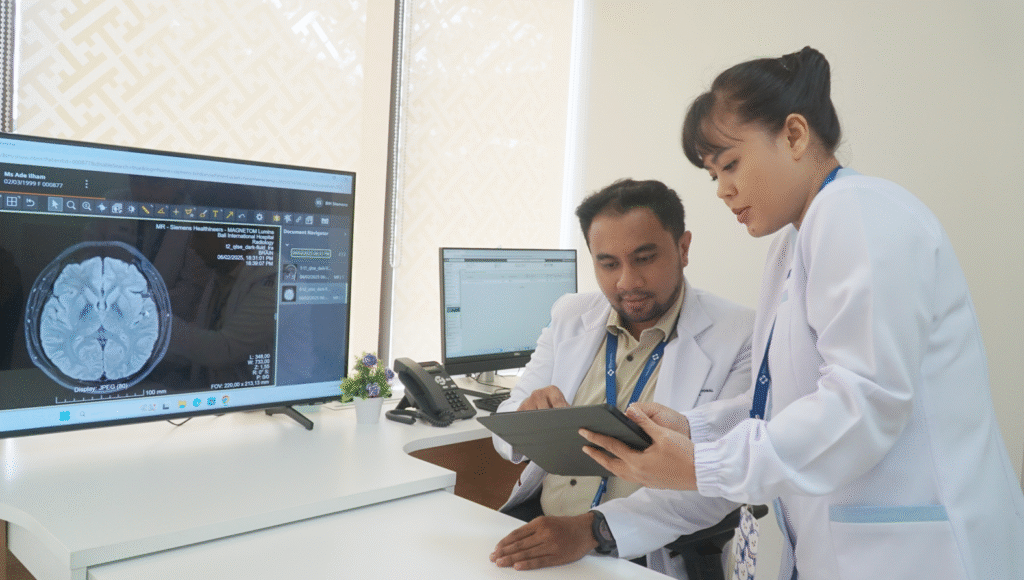
Monitoring BIH article cadence, ICON PET-CT utilisation updates, and SEZ tenant announcements provides a practical early-warning system for demand expansion. This positions Sanur as a credible treatment locus rather than a referral stop. That capability shortens diagnosis-to-treatment timelines for Indonesian families and foreign residents on island, and it raises the likelihood that regional patients choose Bali over longer-haul options.
Two macro mechanisms drive the economic impact:
1) Retained domestic spending
Indonesia’s Deputy Health Minister has publicly estimated outbound medical spending at approximately IDR 600 trillion per year. Each percentage point of retention enabled by the Sanur Special Economic Zone keeps roughly IDR 6 trillion circulating domestically, supporting local payrolls, suppliers, and tax receipts.
2) Incremental inbound spend
When treatment occurs in Bali, the visit becomes multi-purpose. Patients and companions purchase longer stays, recovery lodging, translation and transport, and mid-week hospitality that lifts average yield per trip. This is the economic logic behind a health-tourism estate with a hospital anchor, step-down accommodation, and a convention asset in one controlled precinct.
What the numbers already show
Official SEZ sources set Sanur’s footprint at 41.26 hectares with permitted activities in health and tourism, which creates the physical and regulatory headroom for patient-facing services and recovery-grade hospitality to scale together. Across 2025 briefings, authorities reported the following for Sanur Special Economic Zone:
- Investment realisation: IDR 4.42 trillion recorded by the end of Q1-2025, signalling traction from construction into early operations.
- Employment: 3,822 jobs realised to Q1-2025 against higher long-term targets. Projections remain IDR 10.2 trillion total investment, 18,375 direct jobs, and 25,272 indirect jobs at maturity.
- Complementary capacity in-zone: a 5,000-delegate convention facility and revitalised beachfront hotels, which support clinical conferences, training, and companion-friendly recovery itineraries that stabilise shoulder-season demand.
These figures describe a shift from a single-asset hospital narrative to a precinct with multiple, mutually reinforcing revenue streams. This positions the Sanur SEZ as an extremely attractive site for innovative medical tourism and adjacent enterprises.
Practical leading indicators to watch
Entrepreneurs and investors can track a short set of public signals to time entry and scale-up:
- BIH publication cadence: More frequent BIH articles on clinical services, partnerships, and pathways often precede volume growth and new tenancy in adjacent services. Use the BIH articles hub as a live feed.
- ICON PET-CT utilisation and oncology scope: Modality updates on PET-CT and nuclear medicine imply rising oncology throughput and wider referral draw into Sanur.
- SEZ tenant announcements: New clinics or speciality centres inside the estate, such as fertility and aesthetic medicine, signal diversification of case-mix and a broader companion economy.
- Macro positioning by government and the SEZ Council: Statements that frame Sanur and Kura-Kura as Bali’s economic engines, together with national measures to reduce outbound medical travel, indicate sustained policy support for in-country treatment and allied services.
Fit checks for licences, KBLI alignment, and SEZ permissions
Before committing capital or timelines in the Sanur Special Economic Zone, founders benefit from a stepwise translation of vision into licensable services. The sequence below converts opportunity into an operating plan that aligns activity with the zone’s health and tourism pillars, Bali International Hospital pathways, insurer expectations, and investor-grade governance.
A disciplined feasibility path protects founders and investors:
- Confirm that the activity maps to the Sanur Special Economic Zone’s pillars of health or tourism using National SEZ Council references.
- Select KBLI and technical licences that match services delivered, including professional registrations and any BPOM interfaces where relevant.
- Establish governance for clinical adjacency with scope-of-practice definitions, credentialing, record-keeping, and incident lines.
- Prepare referral memoranda that respect BIH and ICON workflows and documentation.
- Evidence operating standards through SOPs that hospitals and insurers can audit.
Two investable sketches for near-term commissioning
Family accommodation near hospital with care navigation
A 25–40 room facility under the tourism pillar delivering companion lodging, multilingual navigation, special-diet kitchens, and adapted transport. International literature on caregiver houses associates proximity and routines with stronger involvement and better family experience during treatment. A Sanur site within short reach of BIH clinics would serve Indonesian families and foreign residents alike. Instagram
Supportive cancer care pavilion in the Sanur Special Economic Zone
A purpose-designed space offering psycho-oncology support, cancer education, and evidence-based complementary therapies with stepped triage, under a joint governance committee with BIH and ICON. The WHO review provides an evidence base for arts-in-health components, while Maggie’s and Solaris show operational patterns for outcomes tracking and volunteer mobilisation. NCBI+1
Invitation: from idea to operating enterprise
The Sanur Special Economic Zone now combines a hospital anchor, an oncology partner with PET-CT, and a policy frame that welcomes recovery-grade hospitality, education, and supportive cancer care alongside clinical services. TraceWorthy’s role is practical and complete. We listen to the concept, model the pathway, align KBLI and licences, draft the operating manual, and commission the operation so that it functions within hospital and insurer expectations.
If you plan to participate in the Sanur Special Economic Zone, engage TraceWorthy. We will listen to your idea, then model, establish, and bring it into operation with you.
FAQ: Sanur Special Economic Zone
What is the Sanur Special Economic Zone and who can operate there
A 41.26-hectare integrated health and tourism zone in Sanur designed to attract international-standard health operators and recovery-aligned hospitality. kek.go.id
How does Bali International Hospital anchor the Sanur Special Economic Zone
BIH provides the clinical platform for oncology, diagnostics, and specialist services, enabling adjacent ventures to integrate around real patient pathways. bih.id
What is supportive cancer care and how does it integrate with BIH
Evidence-based psycho-oncology, education, movement, and arts-in-health, delivered under clinical governance with outcomes tracking and referral links to hospital teams. NCBI
What is a patient hotel and when is it used
A hospitality setting with low-acuity oversight for pre-admissions, inter-cycle treatment days, and step-down recovery, associated with higher satisfaction and efficient use of acute beds. PubMed
How does medical tourism in Bali benefit from recovery residences and care navigation
Recovery-grade accommodation and navigation reduce logistical stress, support adherence, and retain spend within Bali through longer companion stays and mid-week occupancy linked to clinical schedules. Antara News