
The family-office thresholds and costs below are drawn from named institutional research, attributed where they appear. They are economic benchmarks, not legal minimums. The Indonesian rules are drawn from current sources and should be confirmed for a specific case. The PFII figures come from reporting of the enacted law, whose implementing regulations were pending. USD equivalents of rupiah figures use a rate of around IDR 17,800 to USD 1 as at 11 August 2026 and move with the rate.
A family office is a private team that runs a wealthy family’s affairs in one place. It looks after the family’s investments, tax, and succession, and often its philanthropy, its record-keeping, and parts of daily life, across the generations. A myth attaches to the phrase, that a family office is only for billionaires. In practice the model scales, and the useful question is which form of it fits a given family, rather than whether a family is wealthy enough at all.
This article explains what a family office is, the forms it takes, and what it costs, then turns to the question a foreign family in Bali asks next: can you run one from here, and what does Indonesian law require. The short answer is that a family office operating in Indonesia is a business presence, so a foreign family enters Indonesia’s foreign-investment framework, the Bali Province rules, and the immigration and land regimes. The new Indonesia International Financial Centre in Bali is the route now being built for exactly this, and the difference in tax between a resident and a non-resident principal, worked through below, is where a family stands to gain or lose the most.
What a family office is, and is not
A family office is a private arrangement that runs a wealthy family’s financial and personal affairs in one coordinated place. It can take the form of a dedicated team serving one family, a shared office serving several families, or a function embedded inside a business the family already owns. Whichever form it takes, it replaces the separate accountant, investment manager, lawyer, and administrator a family would otherwise engage one by one with a single team that answers to the family alone. It is not a building, a bank account, or a product a family buys. It is an organisation, sized to the family, and its shape follows the family’s wealth, its complexity, and how much control the family wants to keep.
What a family office does
The work spans several areas that a family would otherwise manage separately:

- investment management, from setting the strategy to selecting and overseeing managers
- tax planning and compliance across the countries the family touches
- estate and succession planning, so wealth and responsibility pass to the next generation in an orderly way
- philanthropy, including how the family gives and how it involves its younger members
- family governance, such as a family constitution and a family council that set how decisions are made
- consolidated reporting, so the family sees all of its assets in one view
- lifestyle and administrative support, from property to travel to record-keeping
- risk, insurance, and, increasingly, cybersecurity
Single-family office, multi-family office, or embedded
A family office takes one of two main forms, with a third that many families use first.
| Form | What it is | Control and privacy | Cost |
|---|---|---|---|
| Single-family office | A team serving one family alone | Highest; the family owns and directs it | Highest; one family bears the whole overhead |
| Multi-family office | A team serving several families on shared staff and systems | Lower; services and staff are shared | Lower; typically 0.5 to 1.0 percent of assets a year |
| Embedded family office | Family-office functions run inside the family’s operating business | Moderate; uses existing staff | Lowest; a common first step |
Control and privacy are highest in a single-family office and lower in a multi-family office; cost runs the other way. Many families begin with an embedded arrangement inside a business they already own, then move to a shared multi-family office, and set up a single-family office only when their wealth and complexity justify the full overhead.
What it costs, and when a family needs one
Cost is what usually decides the form, and the figures come from named research rather than folklore. Deloitte Private, in its family-office studies, gives a common benchmark of around USD 100 million in investable assets to justify the start-up and running costs of a single-family office, with a full in-house team of eight or more people warranted only at around USD 1 billion or above. Multi-family offices, by the industry sources that track them, take families from around USD 10 million to USD 30 million upward. On running cost, the honest measure is a share of assets rather than a headline sum: Deloitte puts typical operating expenses at around 0.41 percent of assets under management, and UBS, in its 2025 Global Family Office Report, puts them at around 0.35 to 0.44 percent.
| Measure | Figure | Source |
|---|---|---|
| Benchmark to justify a single-family office | around USD 100 million in investable assets | Deloitte Private |
| Full in-house team of eight or more | around USD 1 billion or above | Deloitte Private; practitioner range |
| Multi-family office entry | around USD 10 million to USD 30 million | Industry sources |
| Running cost as a share of assets | around 0.35 to 0.44 percent a year | UBS 2025; Deloitte around 0.41 percent |
| Average running cost in absolute terms | around USD 3 million a year, weighted by the largest offices | J.P. Morgan Private Bank 2026 |
The two cost measures need reconciling, because a reader who sets the headline USD 3 million average against a USD 100 million family reads a three percent drag and stops there. The USD 3 million average, reported by J.P. Morgan Private Bank in its 2026 Global Family Office Report, is weighted by the very large offices in the survey; the same report finds four in ten offices spend under USD 1 million a year and around one in ten spend over USD 7 million. The per-family figure that travels is the percentage. A single-family office of around USD 100 million running at around 0.4 percent of assets costs in the region of USD 400,000 a year, not USD 3 million. That is the number a family should plan against.
These thresholds are economic benchmarks, not legal minimums. No Indonesian or international law sets a minimum level of wealth a family must reach before it may organise its affairs through a family office. A family with less wealth has lower-cost routes that carry the same functions: a shared multi-family office, or a coordinated set of trusted advisers working to one plan. The one place a minimum capital figure becomes a legal requirement is the vehicle, not the wealth. Where a family runs an operating presence in Indonesia through a PT PMA, that company must meet the capital rules set out below, and those rules attach to the company rather than to the family’s net worth. For most families a shared office or a coordinated set of advisers delivers most of the benefit long before a standalone office is warranted.

In Indonesia the standalone form is uncommon in practice. Most Indonesian families run the family-office function inside a group company or a foundation, a yayasan, rather than a separately staffed single-family office, because the onshore tax incentives that would reward a dedicated office do not yet exist. The USD 100 million figure is a global benchmark for a fully staffed standalone office in a mature market, so it reads as a ceiling for one form rather than an entry price for the function. A family well below that USD 100 million level already runs a family office in effect when its group company coordinates the investments, the tax, and the succession under one plan. The formal standalone offices of scale in Indonesia are the rare exceptions, and the wealthy families who want a dedicated office have often built it in Singapore or Hong Kong, drawn by the tax treatment and the settled legal framework those centres offer.
Beyond money: governance and succession
The reason a family sets up an office is rarely the returns alone. The harder problems are human: how to pass wealth and control to a next generation that did not build it, how to keep a family united once its members multiply and scatter, and how to give with purpose. A family office puts structure under those problems. A family constitution and a family council set how decisions are made and how disputes are settled. Succession and estate planning move both assets and responsibility across the generations. The next generation is prepared through education and involvement rather than surprise. Philanthropy becomes a shared undertaking that often does as much to keep a family together as any investment. This is the part a family feels most, and it is the part a sound structure protects.
Running a family office from Indonesia: the PT PMA reality
A family office that has staff, premises, and operations in Indonesia is a business presence, and that changes what a foreign family can do. Indonesian company law provides one company type, the Perseroan Terbatas (PT), in two forms. The domestic form is open only to Indonesian citizens and Indonesian entities. The foreign-investment form, the Perseroan Terbatas Penanaman Modal Asing (PT PMA), is the form a foreign family uses. A foreign family therefore operates through a PT PMA, which is itself a PT, rather than through a domestic PT.
Two capital rules apply to that company under the 2025 investment regulation. The first is a minimum paid-up capital of IDR 2.5 billion (around USD 140,000). The second is a total investment of over IDR 10 billion (around USD 560,000), excluding land and buildings, for each line of business at each location. These are two separate rules, not one. A nominee arrangement that puts the company in an Indonesian name for a foreigner is void under Article 33 of the Investment Law, so it gives a foreign family nothing a court will enforce.
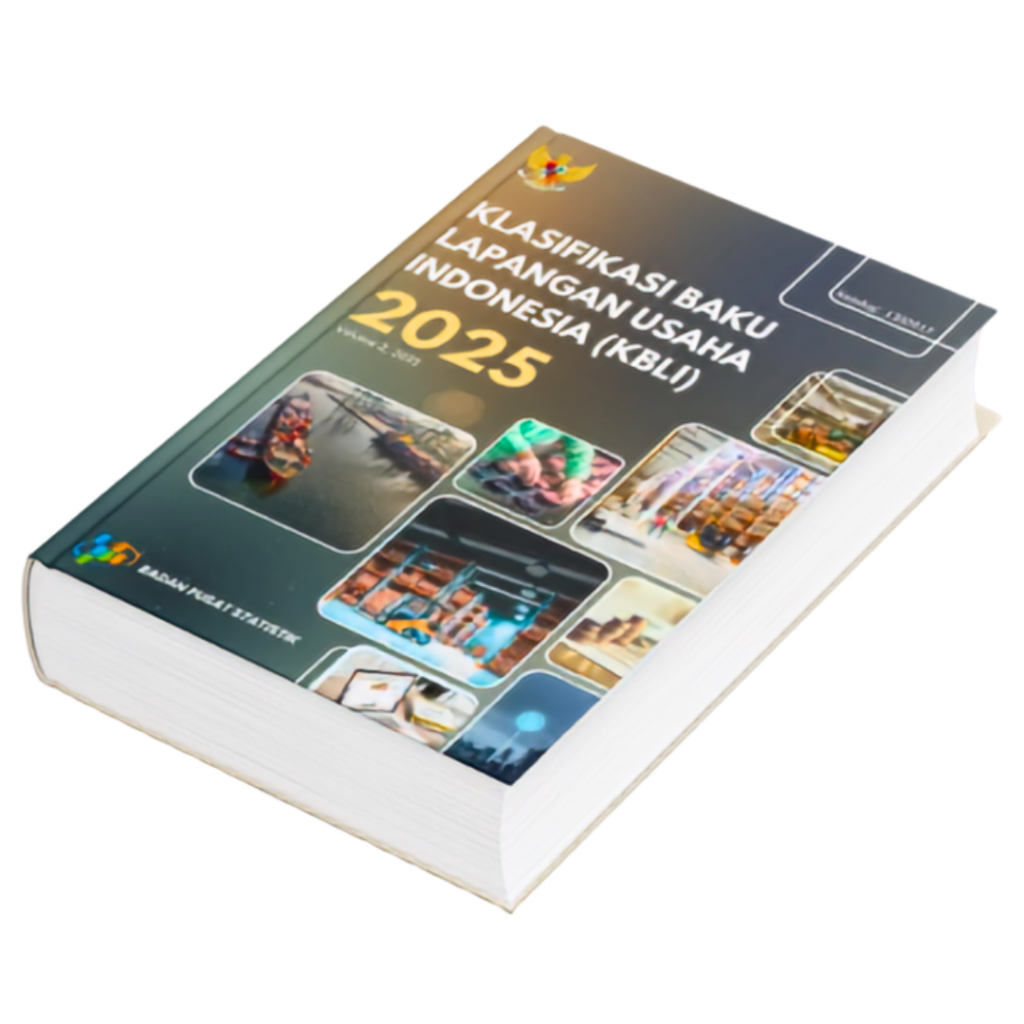
Indonesia classifies every business activity under a standard code system, the KBLI. The 2025 edition, issued by the national statistics agency, replaced the 2020 edition, and businesses on the online licensing system, the OSS, were required to align to it during 2026. A family office is not a single code in that system. The activity is assembled from the codes that fit what the office actually does, which is owning the family’s investments, management, and advisory work. The mix of codes decides how open foreign ownership is, so it is confirmed on the OSS before a structure is chosen.
The classification also decides whether a licence is needed. Managing or advising on investments for other people is a regulated financial activity that needs a licence from the Otoritas Jasa Keuangan (OJK, the Financial Services Authority), reorganised under its 2026 investment-manager rules. A single-family office that manages only the family’s own money generally falls outside that licensing, because it serves no outside clients. Indonesian law does not set out a codified exemption for a single-family office by name, so the position turns on the exact activity and is confirmed with the OJK before the structure is fixed.
Two operating realities follow once the company exists. A PT PMA needs a corporate bank account, and Indonesian banks apply their own know-your-customer checks to the company, its shareholders, and its beneficial owners, which takes time and documentation to clear before the account opens. And the office carries an Indonesian running cost of its own: local staff, premises, an accountant, and annual tax and corporate filings. That cost is modest against a large portfolio, though it is a standing commitment from the first year.
The Bali Province layer
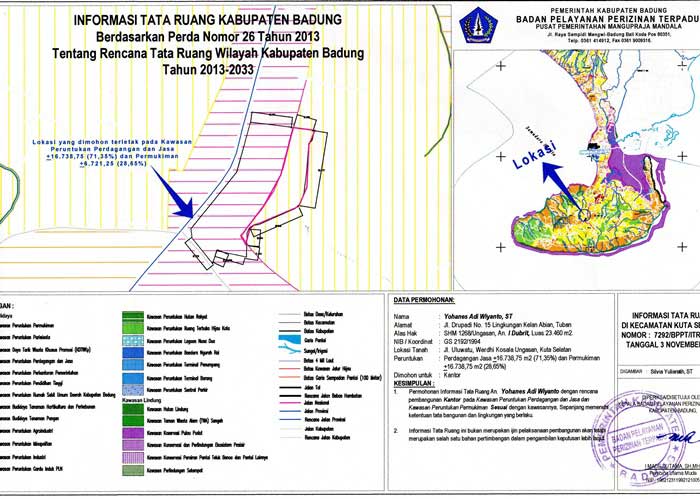
Bali adds a provincial layer on top of the national rules. Where an office takes premises or builds, the site must clear the provincial spatial plan and a zoning check, the Informasi Tata Ruang (ITR, spatial-use information), before anything is committed. Bali reinstated a construction moratorium in 2025 that continued into 2026, chiefly to protect agricultural land and manage overdevelopment. On the current instruction it applies across six regencies, Tabanan, Jembrana, Buleleng, Bangli, Karangasem, and Klungkung, while Badung, Gianyar, and Denpasar are outside the district-level ban.
A separate province-wide limit on converting productive agricultural land applies across Bali, including those three regencies. The measure rests on a provincial executive instruction rather than a gazetted regulation, so its scope can change, and the current position is confirmed before premises are chosen.
The province also runs its own rules on how foreigners conduct business and work, and a tourism levy of IDR 150,000 (around USD 8) applies to each foreign visitor. None of this stops a family office, and all of it shapes where and how one is set up.
People and residence
The people follow the same framework. A principal who relocates needs a stay permit, either the Golden Visa or a limited stay permit, an Izin Tinggal Terbatas (ITAS), evidenced by the card known as a KITAS. Foreign staff need an approved foreign worker plan, a Rencana Penggunaan Tenaga Kerja Asing (RPTKA), and a KITAS each. Premises and land are governed by the foreign-ownership rules. A foreigner cannot take freehold, a Hak Milik, so a PT PMA takes a right to build, a Hak Guna Bangunan, or the family leases suitable premises. And a principal who lives in Bali is, on ordinary rules, an Indonesian tax resident taxed on worldwide income, which is the owner-residence point our companion comparison sets out in full.
The PFII route, and the tax that turns on residence
Indonesia is building a route designed for this. The Pusat Finansial Internasional Indonesia (PFII), the Indonesia International Financial Centre in Bali, is a ring-fenced zone whose permitted activities expressly include family offices, and it follows a government initiative to draw wealthy families and their capital onshore. The zone offers a distinct tax regime and a common-law court, and it is the lawful, purpose-built alternative to the unlawful nominee arrangements some foreigners still attempt.
The difference between a resident and a non-resident principal drives the largest tax difference for a family, and a worked example shows why. Take a family whose offshore portfolio produces around USD 2 million a year in investment income.
| The same USD 2 million of offshore investment income | Indonesian tax treatment |
|---|---|
| Received by a non-resident investor using the PFII carve-out | The carve-out is built to remove or reduce Indonesian tax on a non-resident’s foreign-source income, so the Indonesian charge approaches zero, subject to the qualifying tests in the pending rules |
| Earned by a principal living in Bali for over 183 days in a year | Taxed as the worldwide income of an Indonesian tax resident, at progressive rates up to 35 percent, which is up to around USD 700,000 before any treaty relief, and the principal’s home country may tax it as well |
This is why the carve-out favours a non-resident family over a family whose principal relocates to Bali, and why the residence decision is designed at the outset rather than left to the end. Two cautions attach to it. The zone’s rates, qualifying tests, and site are set by implementing regulations that were pending when this article was prepared, so the family-office regime cannot yet be modelled with certainty. And a family that reads the carve-out as a general tax holiday will misjudge its own position where a principal lives in Bali.
Two further exposures reach a cross-border family wherever the office is located. A large family group can come within the global minimum tax, the OECD framework that Indonesia and many other countries have adopted, which sets an effective minimum of 15 percent on the profits of groups above the size threshold. And a principal’s home country can tax the structure under its controlled-foreign-company rules, which attribute the income of a foreign company back to a resident owner whether or not it is distributed. Both are checked against the family’s own countries before a structure is chosen, because either can undo a design that looks efficient in Indonesia alone.
How TraceWorthy helps
Our team are Indonesian lawyers, accountants, tax specialists, and compliance professionals, working alongside our founder, Tracy Wilkinson, who qualified in Australia and built the team to a standard set against international practice. We advise families across borders as well as on the ground, negotiating cross-border deals, advising on cross-border tax, and drafting cross-border agreements. We help a family decide whether it needs a single-family office, a shared multi-family office, or a coordinated set of advisers, and we model the tax at the family’s Indonesian residence and in each member’s home country. Where the answer is a presence in Indonesia, we form and run the PT PMA, confirm the activity classification and any OJK licence, run the land and spatial due diligence for premises, and arrange the visas and worker permits. Where the family office belongs offshore, we build the onshore parts and work with locally licensed advisers in the jurisdiction concerned. We also treat the succession and the family behind the wealth as the heart of the work, because that is what a family office is for. Our team is your team.
The first step is a structuring and tax-residence review, taken before any company is formed or any premises are taken, so the form of the office and the family’s residence are decided together and in the right order. Getting that right at the outset is far less costly than rebuilding it later.
This article is general information current as at 11 August 2026.
Family-office thresholds and costs are drawn from named institutional research and are economic benchmarks that vary by source, not legal minimums. Indonesian investment, tax, immigration, and provincial rules change, so confirm the position for your own family before you act.
USD equivalents of rupiah figures use a rate of around IDR 17,800 to USD 1 as at 11 August 2026.
The PFII figures are drawn from reporting of the enacted law, and its implementing regulations were pending. This article is not legal, tax, or financial advice, and it does not create an advisory relationship.
Where regulated advice or a licence is required in a jurisdiction, TraceWorthy works with locally licensed advisers there.
Frequently Asked Questions
Is a family office only for billionaires?
No. Deloitte Private gives a common benchmark of around USD 100 million in investable assets to justify a single-family office, and a full team from around USD 1 billion. Below that, a multi-family office, from around USD 10 million to USD 30 million, or a coordinated set of advisers, delivers most of the benefit at a fraction of the cost. These are economic benchmarks, not legal minimums, so the right form follows the family’s wealth and complexity rather than any legal threshold.
Is there a legal minimum amount of wealth to set up a family office?
No. No Indonesian or international law sets a minimum level of wealth before a family may run a family office. The commonly cited figures are economic benchmarks for when the overhead pays for itself. The one legal capital minimum in Indonesia attaches to the vehicle, the PT PMA, which needs IDR 2.5 billion (around USD 140,000) paid-up and over IDR 10 billion (around USD 560,000) of investment for each line of business at each location, and that requirement is of the company, not of the family.
What is the difference between a single-family office and a multi-family office?
A single-family office serves one family alone, with the most control and privacy and the highest cost. A multi-family office serves several families on shared staff and systems, with less control and a lower cost, typically 0.5 to 1.0 percent of assets a year. Many families use an embedded arrangement inside a business they already own before either.
Can a foreign family run a family office from Bali?
Yes, within Indonesian law. A family office operating in Indonesia is a business presence, so a foreign family uses a foreign investment company, a PT PMA, with the minimum capital and the activity classification that involves, and a nominee arrangement to get around ownership rules is void. The principals need visas, any staff need work permits, and premises are governed by the foreign-ownership rules for land.
Does a family office need a financial licence in Indonesia?
A single-family office that manages only the family’s own money generally does not, because it serves no outside clients. Managing or advising on investments for other people is a regulated activity that needs an OJK licence. There is no codified single-family-office exemption by name, so the position turns on the exact activity and is confirmed with the OJK before the structure is chosen.
Can I set up a family office in the PFII?
The PFII permits family offices among its activities, and it is the purpose-built lawful route in Bali. Its rates, qualifying tests, and site are set by implementing regulations that were pending when this article was prepared, so the regime cannot yet be modelled with certainty, and the personal tax carve-out is built for a non-resident investor rather than a resident principal.
Do I have to move to Bali to have a family office there?
No, though where the family lives changes the tax. A principal who lives in Bali is, on ordinary rules, an Indonesian tax resident taxed on worldwide income, and each family member’s home country can tax them too. Where the family is resident is part of the design, not an afterthought.